
What is the difference between re-roofing and roof replacement?
Re-roofing adds a new layer of shingles over an existing roof, while roof replacement removes the old roofing materials before installing a new system. The two approaches may look similar from the ground, but they differ in cost, durability, ventilation, inspection access, and suitability for an aging or damaged roof.
Re-roofing is sometimes called an overlay. It is generally limited to asphalt shingle roofs and is only appropriate when the existing shingles are in reasonably good condition. A full replacement, by contrast, exposes the roof deck and allows the entire roofing system to be inspected and rebuilt as needed.
How does re-roofing work?
During re-roofing, new shingles are installed directly over the existing shingles. The underlying layer remains in place, so the work may take less time and create less tear-off debris.
Re-roofing can be considered when:
- The existing roof has only one layer of shingles.
- The roof deck is solid and not visibly sagging.
- There are no widespread leaks or serious moisture problems.
- The existing shingles are lying relatively flat.
- The roof structure and ventilation system are functioning properly.
- Local building requirements allow another layer.
An overlay can improve the roof’s appearance and provide another period of weather protection. However, it does not correct problems hidden beneath the existing shingles. Damaged decking, wet insulation, inadequate flashing, and concealed leaks may remain undiscovered.
Re-roofing also creates a less uniform surface. If the existing shingles are curled, buckled, or uneven, the new layer may follow those irregularities rather than creating a smooth foundation.
What happens during a full roof replacement?
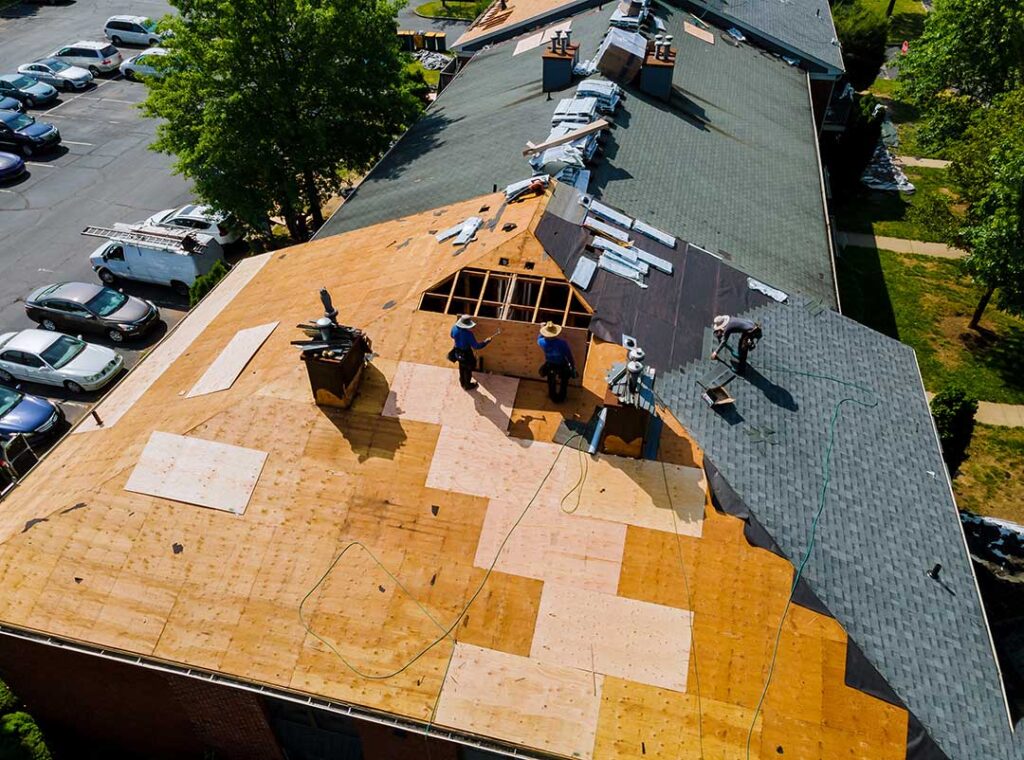
A full replacement begins with removal of the existing shingles and underlayment. Once the roof deck is exposed, it can be examined for rot, delamination, nail pull-through, or other damage.
The replacement process commonly includes:
- Removing old roofing materials.
- Inspecting the roof deck.
- Replacing damaged decking where necessary.
- Installing new underlayment and ice-barrier materials.
- Replacing or repairing flashing around penetrations and roof edges.
- Installing new shingles or another approved roof covering.
- Examining ventilation at the ridge, soffits, and other intake or exhaust points.
- Reinstalling roof-edge components and drainage details.
This approach costs more than re-roofing because it involves additional labor, disposal, and materials. It also takes longer. In return, the roof assembly can be evaluated rather than covered over, and hidden problems have a better chance of being found before they lead to interior damage.
Which option is better for an older home?
For an older house, a full replacement is often more informative because it reveals the condition of the roof deck and underlying layers. Many homes in Ithaca, NY include older construction details, additions, dormers, enclosed porches, or roof sections built at different times. These features can create complicated flashing and drainage conditions that are difficult to assess from the surface alone.
Age by itself does not automatically rule out re-roofing. A roof that is near the end of its expected service life, however, may not provide a good base for another layer. If the shingles are brittle, heavily weathered, or already showing widespread wear, an overlay may offer only a temporary improvement.
A roof with more than one existing shingle layer generally requires removal before another roofing layer is installed. Multiple layers can add weight, make defects harder to identify, and reduce the quality of the finished surface.
How do Ithaca’s seasonal conditions affect the decision?
Freeze-thaw cycles, winter snow, wind, and repeated wetting can expose weaknesses in roofing materials and flashing. Snow and ice can also remain on sloped roofs for extended periods, particularly where roof geometry, shade, or limited solar exposure slows melting.
These conditions make several details especially important:
- Sound roof decking that can hold fasteners securely.
- Proper underlayment beneath the shingles.
- Ice-barrier protection in vulnerable roof-edge areas.
- Reliable flashing around chimneys, walls, skylights, and roof valleys.
- Adequate attic ventilation to limit moisture buildup and uneven roof temperatures.
- Clear drainage paths through gutters and downspouts.
Re-roofing may cover damaged areas without addressing the cause of a leak. For example, staining near an interior ceiling may result from failed flashing, a valley problem, wind-driven rain, or attic condensation rather than a simple shingle defect. A full replacement creates more opportunity to investigate these conditions.
Is re-roofing always less expensive?
Re-roofing usually has a lower initial cost because it avoids tear-off and may require fewer labor hours. The total difference depends on roof size, access, material type, number of existing layers, decking condition, and the amount of flashing or ventilation work needed.
The lower upfront cost does not necessarily make re-roofing the better value. If the existing roof has hidden moisture damage or is already close to failure, an overlay may postpone rather than solve the underlying issue. Removing the old roof later can also become more complicated if an additional layer has been added.
A full replacement is often the more practical choice when the roof is already showing several types of deterioration at once, such as granule loss, curling shingles, recurring leaks, soft decking, and failing flashing.
Can a roof be inspected without removing the shingles?
A surface inspection can identify many visible issues, but it cannot confirm the condition of every hidden component. Inspectors may notice missing shingles, exposed fasteners, damaged flashing, sagging areas, or signs of moisture inside the attic. They may not be able to determine the full condition of the roof deck without removing the covering.
Attic access can provide useful information. Dark stains, damp insulation, mold-like growth, rusted fasteners, or daylight visible through the roof deck may indicate moisture intrusion. However, a dry attic does not prove that the roof deck is sound everywhere.
This is one of the main distinctions between the two methods: re-roofing preserves much of the existing roof assembly, while full replacement allows a more complete inspection during the work.
What signs suggest that re-roofing is not suitable?
A full replacement deserves serious consideration when the roof has:
- Two or more existing shingle layers.
- Widespread curling, buckling, blistering, or missing shingles.
- Repeated leaks in different areas.
- Sagging roof planes or visibly uneven surfaces.
- Soft, rotted, or deteriorated decking.
- Damaged chimney, wall, valley, or skylight flashing.
- Persistent attic moisture or poor ventilation.
- Shingles that are brittle enough to break during normal handling.
Localized damage does not always mean the entire roof must be replaced. A repair may be sufficient when the problem is limited and the surrounding roof remains in good condition. The key question is whether the roof covering is generally sound and whether the underlying structure can support another layer.
How should a homeowner compare the two choices?
The decision should be based on the condition of the entire roofing system, not just the appearance of the shingles. Useful questions include:
- How many layers are already present?
- Is the roof deck known to be dry and structurally sound?
- Are leaks isolated or recurring?
- Is the roof near the end of its expected service life?
- Are flashing and ventilation problems contributing to damage?
- Will the selected method comply with applicable building requirements?
- Will the new roof make future inspection or repair more difficult?
Re-roofing can be reasonable for a sound, single-layer roof with limited surface wear. Full replacement is more appropriate when damage is widespread, the roof has multiple layers, or hidden conditions need to be investigated. In a climate with snowy winters and recurring freeze-thaw weather, overlooking the roof deck, flashing, or ventilation can create problems that shingles alone cannot solve.
