
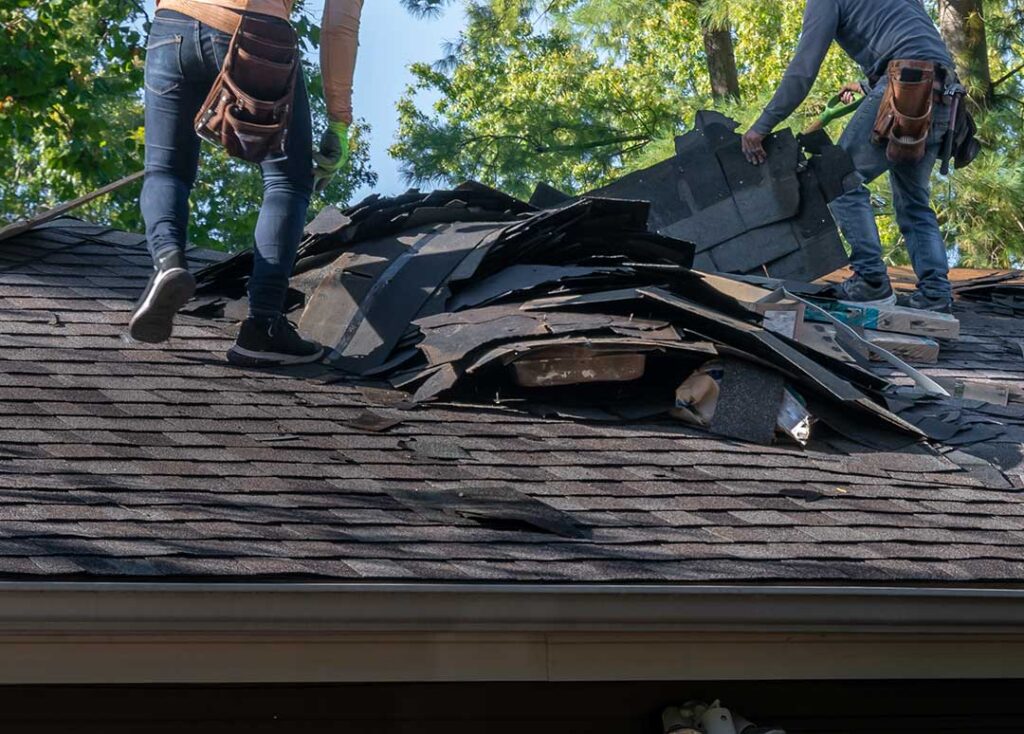
Removing leaves, twigs, and other debris from a roof can reduce clogged gutters, trapped moisture, and damage to shingles. For households in Ithaca, NY, the safest approach depends on the roof’s slope, the type of debris, current weather, and whether snow or ice is present.
What counts as roof debris?
Roof debris includes any material that does not belong on the roof surface or in the drainage system. Common examples include:
- Fallen leaves and small branches
- Pine needles, seed pods, and bark
- Windblown plastic, paper, or lightweight household items
- Accumulated moss or organic matter
- Animal nesting material
- Roof granules collecting in valleys or gutters
- Snow, ice, and frozen debris
Leaves and twigs are especially common during autumn and after windy weather. Debris may collect behind chimneys, around skylights, in roof valleys, and near plumbing vents. Those areas deserve extra attention because they can hold moisture against roofing materials.
How often should debris be removed?
A roof should be checked after major windstorms, heavy leaf fall, and nearby tree damage. A seasonal inspection is often enough for roofs with few overhanging trees, while homes beneath mature trees may need several checks each year.
In the local climate, autumn cleanup is particularly useful before repeated freezing temperatures arrive. Wet leaves can freeze into dense layers, while blocked gutters may contribute to ice buildup along roof edges. Debris should also be checked in spring after snow has melted and branches may have fallen during winter storms.
A visual inspection from the ground is usually the safest first step. Look for:
- Dark piles of leaves in valleys
- Branches resting on shingles
- Sagging or overflowing gutters
- Moss spreading across shaded areas
- Exposed underlayment or damaged flashing
- Shingle pieces on the ground
Can roof debris be removed from the ground?
Light debris can sometimes be removed from the ground with a roof rake or an extension pole designed for roof maintenance. This method is safer than climbing and may work well for small amounts of dry leaves or loose twigs.
Use a tool gently. Pulling aggressively can loosen shingles, damage protective granules, or bend metal flashing. Avoid sharp garden rakes, shovels, and improvised poles. Tools that scrape directly across the roof surface can shorten the service life of asphalt shingles.
Ground-level removal is not suitable for heavy branches, tangled vines, compacted wet material, or debris caught beneath roofing components. Those conditions may require closer evaluation rather than forceful pulling.
What is the safest way to remove debris from a low-slope roof?
For a low-slope roof that can be reached safely, remove loose debris by hand while wearing gloves with good grip. A soft-bristle broom or leaf blower may help with dry material, but blowing debris can send it into gutters, attic vents, neighboring areas, or the air around the house.
Work from a stable surface and avoid stepping on wet, icy, moss-covered, or fragile roofing. Do not drag branches across shingles. Lift them carefully, beginning with the smallest pieces. Place debris in a container or tarp rather than allowing it to slide down the roof edge.
Never use a leaf blower during dry, windy conditions if it could spread dust or lightweight debris toward roads, walkways, or nearby homes.
Should a ladder be used to reach the roof?
A ladder should only be used on firm, level ground with appropriate clearance from electrical wires and the roof edge. It must be placed according to the manufacturer’s instructions, tied or secured when possible, and inspected before use.
A ladder provides access; it does not create a safe working platform on a sloped roof. Reaching sideways, standing on the top rungs, or carrying bulky branches while climbing increases the chance of a fall.
Wet fall conditions, frost, snow, and mud are common hazards. If the ladder cannot be positioned securely, debris removal should not proceed from that location. A roof with a steep pitch, multiple levels, fragile materials, or difficult access presents additional risk that ordinary household tools cannot eliminate.
How should debris be removed without damaging shingles?
The main rule is to lift and brush debris away rather than scrape or pry it loose. Asphalt shingles can lose their protective granules when rubbed, dragged, or struck. Once granules are removed, the exposed surface is more vulnerable to ultraviolet light and weathering.
Avoid:
- Pressure washing
- Metal shovels and stiff rakes
- Walking across ridge caps or damaged shingles
- Pulling branches trapped under flashing
- Cutting moss without addressing the underlying moisture
- Using chemical treatments without checking roof-material compatibility

If a branch is wedged beneath a shingle, flashing, or vent, forcing it out may create a leak. The surrounding area should be examined from the attic or ceiling below after removal, especially if the branch fell during a storm.
What should be done with moss and organic buildup?
Small amounts of surface moss should not be ripped away from shingles. Moss often attaches to roofing granules, and pulling it off can expose the underlying mat.
Moss also indicates persistent dampness or shade. Nearby tree limbs may need pruning, gutters may need cleaning, or the roof may need improved airflow. However, cutting vegetation around utility lines or climbing into trees creates separate hazards.
Do not assume every green or dark roof stain is moss. Algae, lichen, dirt, and aging granules can look similar. Treating the wrong material can cause unnecessary damage.
How do gutters fit into roof debris removal?
Roof and gutter maintenance are closely connected. Leaves that remain on the roof often move into gutters during rain, where they can block downspouts and cause water to spill against fascia, siding, windows, or foundations.
After clearing roof debris, inspect visible gutter sections and downspout openings. Water should flow away from the building rather than collecting near the foundation. During freezing weather, do not use boiling water or open flame to clear ice. Sudden heat can damage materials and create dangerous ice runoff.
A gutter that repeatedly fills with roofing granules, shingle fragments, or sediment may signal roof wear rather than ordinary seasonal debris.
When is debris removal unsafe?
Do not climb onto a roof during rain, snow, frost, high winds, or lightning. Avoid working near downed wires, damaged electrical equipment, unstable branches, or a roof that appears to sag.
Extra caution is needed when:
- A tree has fallen onto the roof
- Shingles are visibly displaced or missing
- The roof surface is soft, spongy, or collapsing
- Water is entering the attic or living space
- Debris is near a chimney, skylight, or electrical connection
- The roof has a steep or unusual design
- Ice is attached to the eaves or covering the walking surface
In these situations, the priority is keeping people away from the hazard and preventing additional damage. Emergency roof access should not be attempted without the right equipment and training.
What should be checked after cleanup?
Once loose debris is removed, inspect the roof from the ground and, if safe, the attic. Look for daylight through the roof deck, damp insulation, water stains, musty odors, or fresh dripping.
Outside, check for lifted shingles, cracked flashing, damaged vents, exposed fasteners, and gutters that have pulled away from the roof edge. Photographing visible damage can help document when a problem occurred.
Removing debris is useful maintenance, but it does not repair the damage that caused water to enter. A clean roof can still leak if shingles, flashing, valleys, or ventilation components have been compromised.
