

Choosing a roofing contractor is less about finding the lowest price and more about confirming that the contractor is qualified, properly insured, clear about the work, and familiar with the conditions affecting homes in Ithaca, NY. A careful evaluation can reduce the risk of leaks, incomplete repairs, unexpected charges, and premature roof failure.
What should homeowners verify first?
Before discussing price, verify the contractor’s identity, experience, insurance, and ability to provide a written scope of work. These basic checks help distinguish an established roofing professional from someone who may be difficult to reach after the project is finished.
Ask for:
- A legal business name and physical mailing address
- Proof of general liability insurance
- Proof of workers’ compensation coverage for employees
- Recent local references for similar roofing projects
- A written description of the proposed work
- Information about who will perform the installation
- A clear process for handling changes or unexpected damage
Insurance matters because roofing involves fall hazards, ladders, tools, and material handling. If a worker is injured or property is damaged, unclear insurance arrangements can create complications for the homeowner.
A contractor should be willing to explain these details without becoming evasive or pressuring the homeowner to make an immediate decision.
How many roofing estimates should be compared?
Comparing at least two or three detailed estimates is usually more useful than collecting many brief price quotes. The goal is not simply to identify the lowest number. It is to determine whether each contractor is describing the same work.
Estimates should identify:
- The roofing material and product type
- The number of layers to be removed, if removal is included
- Underlayment and ice-barrier details
- Flashing work around chimneys, walls, vents, and skylights
- Ventilation improvements or limitations
- Decking inspection and replacement procedures
- Cleanup and disposal arrangements
- Start and completion expectations
- Payment schedule
- Warranty terms and exclusions
A low estimate may leave out essential preparation, flashing replacement, ventilation work, or disposal costs. A higher estimate is not automatically more reliable, but a detailed explanation makes it easier to understand what is being purchased.
Homeowners should be cautious if one quote is dramatically lower than the others without a clear reason. The difference may reflect lower-grade materials, fewer labor hours, incomplete removal, or assumptions that are not stated in writing.
What roofing experience matters in Ithaca?
Local experience is useful when it reflects knowledge of regional weather and building conditions, not merely familiarity with a mailing address. Roofs in Ithaca must handle freeze-thaw cycles, winter snow, wind, heavy rain, shaded areas, and periods of moisture that can slow drying.
A contractor should understand how these conditions affect:
- Ice dams and water backup near roof edges
- Flashing at roof-to-wall transitions
- Moss and algae growth on shaded slopes
- Ventilation in cold-weather conditions
- Snow and ice loads
- Gutters and drainage paths
- Older homes with irregular rooflines or previous repairs
Many older houses have several generations of roofing materials, additions, enclosed porches, steep sections, or roof areas with different slopes. A thorough inspection should account for the entire roof system rather than focusing only on the most visible shingles.
Local knowledge should also include practical planning for weather. Roofing work may be delayed by rain, snow, freezing temperatures, or wet roof surfaces. A responsible contractor should explain how materials will be protected and how the roof will be secured if work is interrupted.
What questions should be asked before signing?
A written conversation before the project begins can reveal how carefully the contractor has evaluated the roof. Useful questions include:
- Is the existing roof being repaired or fully replaced, and why?
- How will hidden damage be handled?
- What happens if roof decking is deteriorated?
- Will flashing be reused or replaced?
- How will ventilation be evaluated?
- Who supervises the crew?
- Are subcontractors involved?
- How will landscaping, siding, windows, and outdoor property be protected?
- How will nails and debris be collected?
- What happens if the project runs beyond the expected schedule?
- What does the workmanship warranty actually cover?
- Who handles warranty concerns after completion?
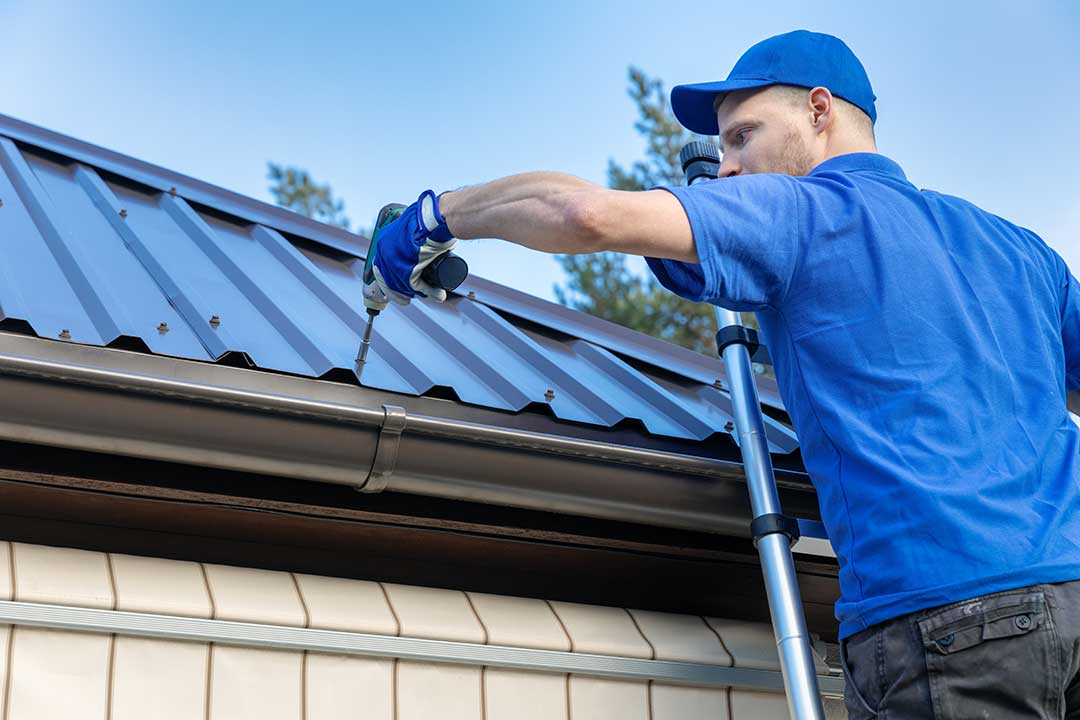
The answers should be specific. Statements such as “everything is included” are less useful than a written explanation of what is included, what is excluded, and how uncertain conditions will be priced.
Is a license required for every roofing contractor?
Licensing and registration requirements can vary by location and by the type of work being performed. Homeowners should not assume that a contractor’s business card or online listing proves compliance with applicable rules.
Before signing, verify which requirements apply to the property and project. This may include local registration, permits, insurance, sales tax documentation, or other construction-related obligations. The contractor should be able to explain which permits are needed and who is responsible for obtaining them.
Permit responsibility should appear in the contract. If a permit is required but no one has agreed to obtain it, the project may face delays or inspection problems.
How can homeowners recognize warning signs?
Certain patterns deserve caution, especially when combined. Warning signs include:
- Pressure to sign immediately
- Requests for a large cash payment before work begins
- No written contract
- Vague answers about insurance
- A refusal to provide references
- A quote that changes substantially after a brief inspection
- Unusually low pricing with little explanation
- Claims that insurance will cover an upgrade without documentation
- Requests to sign paperwork with blank sections
- A contractor who cannot explain ventilation, flashing, or water-shedding details
Storm-related roofing work can attract temporary operators who move quickly through neighborhoods after severe weather. Homeowners should be especially careful with unsolicited inspections and claims that a roof has urgent damage that cannot be documented.
A legitimate inspection should identify visible findings and explain what evidence supports the recommendation. Photographs can be helpful, but homeowners should still ask questions rather than relying on images alone.
What should a roofing contract include?
A roofing contract should describe the project clearly enough that another qualified person could understand what was agreed upon. It should include the property address, contractor information, scope of work, materials, payment schedule, warranty terms, and procedures for changes.
Pay particular attention to allowances and exclusions. An allowance may mean that the final price can change if actual material or labor costs exceed the stated amount. Exclusions may involve decking, chimney repairs, gutter work, ventilation, or interior water damage.
The contract should also explain cleanup. Roofing debris can include nails, tear-off material, packaging, and damaged wood. The agreement should state whether debris will be removed, how the property will be protected, and whether a final cleanup is included.
Avoid signing a contract that is difficult to read or that relies mainly on verbal promises. Any important agreement about materials, repairs, timing, or warranty coverage should be written down.
How should repairs be evaluated differently from replacement?
A repair may be appropriate when the damage is limited, the surrounding materials remain serviceable, and the source of the leak can be identified. Replacement may be more practical when the roof is near the end of its expected service life, has widespread deterioration, or has repeated leaks in several areas.
A contractor should explain why a repair is expected to work and whether matching materials are available. On older roofs, a small repair can sometimes solve an immediate leak while leaving broader problems unresolved. That does not make repair wrong, but the limitations should be clear.
Interior stains also require careful investigation. The visible stain may not be directly beneath the exterior entry point because water can travel along decking, insulation, framing, or ceiling materials.
What is a reasonable decision process?
A sound decision usually follows this order:
1. Document visible problems and gather maintenance records.
2. Obtain detailed evaluations from qualified contractors.
3. Compare scopes of work rather than prices alone.
4. Verify insurance, references, and applicable requirements.
5. Review the contract without rushing.
6. Confirm materials, payment terms, cleanup, and warranty details.
7. Keep copies of the contract, receipts, photographs, and correspondence.
Roofing is a major building-system project, not simply a layer of shingles. The contractor’s inspection methods, written communication, safety practices, and plan for water management are just as important as the appearance of the finished roof.
