
Does a new roof last as long as the package says?
Not always. Published service-life estimates describe typical performance under favorable conditions, not a guarantee for every house.
Roofing materials age differently depending on:
- Roof slope and sun exposure
- Ventilation beneath the roof covering
- Ice, snow, wind, and repeated freeze-thaw cycles
- Moss, leaves, and moisture retention
- Installation quality and maintenance
- The condition of the roof deck and flashing
In Ithaca, winter weather can be especially hard on roofing systems. Snow accumulation, ice formation, and temperature swings can cause materials to expand, contract, or remain damp for extended periods. A roof that reaches its expected service life may still be performing well, while another of the same age may have localized failures.
Age is useful information, but it should not be treated as the only measure of roof condition.
If the roof is not leaking, is it in good shape?
A roof can have developing problems before water appears inside the house. Small issues around flashing, roof penetrations, valleys, or vent openings may allow moisture into concealed areas without producing an immediate ceiling stain.
Warning signs can include:
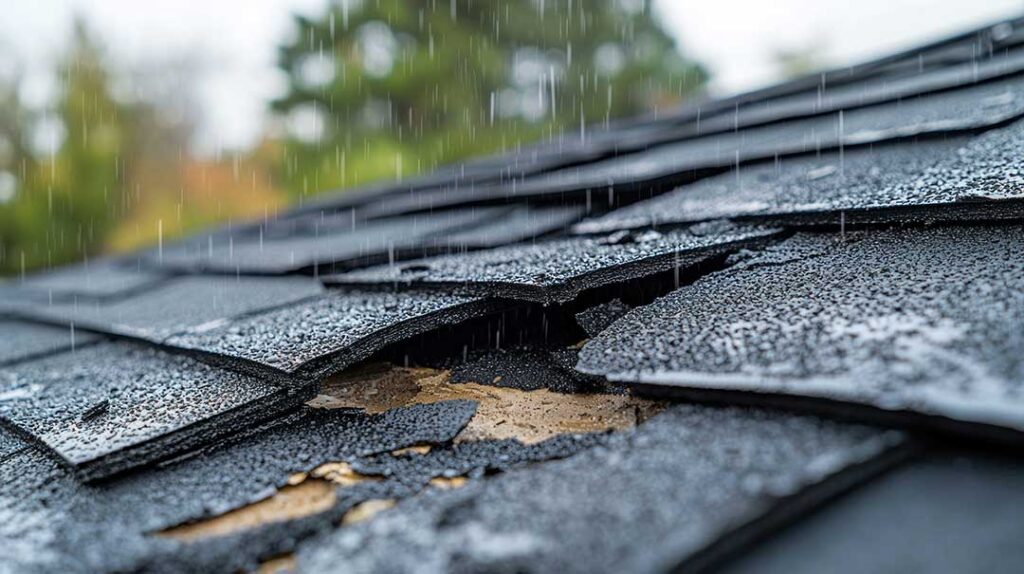
- Curling, cracked, or missing shingles
- Dark areas that remain after the roof surface dries
- Loose or deteriorated flashing
- Sagging along the roofline
- Granules collecting in gutters
- Damp insulation or musty odors in the attic
- Daylight visible through parts of the roof deck
Interior staining often appears after water has traveled away from the original entry point. A ceiling mark may therefore be several feet from the actual roof defect.
Are all roof leaks caused by damaged shingles?
No. Shingles receive much of the attention, but many leaks begin at transitions and penetrations rather than in the main field of the roof.
Common sources include:
- Chimney and wall flashing
- Plumbing vent boots
- Skylights
- Valleys where roof planes meet
- Roof edges and drip edges
- Ice-related damage near eaves
- Blocked or poorly designed drainage areas
A leak may also come from condensation rather than rain. Warm, moist indoor air can enter a cold attic and condense on roof sheathing, fasteners, or insulation. This is more likely when attic air sealing and ventilation are inadequate.
Finding the source requires tracing the moisture path, not simply covering the first damaged shingle that is visible.
Does more attic ventilation always solve roof problems?
No. Ventilation must be balanced with air sealing and insulation.
A common misconception is that adding vents automatically prevents moisture, heat buildup, and ice dams. In reality, uncontrolled air leaking from the living space can carry moisture into the attic. If intake and exhaust ventilation are not properly balanced, additional vents may provide limited improvement.
A sound attic system generally depends on:
- Sealed gaps around wiring, pipes, and light fixtures
- Adequate insulation at the attic floor
- Clear intake paths at the eaves
- Properly placed exhaust ventilation
- No blocked airflow caused by insulation or stored items
Roof ventilation should not be used to compensate for air leaks from the home. Both conditions need to be considered together.
Do ice dams mean the roof itself is defective?
Not necessarily. Ice dams form when heat from the building warms part of the roof, melting snow that later refreezes near colder eaves. They can be influenced by insulation, air leakage, ventilation, roof shape, snow depth, and weather conditions.
Ice dams may occur even on a relatively new roof. They do not automatically prove that the shingles failed or that the entire roof must be replaced.
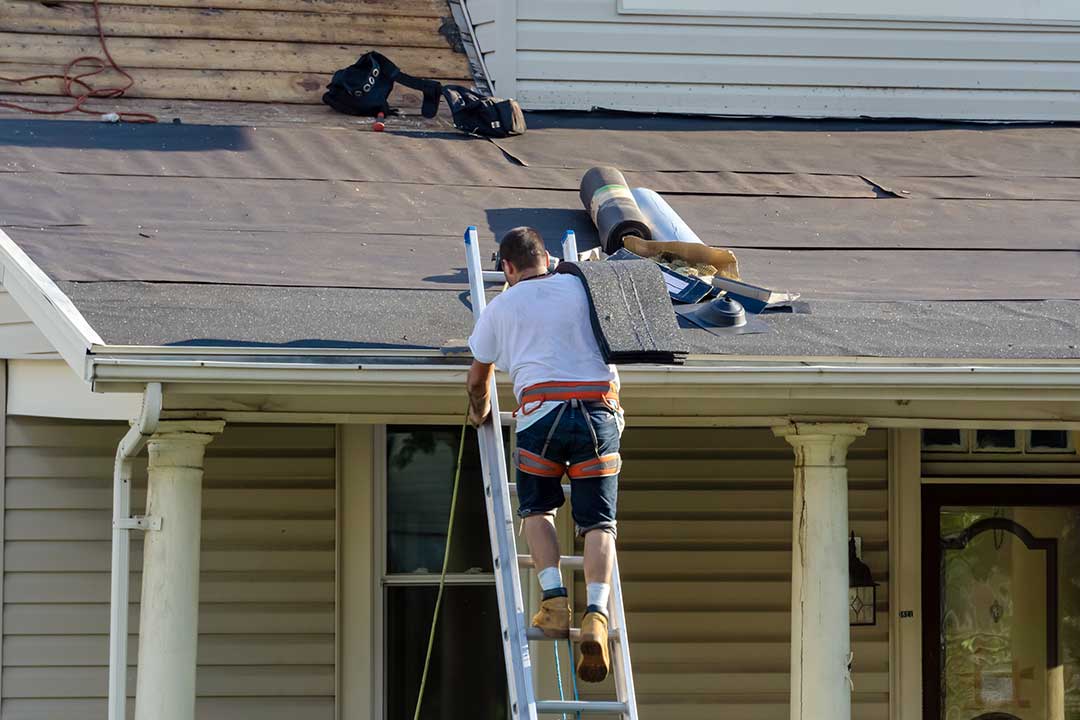
However, repeated ice dams can damage underlayment, flashing, gutters, ceilings, and insulation. Removing ice with sharp tools can also damage roof coverings and create a fall hazard. In heavy accumulation or active leakage, safety should take priority over trying to correct the problem personally.
Does a steep roof never need maintenance?
A steep roof may shed water and snow more effectively, but it still contains vulnerable areas. Flashing, sealants, vents, gutters, and roof edges can deteriorate regardless of slope.
Steep roofs may also be harder and more dangerous to inspect. Walking on them can damage roofing materials, especially when surfaces are cold, brittle, wet, or covered with algae or moss.
Maintenance does not mean climbing onto the roof regularly. Safer observations can often be made from the ground, attic, upper windows, or nearby roof sections that are accessible without exposure to a fall.
Is moss harmless because it grows naturally?
Moss is not automatically an emergency, but persistent growth can retain moisture against roofing materials. It may lift or loosen the lower edges of shingles and make the surface stay damp longer.
Moss is more common on shaded roof sections, especially where leaves and organic debris accumulate. Removing it with a pressure washer can strip protective granules and shorten the life of the roof. Harsh scraping can cause similar damage.
Prevention often involves keeping nearby tree growth from creating excessive shade, clearing debris from drainage areas, and addressing moisture conditions. Cleaning methods should match the roofing material and avoid unnecessary abrasion.
Can a roof be judged from the number of missing shingles?
Missing shingles matter, but counting them does not reveal the full condition of the roof. A few isolated losses may be repairable, while a roof with no obvious missing shingles may have widespread brittleness, failing flashing, or degraded underlayment.
The surrounding material matters as much as the visible gap. If neighboring shingles are cracked, curled, or losing granules, a small repair may not address the broader issue.
The same principle applies after a windstorm. Damage may affect ridge caps, flashing, vents, and sealant points even when the main roof surface appears intact.
Does replacing the roof fix poor attic insulation?
Usually, no. Roofing and insulation are related but separate parts of the building system.
A new roof may provide better water protection, but it will not automatically correct:
- Thin or uneven attic insulation
- Air leakage from the living space
- Inadequate ventilation
- Moisture from bathroom fans venting into the attic
- Condensation on cold surfaces
If a roof replacement is being considered, the attic is worth examining at the same time. Correcting hidden moisture or insulation problems can help protect the new roof and improve indoor comfort.
Do roof repairs always look worse than the original roof?
A visible repair can sometimes look different because roofing materials weather over time. New shingles may have a different color, texture, or level of granule loss than older surrounding materials.
Color variation does not necessarily indicate a poor repair. It can be more noticeable on roofs exposed to strong sunlight or on sections with different weathering patterns. Matching materials may also be limited by the age of the roof or changes in available products.
Appearance matters, but water-shedding performance, secure flashing, proper fastening, and compatibility with existing materials are more important than achieving a perfectly uniform color.
Is every roof problem urgent?
Some conditions require immediate attention, while others can be monitored. Active interior dripping, a sagging roof deck, exposed underlayment, major storm damage, or loose materials near walkways should be treated as safety concerns.
Less urgent examples may include mild surface discoloration, isolated granule loss, or aging materials without signs of moisture intrusion. Even then, postponing all observation can allow a minor issue to become more extensive.
For local households, seasonal checks are particularly useful after winter weather, strong wind, and heavy leaf fall. Looking for changes from one season to the next often provides more useful information than relying on roof age alone.
A roof is a system rather than a single layer. Shingles, flashing, drainage, ventilation, insulation, and the roof structure all affect performance. Understanding that relationship helps residents interpret warning signs more accurately and avoid assuming that a single visible defect explains the entire condition.
