

Storms can damage a roof without leaving an obvious hole. Strong wind may loosen shingles, hail can bruise roofing materials, and heavy rain or melting snow may expose leaks that appear hours later. After a storm in Ithaca, NY, the safest approach is to inspect from the ground first, check the attic and upper floors from inside, and avoid climbing onto the roof unless conditions are completely safe.
Is it safe to inspect the roof immediately after a storm?
Usually, no. Wait until lightning, high winds, falling branches, and active precipitation have ended. Wet roofing materials are slippery, and storms can leave behind hidden hazards such as downed wires, unstable tree limbs, broken glass, and exposed nails.
Before approaching the house:
- Look for downed electrical lines or branches touching wires.
- Stay away from areas with standing water near electrical equipment.
- Watch for loose siding, damaged chimneys, or partially fallen trees.
- Use a flashlight rather than an open flame if the power is out.
- Leave the building if there is a gas odor, smoke, sparking, or visible structural movement.
A roof inspection should never begin with a ladder. A damaged roof edge, weakened gutter, or unstable branch can make ladder access especially dangerous.
What can be checked from the ground?
A ground-level inspection can reveal many storm problems without putting anyone on the roof. Walk around the property only when the surrounding area is safe, and use binoculars or a phone camera with zoom if needed.
Look for:
- Shingles that are missing, lifted, curled, cracked, or out of alignment
- Dark or exposed patches where roof material appears to be gone
- Pieces of shingles, flashing, ridge caps, or metal roofing in the yard
- Bent gutters, separated downspouts, or loose gutter sections
- Damaged soffits, fascia boards, vents, chimney caps, and skylights
- Tree limbs resting on the roof
- Granules collecting heavily at the base of downspouts
- Sagging sections along the roofline
- New openings around pipes, vents, or chimneys
A few loose granules in a gutter are not automatically proof of storm damage. However, a sudden, unusually heavy deposit after hail or strong wind deserves closer attention, especially if shingles also show dark spots, exposed matting, or fresh dents.
How can indoor areas reveal roof damage?
Indoor inspection is often the most useful part of a post-storm check. Water may enter through a small roof opening and travel along rafters before appearing somewhere else.
Check the attic, upper ceilings, and exterior walls for:
- Damp insulation
- Water stains or brown rings
- Dripping or active moisture
- A musty smell that was not present before the storm
- Peeling paint or bubbling drywall
- Warped wood around roof openings
- Daylight visible through the roof deck
- Wet electrical wiring, junction boxes, or recessed lights
Do not touch wet electrical components. If water is near a light fixture, outlet, appliance, or electrical panel, avoid that area and treat it as an electrical hazard.
A water stain does not always identify the exact entry point. Roof leaks can travel horizontally along framing, insulation, or plumbing before showing on a ceiling. Marking the location and photographing it can help document when and where the problem appeared.
What types of storm damage are easy to miss?
Some damage is visible only from close range or after several weather cycles. Wind can break the seal beneath shingles without removing them. The shingles may look normal from the yard but lift during the next windy period.
Hail damage may appear as shallow circular depressions, bruised areas, or irregular dark marks. On older roofing, it can be difficult to distinguish new hail marks from normal wear. Do not press on suspected damage or scrape the surface, since that can make the condition worse.
Flashing around chimneys, walls, dormers, skylights, and plumbing vents is another common weak point. Storm movement may loosen the flashing or break the sealant while leaving the surrounding shingles intact.
In Ithaca, freeze-thaw cycles can make small storm-related defects more significant. Water that enters a small opening may freeze, expand, and enlarge the damaged area during later cold weather. A roof that appears dry immediately after a storm can still develop a leak later.
Should you climb onto the roof to look for damage?
For most homeowners, no. Roof inspection from the ground and from safe interior areas is usually sufficient for an initial assessment. Climbing becomes particularly risky when the roof is wet, icy, steep, covered with debris, or reached by an unstable ladder.
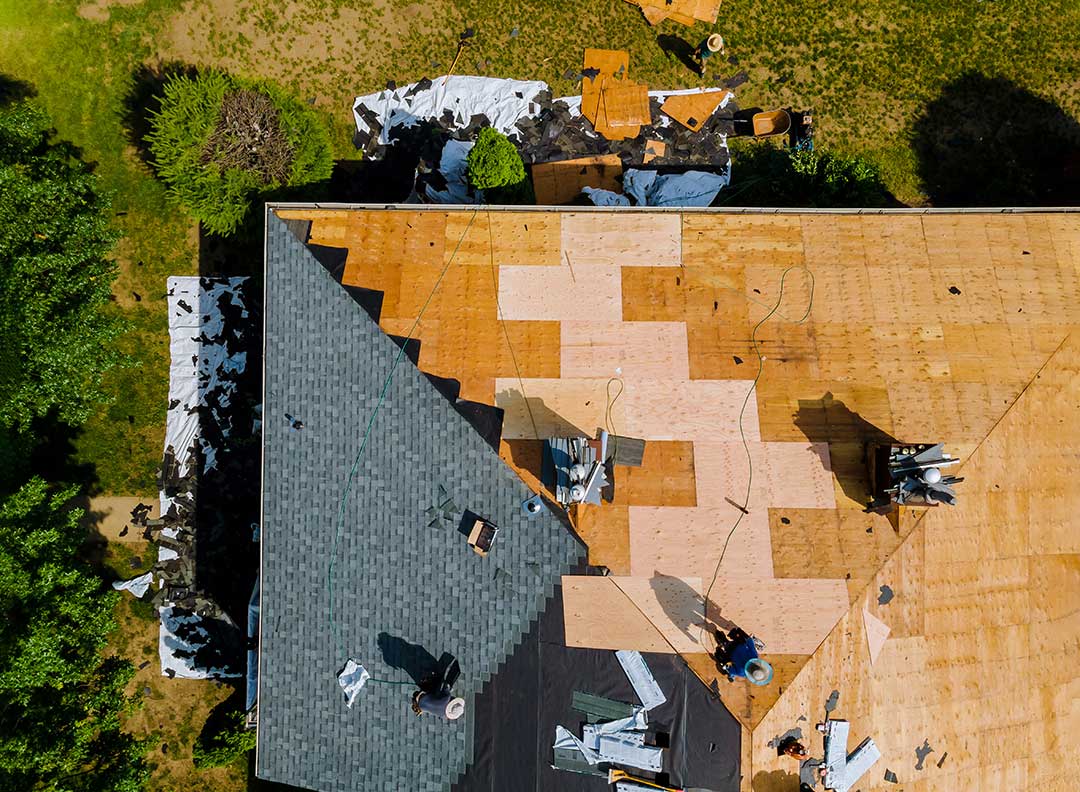
Never walk on a roof that has:
- Visible sagging
- Large branches or other heavy debris
- Missing sections of decking
- Standing water
- Ice or frost
- Damage near power lines
- A steep or unfamiliar surface
Do not climb onto a roof to move a branch, inspect a suspected leak, or place a temporary covering during unsafe weather. Emergency measures should be handled only when they can be completed without exposure to fall, electrical, or structural hazards.
What should be done if water is entering the house?
First, protect people and avoid electrical risks. Place containers under small drips if doing so is safe, and move furniture or household items away from the affected area. Do not stand beneath a visibly bulging ceiling; wet drywall can become heavy and fail without much warning.
If water is spreading, shut off electricity to the affected area only if the panel and surrounding floor are dry and accessible. If reaching the panel would require walking through water or touching wet equipment, leave it alone and seek emergency assistance.
Temporary protection, such as a properly secured covering, may reduce additional damage, but a roof should not be covered from above during rain, wind, or icy conditions. Do not seal interior stains before the source of the moisture is understood, because trapped moisture can contribute to mold and material deterioration.
How should storm damage be documented?
Take photographs and short videos from safe locations before moving debris or making repairs. Record:
- The date of the storm and when damage was first noticed
- Exterior damage from several angles
- Interior stains, wet materials, and affected rooms
- Fallen branches or debris
- Damaged gutters, vents, flashing, and siding
- Any temporary steps taken to limit further water entry
Keep damaged roofing pieces if they can be collected safely. Avoid making permanent repairs before the condition is documented, except when immediate action is necessary to protect people or prevent serious additional damage.
It is also useful to compare current photos with older images of the property if available. This can help distinguish storm-related changes from long-standing wear.
When does roof damage require urgent attention?
Urgent attention is warranted when the roof is visibly open, the roof structure is sagging, water is entering rapidly, a tree has struck the house, or electrical systems have been exposed to moisture. A damaged chimney, unstable roof edge, or large section of missing roofing also presents a safety concern.
Minor-looking damage should not be ignored if rain, snow, or freezing temperatures are expected. A loose shingle or separated flashing section can allow moisture into insulation and framing before a ceiling stain appears.
The safest post-storm process is simple: wait until conditions are safe, inspect from the ground and indoors, document what is visible, limit further exposure to water when possible, and stay off the roof when hazards are present. In a climate with wind, heavy precipitation, snow, and repeated freeze-thaw conditions, early attention can help prevent a small opening from becoming a larger building problem.
