
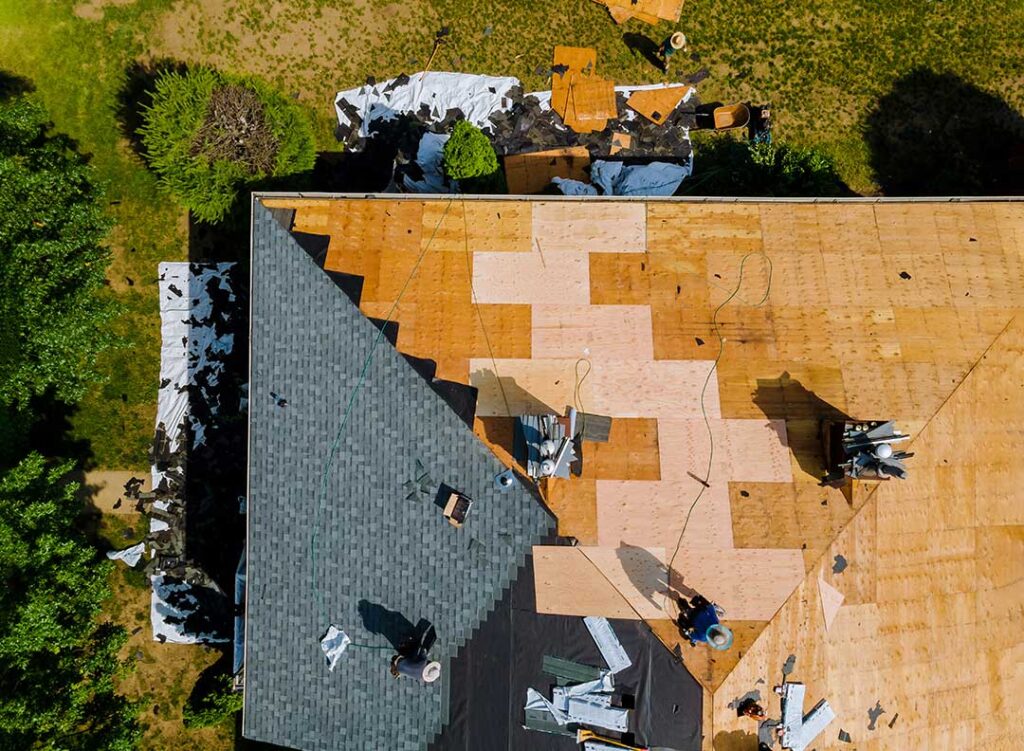
Ice dams are ridges of ice that form along a roof’s lower edge and stop melting snow from draining away. In Ithaca, NY, repeated snow, freezing temperatures, and freeze-thaw cycles can create conditions for ice dams, especially on homes with uneven attic insulation or warm air leaking into the attic.
How does an ice dam form?
An ice dam develops when different parts of the roof have different temperatures.
Snow resting on a warmer section of the roof begins to melt. The water runs downward until it reaches a colder roof edge, usually near the eaves or gutters, where it freezes. As more snow melts, the ice ridge grows and traps water behind it.
That backed-up water may work beneath roofing materials and enter the attic, ceilings, walls, or insulation. A leak may appear far from the roof edge because water can travel along roof decking, framing, or insulation before becoming visible indoors.
Ice dams are more likely when these conditions occur together:
- Snow remains on the roof.
- Some areas of the roof surface are above freezing.
- Roof edges remain below freezing.
- Indoor heat escapes into the attic.
- Outdoor temperatures repeatedly rise above and fall below freezing.
The roof does not need to be flat or poorly maintained for an ice dam to form. Roof shape, orientation, insulation levels, air leakage, shade, and nearby trees can all affect how evenly the roof warms.
Are icicles always a sign of an ice dam?
No. A few icicles do not automatically prove that a damaging ice dam is present. Icicles can form from ordinary snowmelt, especially during a sunny afternoon followed by a cold night.
However, large or widespread icicles deserve attention when they occur with:
- A thick ridge of ice along the eaves
- Water stains on ceilings or upper walls
- Damp attic insulation
- Peeling paint or swollen drywall
- Gutters filled with ice
- Water dripping indoors during or after a thaw
Icicles can also fall unexpectedly and injure people or damage objects below. Keeping people, pets, and valuable items away from the area beneath heavy roof-edge ice is sensible during winter weather.
Why are ice dams a concern for homes in Ithaca?
Winter conditions in Ithaca commonly include snow, cold nights, wind, and temperature swings. Those changing conditions can repeatedly melt and refreeze snow on a roof.
Older houses may have limited insulation, compressed insulation near the eaves, or air leaks around attic stairs, plumbing openings, electrical fixtures, chimneys, and ductwork. Renovated homes can also develop problems if new heated space is added without improving the attic insulation and ventilation system.
Roof orientation matters as well. A roof section exposed to sunlight may melt snow faster than a shaded section. Nearby buildings and mature trees can create uneven shading, while different roof additions may warm and cool at different rates.
What is the most effective way to prevent ice dams?
The most reliable long-term approach is to keep the roof surface as uniformly cold as possible. This requires reducing heat loss from the living space and allowing the attic to remain properly ventilated.
Seal air leaks first
Warm indoor air can reach the attic through small openings that are easy to overlook. Common leakage points include:
- Attic access doors and pull-down stairs
- Recessed light fixtures
- Plumbing and electrical penetrations
- Heating and cooling duct openings
- Chimney and flue openings
- Gaps above interior walls
- Bathroom and kitchen exhaust penetrations
Air sealing should be completed with materials appropriate for the location and the surrounding equipment. Combustion appliances and chimneys require particular care because improper sealing can create safety hazards.
Add or correct attic insulation
Insulation slows heat transfer from the living space into the attic. It should be distributed evenly and extend over the full ceiling area, including the narrow zones near exterior walls.
Insulation that is thin, compressed, displaced, or missing near the eaves can create warm spots on the roof. Adding more insulation without sealing air leaks first may not solve the problem, because warm, moist air can still move around or through the insulation.
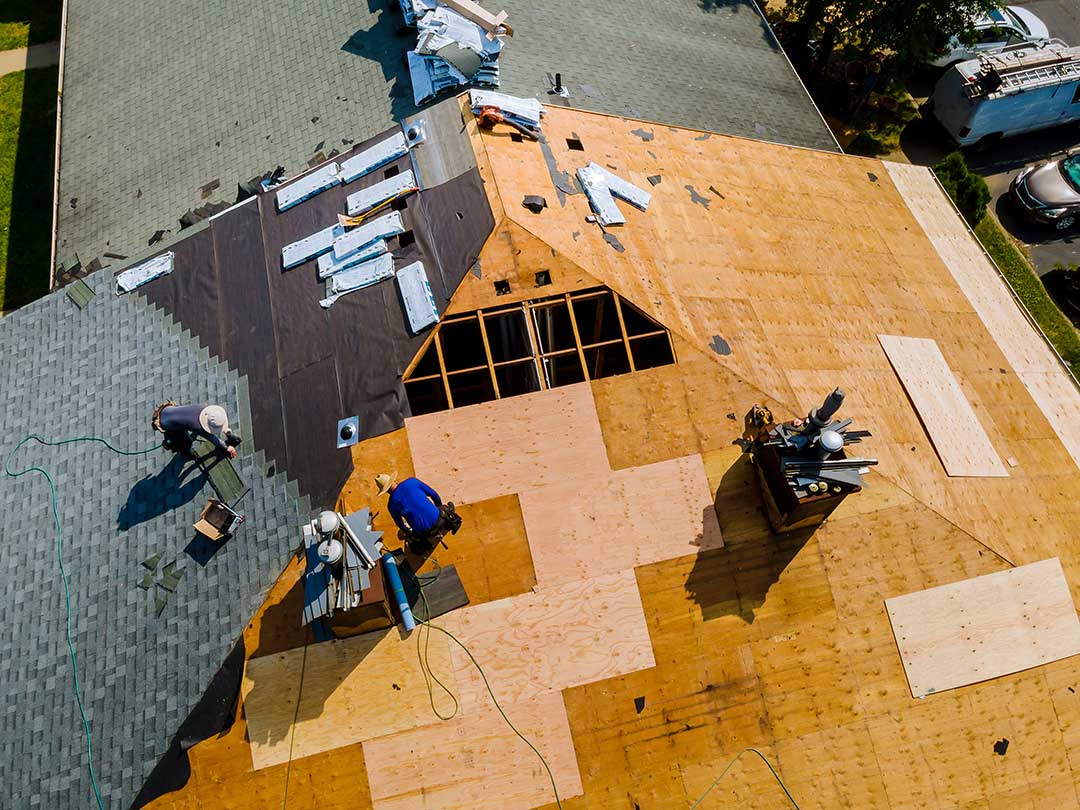
Wet insulation should not simply be covered with new insulation. It may have lost effectiveness and can contribute to mold or material damage until the source of moisture is corrected.
Maintain proper attic ventilation
A properly designed vented attic usually uses low intake vents near the eaves and high exhaust vents near the roof peak. Baffles help keep insulation from blocking airflow at the eaves.
Ventilation is not a substitute for air sealing and insulation. A powered attic fan also does not automatically solve ice dam problems. If the ceiling plane is leaky, mechanical ventilation may draw warm indoor air into the attic or create other moisture concerns.
The goal is a balanced assembly that limits heat entering the attic while allowing the attic space to dry and remain close to outdoor temperature.
Should snow be removed from the roof?
Removing snow can reduce the amount of meltwater available to feed an ice dam, but roof work is hazardous. Climbing onto an icy roof is especially dangerous, and pulling or scraping snow can damage shingles, flashing, gutters, and roof edges.
A roof rake used from the ground may be appropriate for some homes, but it must be used carefully. Removing all snow is not always necessary, and heavy snow removal can change the load pattern on a roof.
Do not chip away at an ice dam with a hammer, shovel, or other sharp tool. This can damage the roof covering and create additional leak paths.
If water is actively entering the home, place containers beneath the leak, move furnishings away from the area, and document visible damage. Electrical fixtures or wiring near water should be treated as a safety concern.
Do heating cables prevent ice dams?
Heating cables can create drainage channels along selected roof edges, but they do not correct the cause of the ice dam. They may be useful as a temporary or supplemental measure in specific locations, but they require proper installation, electrical safety, and regular inspection.
Heating cables should not be viewed as a replacement for air sealing, insulation, or balanced ventilation. They also may not protect valleys, roof transitions, or other areas where water backs up.
What should homeowners check before winter?
A seasonal inspection can identify conditions that increase risk:
- Look for missing or displaced insulation in the attic.
- Check whether bathroom and kitchen exhaust fans discharge outdoors rather than into the attic.
- Inspect attic insulation for dampness, staining, or frost.
- Confirm that soffit or eave vents are not blocked.
- Look for daylight around attic hatches, duct openings, and plumbing penetrations.
- Check ceilings and upper walls for old water stains.
- Clear leaves and debris from drainage paths before snow arrives.
- Trim or manage branches that regularly drop debris onto the roof, where appropriate.
Roof drainage systems do not cause every ice dam, but blocked gutters and downspouts can make drainage worse after snow begins to melt. Keeping them clear helps water leave the roof when conditions allow.
When does an ice dam require immediate attention?
Prompt attention is warranted when water is entering the home, ceiling materials are sagging, insulation is wet, or a large mass of ice is attached to the roof edge. Structural movement, cracking, or unusual roof deflection after heavy snow also deserves urgent evaluation.
Ice dams are usually a symptom of uneven roof temperatures rather than a problem solved by removing visible ice alone. The durable solution is to identify where heat and moisture are moving through the building and correct the attic and roof assembly so future snowmelt can drain normally.
