
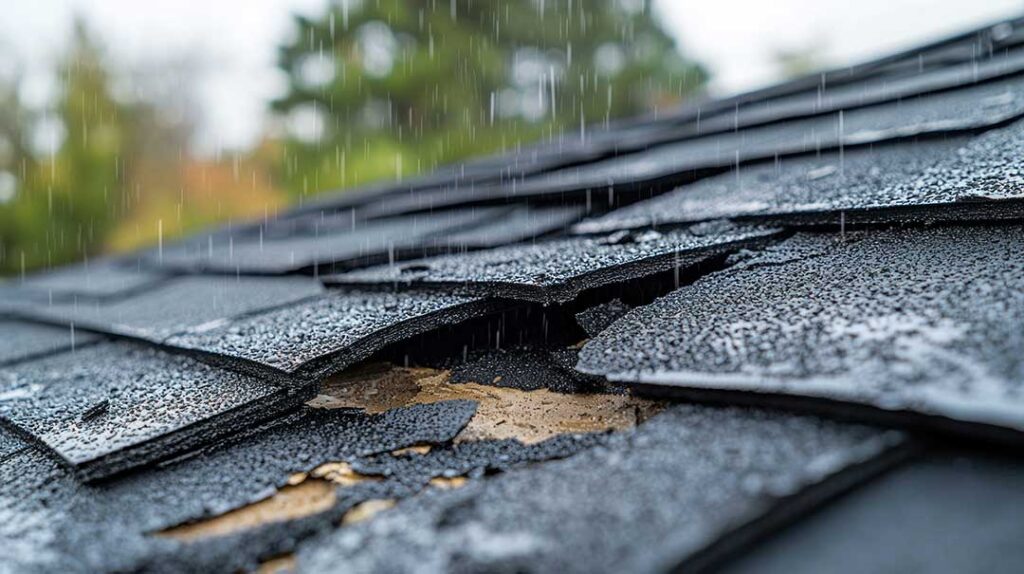
Hail damage is not always obvious from the ground. Small dents, loosened shingle granules, and weakened flashing may look minor immediately after a storm but can allow water to enter later. In Ithaca, NY, residents should check for roof damage after strong thunderstorms, especially when hail is reported nearby or when vehicles, siding, windows, or outdoor equipment show impact marks.
What does hail damage look like on a roof?
Hail damage commonly appears as circular or irregular impact marks, missing granules, bruised shingles, cracked roofing materials, or dents in metal components. The exact appearance depends on the roofing material, hailstone size, wind speed, and the age of the roof.
On asphalt shingles, look for:
- Dark or exposed spots where protective granules have been knocked away
- Soft, bruised areas that feel slightly spongy when pressed gently
- Cracks, splits, or small punctures
- Shingle edges that are lifted, broken, or no longer lying flat
- Exposed fiberglass mat beneath the surface coating
- Granules collected in gutters or at the base of downspouts
A hail impact does not always create a clean hole. The force may damage the shingle’s internal structure while leaving the top surface mostly intact. That is why a roof can appear acceptable from the ground but still have reduced resistance to rain, ice, and freeze-thaw cycles.
How can hail damage be checked safely from the ground?
A ground-level inspection can reveal warning signs without requiring anyone to climb onto the roof. Use binoculars if available and inspect the roof from several sides of the property.
Look for shingles that appear different from surrounding areas, especially darker spots, uneven rows, missing pieces, or patches where the surface looks unusually smooth. Hail damage is often scattered rather than limited to one neat section.
Also inspect nearby surfaces. Evidence of a storm may include:
- Dents in metal gutters, downspouts, flashing, vents, or chimney caps
- Chipped paint or small circular marks on exterior trim
- Damage to window screens
- Dents in vehicles or outdoor metal equipment
- Broken leaves, stripped branches, or plants with torn foliage
- Loose or damaged siding
These signs do not prove the roof is damaged, but they indicate that a closer inspection may be appropriate.
What signs should be checked in the attic?
The attic can reveal moisture entry that is not yet visible inside living areas. Inspect only from a stable floor or walkway, and avoid stepping on drywall, insulation, or areas between ceiling joists.
Look for:
- Damp insulation
- Water stains on roof decking
- Darkened wood
- Fresh drips or moisture after rain
- Musty odors
- Light visible through the roof deck where it should not be
- Rust around fasteners or metal connections
Water entering through hail-damaged shingles may not appear directly below the damaged spot. Roof leaks can travel along decking, rafters, insulation, or framing before reaching a ceiling. A stain may therefore indicate a larger or differently located problem.
If the attic is wet, electrical wiring is exposed to water, or the roof structure appears unstable, avoid entering the area and keep people away from affected rooms.
How does hail affect different roofing materials?
Asphalt shingles are the most likely roofing material to show granule loss, bruising, cracks, or fractures. Older shingles may be more brittle, while newer shingles can also be damaged by large hail or strong wind-driven impacts.
Metal roofing may develop visible dents, chipped finishes, loosened fasteners, or damaged seams. A dent is not always a leak, but damage near seams, penetrations, or fasteners deserves careful attention.
Wood shingles and shakes may split, crack, or develop impact marks. Damage can be harder to distinguish from normal weathering, especially on older roofs.
Flat or low-slope roofing may show punctures, membrane tears, displaced surfacing, or damaged seams. Water can remain on these roofs longer, so small breaches may become more serious during repeated rain.
Flashing around chimneys, skylights, vents, and roof edges can also be damaged even when the field shingles appear normal. These transition areas deserve special attention because they are common paths for water entry.
Is missing granule material always hail damage?
No. Granule loss can result from hail, foot traffic, aging, manufacturing defects, gutter abrasion, or repeated contact with tree branches. A few loose granules in a gutter are not enough to identify the cause.
Hail-related granule loss often appears in concentrated impact spots, with exposed or bruised areas surrounded by otherwise intact shingles. It may also occur alongside dents in metal components or damage to nearby property.
Roof age matters as well. As shingles age, they naturally lose some granules and become less flexible. A roof with widespread surface wear may have several causes of damage at the same time.
Can hail damage cause a leak immediately?
Sometimes, but not always. Large hail or direct impacts on vulnerable areas can create an immediate opening. More commonly, damage weakens the shingle surface, breaks the seal between shingles, or exposes the underlying mat without producing an obvious leak that day.
Rain may enter later when wind lifts a damaged shingle, when snow or ice works into a weakened area, or when repeated freeze-thaw cycles enlarge a crack. The cold-season conditions common in the region can make minor roof weaknesses more noticeable over time.
A lack of interior water stains does not prove that the roof is undamaged.
What should be done after a suspected hailstorm?
Start with a visual inspection from the ground and document what can be seen safely. Photograph damaged gutters, siding, screens, outdoor equipment, and roof areas visible from windows or ground level. Note the storm date and whether hail was observed.
After the next rainfall, check ceilings, attic areas, and upper wall corners for new moisture. Keep records of any changes, including the location and approximate size of stains or visible damage.
Do not climb onto a wet, steep, or damaged roof. Hail can make shingles slippery, and hidden structural damage may increase the risk of falling. Roof surfaces may also contain loose materials, exposed fasteners, or broken components.
If damage is suspected but cannot be safely evaluated from the ground or attic, a qualified roof inspection may be necessary for safety and accurate identification. The inspection should distinguish hail damage from ordinary aging, wind damage, installation problems, and maintenance-related wear.
How can hail damage be distinguished from wind damage?
Hail damage is usually associated with impact marks, bruised surfaces, and granule loss in localized spots. Wind damage more often involves lifted, creased, folded, torn, or missing shingles.
The two can occur during the same storm. Wind may loosen a shingle after hail has weakened it, and hail may damage flashing or vents while wind affects the shingle edges. A careful assessment should consider the pattern across the entire roof rather than relying on one mark.
For residents in Ithaca, checking the roof after severe weather is especially useful because repeated rain, snow, ice, and seasonal temperature changes can expose weaknesses that were not apparent immediately after the storm.
