
Why Sun Exposure Matters to a Roof
Sun exposure affects roofing materials through heat, ultraviolet radiation, and repeated expansion and contraction. Over time, these forces can make shingles brittle, fade roof surfaces, weaken sealants, and shorten the useful life of some roofing systems.
In Ithaca, NY, sunlight is only one part of the roof’s environment. Roofs also experience freezing temperatures, snow, ice, wind, spring moisture, and summer humidity. A roof surface exposed to direct sun may age differently from one shaded by trees, nearby buildings, or roof-mounted equipment.
The effects are usually gradual. A roof may continue to keep out water while its materials are already losing flexibility and strength.
How ultraviolet light wears down shingles
Ultraviolet, or UV, radiation breaks down exposed roofing materials. Asphalt shingles contain protective coatings and reinforcing materials, but years of sunlight can gradually reduce their flexibility.
Common signs of UV-related aging include:
- Faded or uneven color
- Shingles that feel brittle or crack easily
- Loss of surface granules
- Exposed or weakened fiberglass matting
- Curling, blistering, or edge deterioration
- Cracked sealant around flashing or roof penetrations
Granules help protect the asphalt layer from sunlight and weather. Some granule loss is normal, especially during installation and the first few storms. Large amounts of granules in gutters or bare-looking areas on shingles may indicate more advanced surface wear.
South-facing and west-facing roof slopes often receive stronger afternoon sunlight. However, the actual exposure depends on roof pitch, surrounding trees, nearby structures, and seasonal changes in the sun’s position.
Does a hot roof age faster?
Higher roof temperatures can accelerate material aging, although heat alone does not determine how long a roof will last. Dark-colored surfaces generally absorb more solar energy than light-colored surfaces, and poorly ventilated roof assemblies may retain more heat.
Repeated heating and cooling can cause roofing materials to expand and contract. This movement places stress on shingle seals, flashing, pipe boots, membrane seams, and other areas where different materials meet.
Heat-related problems may appear as:
- Shingles that lose their factory seal
- Cracked or shrinking sealants
- Warped flashing
- Deteriorated rubber pipe boots
- Open seams on low-slope roofing
- Dry, brittle underlayment or exposed wood components
A roof does not need to feel unusually hot to be affected. Daily temperature changes over many seasons can gradually contribute to fatigue in the roofing system.
Why shaded roofs can have different problems
Shade reduces direct solar heating, but it does not automatically protect a roof. Roof areas under trees or beside taller structures may stay damp longer after rain, snow, or morning condensation.
Persistent shade can encourage:
- Moss or algae growth
- Slower drying of shingles
- Ice formation in colder weather
- Debris accumulation
- Hidden deterioration beneath leaves and branches
- Moisture retention around roof edges and valleys
In the city, mature trees and closely spaced homes can create a patchwork of sunny and shaded roof sections. This is one reason a roof may show more wear on one slope than another, even when all sections were installed at the same time.
Moss is not simply a cosmetic concern. It can lift shingle edges, hold moisture against the roof surface, and interfere with drainage. Scrubbing or pressure washing shingles can cause additional damage, so aggressive cleaning methods should be avoided.
How sun exposure interacts with winter weather
Sun and snow can work together to stress a roof. During a sunny winter day, the roof surface may warm enough to melt snow in some areas. Water can then flow toward colder eaves, where it may refreeze.
This process can contribute to ice dams, especially when heat escapes from the living space into the attic and warms the underside of the roof. Sunlight is not usually the only cause. Attic insulation, air sealing, roof shape, snow depth, and outdoor temperatures also matter.
Uneven snow melting may leave wet areas around valleys, chimneys, skylights, and roof edges. Those locations deserve attention after major winter weather, particularly if water appears on ceilings or interior walls.
Can sun damage cause leaks?
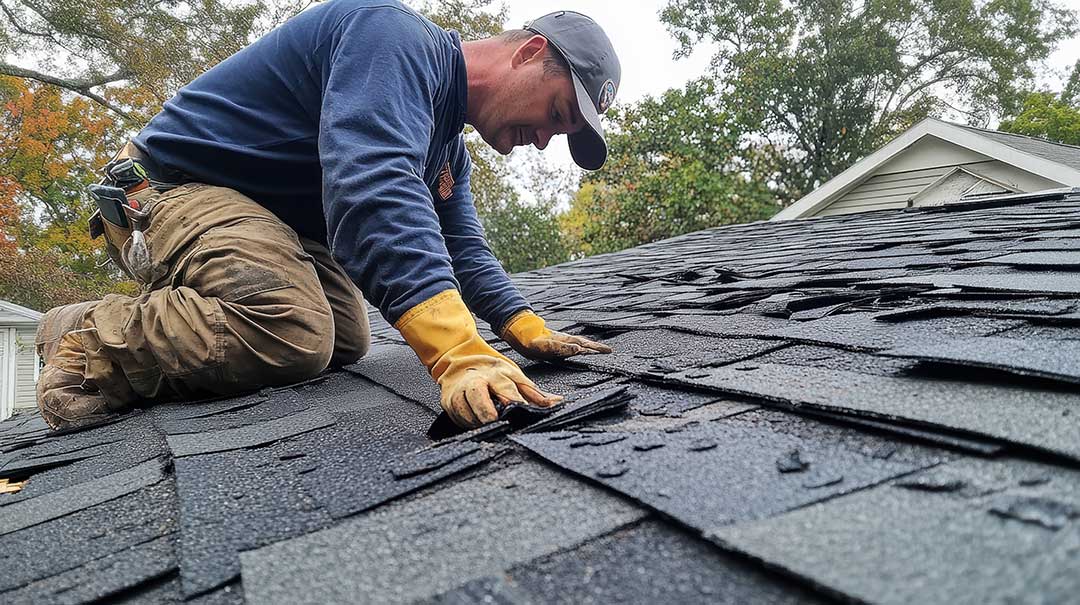
Sun exposure can contribute to leaks, but it usually does so by weakening materials rather than creating an immediate hole. Brittle shingles may crack, flashing seals may deteriorate, and exposed underlayment may lose protection.
The first visible sign may appear inside the building as:
- A water stain on a ceiling
- Peeling paint near an exterior wall
- Damp insulation in an attic
- Musty odors
- Drips around a skylight or chimney
- Water appearing after a specific wind direction or weather event
The location of an interior stain does not always match the location of the roof problem. Water can travel along rafters, roof decking, insulation, or framing before becoming visible indoors.
Which roof areas receive the most sunlight?
The most exposed areas are usually broad, unobstructed roof slopes facing the direction of the strongest daily sun. Ridges, upper roof sections, dormer roofs, and low-slope sections may also receive intense exposure because they have fewer shaded periods.
Roof-mounted equipment, chimneys, and plumbing penetrations can create additional patterns. The material around these features may heat and cool differently from surrounding shingles. Gaps or cracking around flashing can then become more noticeable over time.
A roof inspection should compare multiple slopes rather than judging the entire roof from one visible section. Differences in color, granule loss, curling, and sealant condition can reveal how exposure varies across the structure.
How homeowners can monitor sun-related wear
A visual check from the ground can identify warning signs without requiring anyone to walk on the roof. Look for missing or curled shingles, dark patches, exposed underlayment, sagging areas, and excessive granules near downspouts.
After strong sunlight, high winds, or major temperature changes, it is also useful to check:
- Attic areas for daylight or damp insulation
- Ceilings and upper walls for new stains
- Gutters for unusual granule buildup
- Flashing around chimneys, vents, and skylights
- Roof sections where snow melts much faster than nearby areas
- Tree limbs or debris resting on roofing materials
Roof access can be dangerous, particularly when shingles are steep, wet, icy, or brittle. Conditions involving exposed wiring, unstable surfaces, structural sagging, or active leaks may require qualified assistance for safe evaluation.
Can maintenance reduce damage from sunlight?
Maintenance cannot stop sunlight from aging a roof, but it can prevent small weaknesses from becoming larger failures. Keeping drainage paths clear helps water leave the roof efficiently. Removing leaves and branches reduces moisture retention and abrasion.
Attic ventilation and insulation also influence roof temperatures. Proper airflow can help reduce trapped heat and moisture, while adequate insulation limits heat transfer from the living space into the roof assembly. These systems must work together; adding vents without addressing air leaks may not solve the underlying problem.
Roof coatings, reflective materials, or replacement shingles may be appropriate for some roof designs but are not universal solutions. Compatibility, roof pitch, existing material condition, and local weather exposure all affect whether a treatment is suitable.
For homes in Ithaca, regular observation is especially useful because the roof must handle both strong summer sun and repeated winter freeze-thaw cycles. Comparing the condition of sunny and shaded slopes can provide early clues about how the roofing system is aging.
