
Roof damage does not always happen at a convenient time. During COVID-19, severe storms, power outages, supply shortages, or other emergencies, homeowners in Ithaca, NY may need to balance urgent property protection with health, safety, access, and scheduling concerns.
The right response depends first on the severity of the damage. A small, stable leak may allow time for careful planning, while an actively leaking roof, fallen tree, exposed electrical wiring, or partial collapse requires immediate action.
How should a homeowner decide whether roof damage is an emergency?
A roof problem is an emergency when delaying action could create a serious risk to people or cause rapidly worsening property damage. Active water entry, structural movement, or a large opening should be addressed before less urgent cosmetic concerns.
Prioritize immediate precautions if any of the following are present:
- Water is entering near electrical outlets, light fixtures, wiring, or the electrical panel.
- A ceiling is sagging, bubbling, or showing signs of imminent collapse.
- A tree, branch, or other heavy object has struck the roof.
- Roofing materials have blown away, leaving the roof deck or attic exposed.
- Ice, snow, or debris has created a dangerous load or blocked drainage.
- Wind has damaged flashing, vents, chimneys, or roof edges.
- A leak is spreading into insulation, walls, or occupied rooms.
Move people away from unsafe areas. Do not stand beneath a sagging ceiling, climb onto a damaged roof, or touch wet electrical equipment. If water is near electrical components, shut off power only if it can be done safely without entering standing water.
A stained ceiling from an older, inactive leak may not require the same response as water actively entering the home. Even so, it should be documented and monitored, particularly during rain or thawing conditions.
What can be done before anyone comes to the property?
The safest early steps are usually observation, documentation, and temporary protection from inside the home. Avoid climbing onto the roof during rain, high winds, snow, ice, or poor visibility.
From the ground or a window, look for:
- Missing or displaced shingles
- Torn or loose metal flashing
- Damaged gutters or downspouts
- Sagging roof sections
- Fallen branches
- Water pooling near the foundation
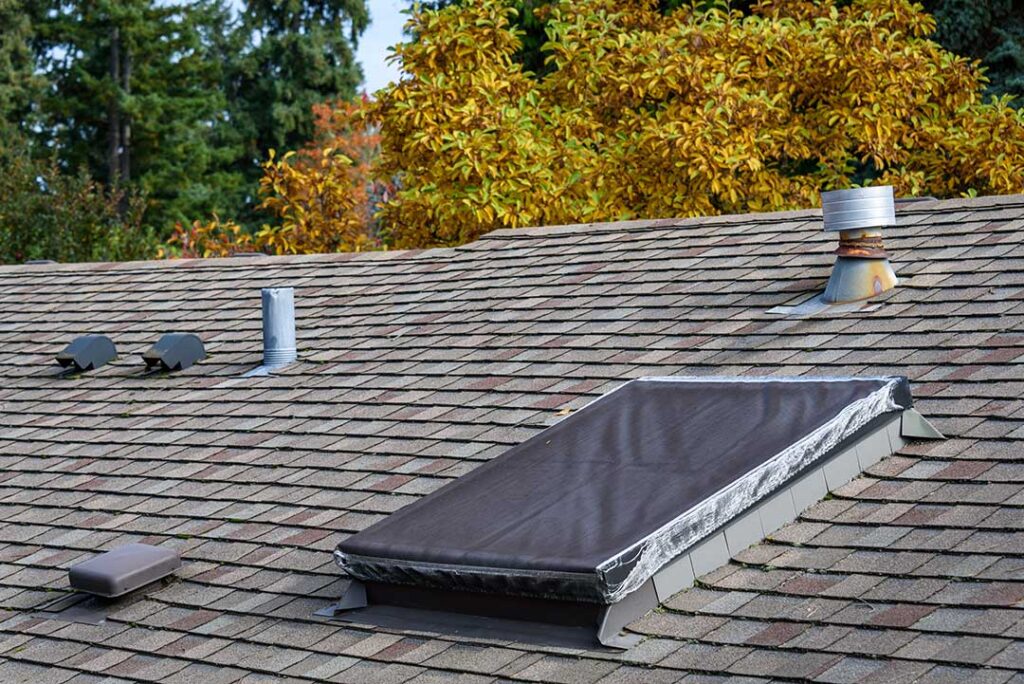
- Openings around vents, skylights, or chimneys
Take photographs and write down when the damage was first noticed. If possible, record whether the leak occurs during rain, snow, wind, or thawing. This information can help determine whether the problem is caused by a roof covering, flashing, drainage issue, ice buildup, or interior plumbing.
Inside, place containers beneath drips and move furniture, electronics, and other valuables away from the affected area. Do not puncture a ceiling bubble unless instructed by someone qualified to assess the situation; disturbing it can release a large amount of water unexpectedly.
Temporary coverings can reduce exposure, but improvised tarps are hazardous in cold or windy weather. A tarp should not be treated as a permanent repair, especially through an Ithaca winter with snow, ice, and repeated freeze-thaw cycles.
How can roof work be handled during COVID-19 or another infectious-disease concern?
Roof repairs can often be organized with limited face-to-face contact, but the plan should account for both the household and the workers. The main goals are to reduce unnecessary indoor access, improve communication, and prevent anyone who is ill from entering the work area.
Before work begins, share practical information such as:
- Whether anyone in the household has respiratory symptoms or a recent exposure
- Whether anyone is medically vulnerable
- Which areas of the property are accessible
- Whether attic or interior access is necessary
- Where workers can park, stage materials, and dispose of debris
- Whether pets or children need to be kept away from the work zone
If someone has respiratory symptoms, the safest approach is to postpone non-emergency indoor work until the person is recovering and no longer likely to expose others. Current respiratory-virus guidance generally emphasizes staying home while symptoms are active and taking added precautions around people at higher risk.
For urgent repairs that cannot wait, keep household members in a separate part of the home whenever possible. Use outdoor communication, phone calls, text messages, or clearly marked entry points to limit unnecessary contact. Opening windows or using exhaust fans can improve airflow when weather and safety conditions allow.
Masks may be appropriate when people must share a small indoor space, particularly during periods of increased respiratory-virus activity. Hand hygiene, covering coughs, and routine cleaning of frequently touched surfaces remain useful, especially when several people handle doors, railings, tools, or payment devices.
What if the roof is damaged during a storm, outage, or supply shortage?
A crisis may affect more than health precautions. Severe weather can lead to limited availability of materials, delayed inspections, blocked roads, and temporary shortages of tarps or replacement components.
Protect the building from additional damage without creating a second hazard. Do not remove large branches, walk on icy roofing, or climb ladders during strong winds. If a tree is resting on the roof or utility lines are involved, keep away from the area until it is confirmed safe.
Temporary measures may include:
- Placing containers under interior leaks
- Moving belongings away from water
- Clearing only safe, ground-level drainage areas
- Covering exposed belongings indoors with plastic sheeting
- Photographing damage before cleanup
- Keeping receipts for emergency materials and related work

Do not seal a wet attic or wall cavity so tightly that moisture cannot escape. Trapped moisture can contribute to mold growth and deterioration of wood components. Wet insulation may also need separate evaluation, particularly if it remains damp for an extended period.
After a storm, roof damage may be hidden beneath snow or viewed from an unsafe angle. A roof that appears intact from the ground can still have damaged flashing, lifted shingles, punctures, or compromised decking.
Are roof repairs allowed during an emergency?
Whether work requires a permit, inspection, or special approval depends on the type and scope of the repair. Emergency steps that prevent immediate water damage may be treated differently from structural alterations, reroofing, or work that changes the roof system.
Before beginning significant work, check the current requirements for the property. This is especially relevant when replacing roof sheathing, modifying structural framing, changing roof openings, or working on a building with special zoning or historic restrictions.
Insurance documentation can also affect the process. Photograph damage before covering it when possible, save written descriptions of what occurred, and keep records of temporary materials and emergency expenses. Do not delay a necessary safety measure solely to obtain a perfect set of photographs.
Which roof repairs can wait?
Cosmetic issues and minor wear can sometimes wait if the roof is dry, stable, and not exposed to worsening weather. Examples may include a few missing surface granules, faded shingles, or a small area of non-leaking damage that has been securely protected.
Repairs should not be postponed when there is:
- Repeated or expanding water entry
- Wet insulation or visible interior mold
- Exposed roof decking
- Damaged structural framing
- Widespread shingle loss
- A blocked or failing drainage path
- Water near electrical systems
- Damage likely to worsen with snow, ice, rain, or wind
In the local climate, a minor opening can become more serious after several freeze-thaw cycles. Water may enter beneath roofing materials, freeze, expand, and loosen surrounding components. Early documentation and temporary protection can help prevent a manageable repair from becoming a larger interior or structural problem.
How can households prepare before the next crisis?
A basic roof-emergency plan reduces confusion when roads, supplies, or communication systems are disrupted. Keep photographs of the roof and attic in a secure location, along with insurance information and records of prior repairs.
It is also useful to know:
- Where the main electrical shutoff is located
- How to identify active water entry
- Which ceilings or attic areas are unsafe to enter
- Where emergency containers, plastic sheeting, and flashlights are stored
- How to protect pets and children from falling debris
- Which repairs require immediate action and which can be monitored
The most important principle is simple: protect people first, limit interior exposure, document conditions, and prevent temporary measures from being mistaken for permanent repairs.
