
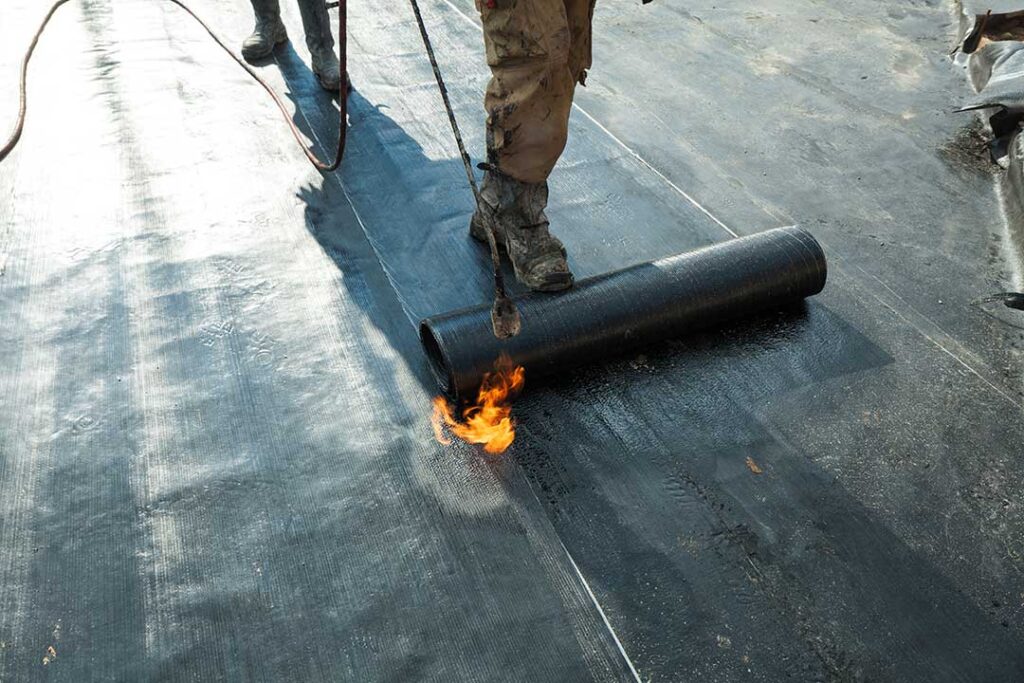
A roof’s fire rating describes how its covering and supporting materials perform when exposed to fire from outside the building. For homeowners in Ithaca, NY, the rating can affect code compliance, roof replacement decisions, insurance documentation, and the way a roof responds to embers, radiant heat, or nearby flames.
A fire-rated roof is not fireproof. It is a roof assembly tested under specific conditions and assigned a classification based on how well it resists ignition, flame spread, and fire penetration.
What do Class A, Class B, and Class C mean?
Class A provides the highest level of roof-covering fire performance recognized in the standard classification system. Class B provides moderate protection, while Class C provides limited protection.
The classifications generally reflect how a roof assembly responds to an external fire exposure:
- Class A: The strongest resistance to flame spread, fire penetration, and the passage of burning material.
- Class B: Moderate resistance to those same conditions.
- Class C: Basic resistance, but less protection than Class A or Class B.
Testing commonly evaluates the complete roof assembly rather than an isolated shingle or panel. That assembly may include the roof covering, underlayment, roof deck, insulation, and other layers. A product that appears fire-resistant by itself may not provide the same rating when installed over a different deck or with different underlying materials.
For many homes, a Class A assembly is preferred because it offers the greatest protection from exterior fire exposure. It is also frequently associated with common asphalt shingle systems, certain metal roofs, slate, clay tile, and concrete tile, provided the complete installation has the required listing.
Is a roof fire rating the same as a one-hour fire rating?
No. These terms describe different forms of fire protection.
A roof-covering classification—such as Class A—primarily addresses exposure to fire from outside the roof. It considers conditions such as flame spread across the surface, burning brands landing on the roof, and fire penetrating into the building.
A fire-resistance rating, such as one hour, generally describes how long a wall, floor, ceiling, or structural assembly can withstand fire under a standardized test. That rating may involve structural stability, heat transmission, and flame passage.
A Class A roof does not automatically mean the entire roof structure will remain intact for one hour in a building fire. It also does not guarantee protection from a fire that begins inside the attic, around a chimney, or near electrical equipment.
Why does the roof assembly matter?
The roof covering is only one part of the system. Its fire performance can be affected by the roof deck, underlayment, ventilation openings, insulation, fasteners, penetrations, and installation method.
For example, a roof covering may have one classification when installed over a particular deck and another classification when installed over a different substrate. Adding a new layer over an old roof can also change the assembly’s tested performance, especially if the existing roof has unknown materials or multiple layers.
Installation details matter as well. Gaps around vents, skylights, chimneys, and roof edges can provide pathways for fire or embers. Improperly installed flashing may create moisture problems that weaken roof components over time, even though flashing itself is not the same as a fire rating.
The most reliable way to verify a rating is to check the product label, installation instructions, or assembly listing. The classification applies to the tested configuration, not simply to a material name.
Which roofing materials are commonly associated with higher fire ratings?
Several roofing materials can be used in Class A assemblies, but no material should be judged by appearance alone.
Common examples include:
- Asphalt shingles that are specifically tested and labeled as part of a Class A assembly
- Metal panels and metal shingles installed over an approved roof system
- Slate installed with the required underlayment and supporting construction
- Clay or concrete tile installed as part of a listed assembly
- Certain built-up, modified-bitumen, and single-ply membrane systems used on low-slope roofs
Wood shingles and shakes require special attention. Some are treated and tested for improved fire performance, but untreated wood roofing should not be assumed to meet a higher classification. The classification depends on the exact product and installation details.
Solar panels also require consideration. A roof-mounted photovoltaic system has its own fire-classification requirements, and the panel layout, mounting system, and roof covering may need to work together as a tested or approved configuration.
What does this mean for homes in Ithaca?
The local climate makes roof condition relevant to fire performance, even though heavy snow, ice, and rain are not the same as fire hazards. Repeated freeze-thaw cycles, moisture intrusion, wind, and aging can damage shingles, underlayment, decking, and flashing. A roof that was originally tested as an assembly may no longer perform as intended if its deck has deteriorated or if openings have developed around penetrations.
Older housing can also contain several generations of roofing materials. A roof may have been covered, repaired, or partially replaced over the years, making its current classification difficult to determine without examining the actual layers.
Dense neighborhoods and homes built close to property lines can make exterior fire exposure more significant. Under residential code provisions, roof assembly requirements may be affected by the distance between the roof edge and a lot line, along with other building characteristics and local requirements.
As of December 31, 2025, the updated New York State building and residential codes apply in Ithaca. Requirements can differ depending on whether work involves a repair, reroofing project, roof replacement, addition, solar installation, or new construction.
Does a Class A roof protect against chimney or electrical fires?
Not completely. Class A testing focuses primarily on external fire exposure. Fires that start inside a building can involve attic wiring, recessed lighting, chimney components, heating equipment, or combustible storage.
A roof may also be exposed to fire from a nearby structure, burning vegetation, or airborne embers. Class A construction improves resistance to some of these conditions, but it does not eliminate the need for safe chimney clearances, proper electrical work, maintained smoke alarms, and careful storage practices.
Roof penetrations deserve particular attention. Chimneys, plumbing vents, exhaust fans, skylights, and electrical service components can create vulnerable points if they are damaged, poorly sealed, or surrounded by combustible materials.
How can a homeowner verify a roof’s fire rating?
Start with the roof paperwork if it is available. Product packaging, invoices, permits, inspection records, and manufacturer installation documents may identify the assembly classification.
Useful questions include:
- Is the rating for the complete roof assembly or only one material?
- What type of roof deck was used in the test?
- Does the rating depend on a specific underlayment?
- Are multiple roof layers allowed under the listed assembly?
- Does a solar installation change the approved configuration?
- Is the current roof covering damaged, deteriorated, or altered?
If records are unavailable, the visible roof covering alone may not provide a dependable answer. The classification can require inspection of the materials beneath the surface and comparison with current code requirements.
Fire rating is only one part of roof safety. Water resistance, structural condition, ventilation, snow loads, chimney clearances, electrical components, and proper drainage also affect how a roof performs over its service life.
