
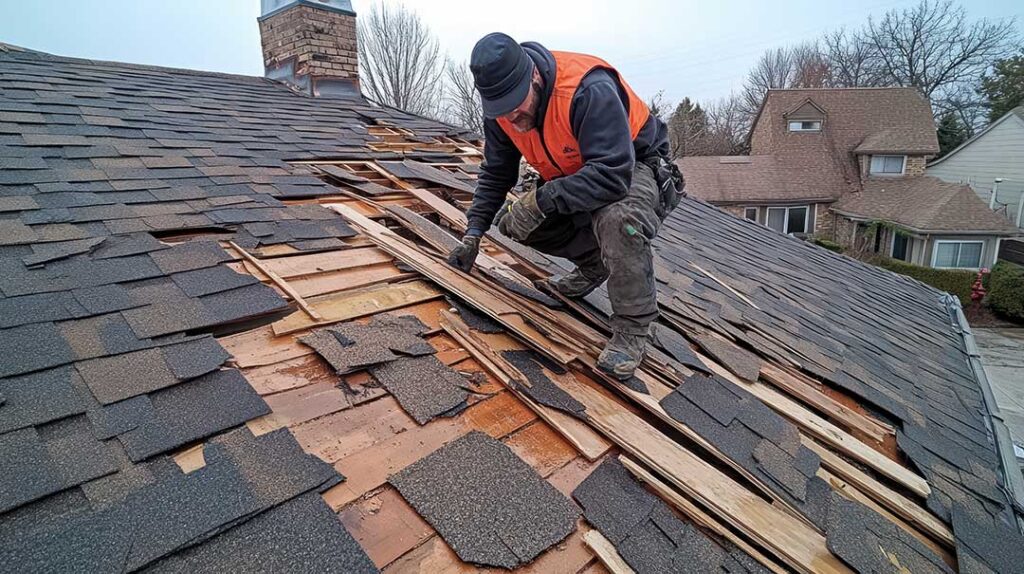
Hail damage is not always obvious from the ground. A roof may look intact after a storm while shingles, metal components, flashing, vents, or gutters have suffered impacts that shorten the roof’s service life or allow water to enter later.
For residents of Ithaca, NY, the risk can be easy to overlook because hail often occurs during thunderstorms that also bring heavy rain and strong wind. The most reliable approach is to inspect from the ground first, look for consistent patterns, and treat roof access as a safety issue.
What does hail damage look like on asphalt shingles?
Hail damage on asphalt shingles often appears as small, irregular dents where the protective granules have been knocked away. The damaged areas may look darker than the surrounding shingle, exposing the underlying asphalt or fiberglass mat.
Common signs include:
- Circular or slightly irregular impact marks
- Missing granules collected in gutters or downspouts
- Bruised areas that feel soft or spongy
- Cracked, split, or loosened shingles
- Shingles with exposed dark spots
- Small areas where the surface coating has been scraped away
A hail mark does not always look like a perfect circle. Hailstones strike at different angles, and the roof surface may already have weathering, moss, dirt, or previous repairs that make the pattern less distinct.
The most meaningful clue is often repetition. If similar marks appear across several roof slopes, the damage is more likely to be storm-related than the result of a single falling branch or isolated defect.
How can hail damage be checked from the ground?
A ground-level inspection can identify warning signs without putting someone on a slippery roof. Use binoculars if available and examine the roof from multiple sides of the property.
Look for:
- Shingles that are missing, lifted, or visibly cracked
- Uneven patches or rows that no longer lie flat
- Bright or dark spots that differ from surrounding shingles
- Damaged ridge caps along the roof peak
- Dents in metal vents, flashing, chimney caps, or fascia
- Bent or dented gutters and downspouts
- Broken screens, window trim, siding, or exterior fixtures
- Fresh debris around the foundation or on decks and porches
Check areas that face different directions. Storm winds can push hail across a property, but one roof slope may show more impact than another. Nearby vehicles, outdoor furniture, skylights, and painted surfaces can also provide clues that hail occurred.
Do not rely only on visible holes. A shingle can lose protective granules and suffer compression damage without being punctured.
What does hail damage look like on metal roofing?
Metal roofing usually shows dents, dimples, or shallow depressions after a hailstorm. The effect may be cosmetic, or it may damage the coating and expose the metal to corrosion.
Pay particular attention to:
- Dents near roof edges and exposed sections
- Chipped or fractured paint
- Scratches that reveal bare metal
- Bent flashing around chimneys, walls, vents, and valleys
- Distorted seams or fasteners
- Dents in metal gutters and downspouts
A dent by itself does not always mean the roof has lost its ability to shed water. The location matters. Damage near seams, penetrations, fasteners, or flashing deserves closer attention because those areas help keep water out of the building.
Can hail damage cause a roof leak later?
Yes. Hail damage can lead to leakage immediately, but delayed leaks are also common. A storm may loosen a shingle, fracture a seal, or damage flashing without creating an opening large enough to notice during the first rainfall.
Inside the home, watch for:
- Brown or yellow ceiling stains
- Damp attic insulation
- Water marks on rafters or roof decking
- Peeling paint near ceilings
- Musty odors after rain
- Drips around light fixtures or attic access points
- Damp walls near upper-floor windows or exterior corners
Water does not always appear directly below the damaged area. It can travel along roof decking, framing, insulation, or electrical pathways before becoming visible indoors.
If water is near electrical fixtures, avoid touching the fixture or wet surfaces. Shut off power to the affected area only if it can be done safely, and treat active water entry as an urgent household safety problem.
How is hail damage different from normal roof aging?
Normal aging usually affects broad areas gradually. Hail damage is more often scattered, concentrated, and impact-related.
Aged shingles may become brittle, curl at the edges, lose granules evenly, or show widespread discoloration. Hail damage tends to produce localized bruises, fresh-looking bare spots, cracks, or dents that correspond with a particular storm.
Wind damage is another common source of confusion. Wind often lifts, creases, or tears shingles along edges and seams. Hail more commonly produces impact marks on the shingle surface and dents in exposed metal.
Roofs in the area may also experience weathering from repeated freeze-thaw cycles, ice, snow, shade, and moisture. Those conditions can make old damage harder to distinguish from recent storm damage. Comparing current photographs with older maintenance records can help establish what changed.
Should a homeowner climb onto the roof to look for damage?
Not necessarily. A roof can be dangerous even when it appears dry, especially after rain, when granules make shingles slippery, or when steep slopes, moss, ice, and loose materials are present.
A safer inspection usually begins with:
- Photographs from the ground
- Binocular observations
- Examination of gutters and downspouts
- Inspection of the attic from the interior
- Documentation of the storm date and visible debris
Roof access should be left to someone equipped and experienced to work safely at height. Avoid walking on visibly damaged, wet, steep, or unstable roofing. Solar panels, skylights, and older roof sections require additional caution.
What should be documented after a hailstorm?
Take clear photographs of the roof from the ground, exterior metal components, siding, windows, vehicles, fallen branches, and any interior water stains. Record the date of the storm and when each symptom was first noticed.
Keep damaged materials or debris only if they can be stored safely. Do not disturb areas that could pose a structural or electrical hazard.
Homeowners insurance policies commonly address sudden damage from covered events such as hail, but coverage depends on the policy, deductible, roof age, exclusions, and the condition of the roof before the storm. Maintenance-related deterioration is treated differently from sudden storm damage. Reading the policy’s wind and hail provisions before a problem occurs can clarify what documentation may be needed.
When does hail damage require prompt attention?
Prompt attention is warranted when shingles are missing, water is entering, flashing is displaced, a roof edge is exposed, or large dents and cracks are visible. Temporary measures may reduce additional water entry, but tarps, ladders, and wet roofing can create serious hazards if handled improperly.
A roof inspection is especially appropriate when damage cannot be safely evaluated from the ground, when interior moisture is present, or when the roof has multiple layers, steep sections, or signs of structural weakness. Early documentation and careful observation can help distinguish fresh storm damage from long-term wear and prevent a small opening from becoming a larger moisture problem.
