
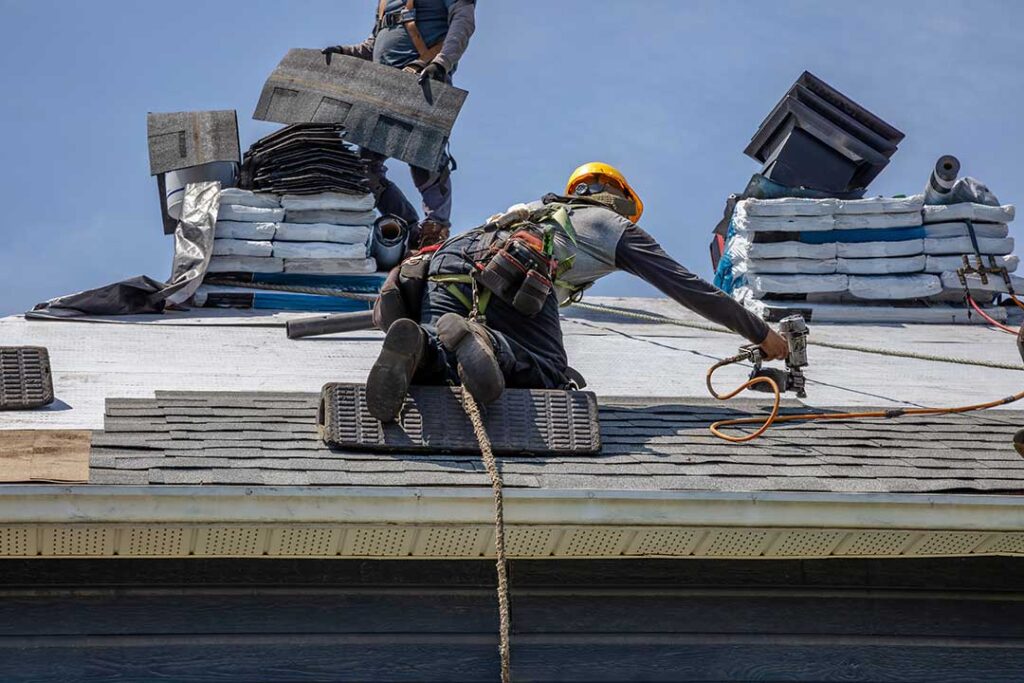
A roof’s color does not tell the whole story about how hot it will become in sunlight. Cool roof ratings provide a more useful way to compare roofing materials by measuring how much solar energy a surface reflects and how efficiently it releases absorbed heat.
For homeowners in Ithaca, NY, these ratings can help clarify whether a roofing material may reduce summer heat gain, how much the roof’s color actually matters, and whether a highly reflective roof makes sense in a climate with long heating seasons.
What is a cool roof?
A cool roof is designed to remain cooler in direct sunlight than a conventional roof with similar construction. It does this through two surface properties:
- Solar reflectance: The percentage of sunlight reflected away from the roof.
- Thermal emittance: The ability of the roof surface to release absorbed heat as infrared radiation.
Both properties are generally expressed on a scale from 0 to 1. Higher values usually indicate a roof surface that stays cooler under sunny conditions.
A dark roof with low reflectance absorbs more sunlight. A light or specially formulated roof reflects more solar energy. However, reflectance alone is not enough. Two roofs with similar reflectance can have different surface temperatures if one releases heat more effectively.
What do solar reflectance and thermal emittance mean?
Solar reflectance measures how much incoming sunlight bounces away from the roof. A reflectance of 0.80 means the surface reflects approximately 80 percent of the solar energy measured under the rating method.
Thermal emittance measures how effectively the surface radiates heat away after absorbing solar energy. A surface with high emittance can release heat more efficiently than a surface with low emittance.
This is why a bare, shiny metal roof and a light-colored coated roof should not automatically be considered equivalent. The metal may reflect a significant amount of sunlight but release absorbed heat differently. The complete rating gives a better picture than appearance alone.
What is the Solar Reflectance Index?
The Solar Reflectance Index, commonly called SRI, combines solar reflectance and thermal emittance into one comparative number. A higher SRI generally means the roof will remain cooler in sunlight.
SRI is useful because it accounts for the interaction between the two surface properties. A roof with moderate reflectance and high emittance may achieve a stronger SRI than a roof with high reflectance but poor heat release.
SRI should not be treated as a prediction of indoor temperature or annual energy savings. Roof temperature also depends on:
- Roof pitch and orientation
- Attic insulation
- Roof ventilation
- Air leakage between the living space and attic
- Tree shade and nearby buildings
- Roof condition, dust, algae, and weathering
- Window area and wall insulation
- Heating and cooling equipment
The rating describes the roof surface, not the entire building envelope.
Does a lighter roof always qualify as a cool roof?
No. Light colors often reflect more sunlight than dark colors, but color alone is not a certification. Some dark roofing products use reflective pigments that reduce absorption of invisible near-infrared light. Some bright-looking surfaces may lose performance as they age or become covered with dirt.
A product’s tested rating is more dependable than a color chart. Look for documented values for initial and aged solar reflectance, thermal emittance, or SRI. Aged ratings matter because roofing surfaces can weather, collect particles, and change appearance over time.
Roof ratings may also differ according to whether the material is intended for a low-slope or steep-slope roof. A rating appropriate for a commercial membrane roof should not automatically be applied to asphalt shingles or another steep-slope product.
Do cool roofs reduce heating costs in Ithaca?
Not necessarily. A cooler roof may reduce heat entering a building during sunny summer weather, but the same reflectance can reduce passive solar heat gain during the heating season.
That tradeoff matters in Ithaca, where homes commonly experience cold winters, freezing temperatures, snow, and a relatively short cooling season compared with warmer regions. For many households, attic insulation and air sealing have a more consistent effect on year-round comfort and energy use than changing from one roof color to another.
A cool roof may still be useful, particularly on:
- Homes with poorly shaded upper floors that become uncomfortable in summer
- Buildings with low-slope roofs and large exposed roof areas
- Dwellings with limited attic insulation
- Additions, garages, or porches that overheat beneath dark roofing
- Structures where summer cooling demand is a significant concern
The potential benefit depends on the whole roof assembly. A highly reflective surface cannot correct major heat loss through an underinsulated attic or air leakage around light fixtures, chimneys, plumbing penetrations, and attic access panels.
How do roof ratings differ from insulation ratings?
Cool roof ratings describe how the exterior surface responds to sunlight. Insulation ratings describe how strongly the building resists heat flow through the roof or attic assembly.
These are separate issues:
- Reflectance and emittance affect roof surface temperature.
- Insulation slows heat transfer between the attic and living space.
- Ventilation helps manage moisture and heat in the attic when properly designed.
- Air sealing limits uncontrolled movement of heated or cooled air.
A roof can have excellent reflective properties but still allow substantial indoor heat gain if insulation is inadequate. Conversely, a well-insulated attic may keep indoor temperatures stable even beneath a conventional dark roof.
Can snow, dirt, or algae change a roof’s performance?
Yes. Ratings are based on tested surfaces, but field conditions change over time. Dust, pollen, soot, algae, moss, and biological growth can reduce reflectance. Snow has a different effect: a clean snow cover is highly reflective, but it can also add weight and create moisture or ice-dam concerns depending on roof design and weather conditions.
In this region, roof performance should be considered alongside snow shedding, flashing, drainage, ice-dam prevention, and the condition of the roof deck. A reflective material is not automatically better if it is poorly suited to the roof’s pitch, drainage pattern, or installation details.
What should homeowners look for on a product label?
A useful comparison should include more than the color name. Check for:
- Solar reflectance, both initial and aged when available
- Thermal emittance
- Solar Reflectance Index
- The roofing material and application type
- Whether the rating applies to low-slope or steep-slope construction
- Warranty conditions related to coatings, cleaning, or maintenance
- Compatibility with the existing roof assembly
If a product lists only a general phrase such as “energy efficient” or “cool color,” that phrase does not provide enough information for a meaningful comparison.
Is a cool roof the right choice for every home?
No. The best choice depends on the building’s exposure, insulation, roof design, heating and cooling patterns, appearance requirements, and expected service life.
For an Ithaca home, the most practical evaluation usually starts with the attic and roof assembly rather than the surface color. If the upper floor is hot in summer, inspect insulation levels, air leakage, ventilation, shading, and duct locations before assuming the roofing material is the main cause.
Cool roof ratings are most useful as one part of a broader decision. They help explain how a roof behaves in sunlight, but they do not replace careful attention to moisture control, winter weather, roof durability, and the performance of the entire home.
