

How does sun exposure affect a roof?
Sunlight gradually changes roofing materials through heat, ultraviolet radiation, and repeated expansion and contraction. Over time, these effects can make shingles brittle, fade their color, weaken protective coatings, and shorten the useful life of some roof components.
For households in Ithaca, NY, sun exposure is only one part of the picture. Roofs also face snow, ice, wind, freezing temperatures, moisture, and rapid seasonal changes. A roof on a sunny south- or west-facing slope may age differently from a shaded slope, even when both were installed at the same time.
The effects are usually slow rather than sudden. A roof may continue keeping water out while its surface is already showing early signs of aging.
Why do sunny roof slopes age faster?
The sun reaches different parts of a roof with different intensity and duration. In the Northern Hemisphere, south-facing roof slopes generally receive the most direct sunlight during the year. West-facing slopes can also receive strong afternoon sun, when outdoor temperatures and roof-surface temperatures are often higher.
A sunny slope may experience:
- More ultraviolet exposure
- Higher surface temperatures
- Greater daily temperature swings
- Faster drying after rain or snow
- More noticeable fading and surface wear
North-facing slopes often remain cooler and shadier, especially where nearby trees or taller structures block sunlight. That can reduce direct ultraviolet damage, but shade may create other concerns. Slow drying can encourage moss or algae growth, and damp materials may remain vulnerable to freezing and thawing.
A roof’s direction does not determine its condition by itself. Ventilation, roof pitch, tree cover, insulation, material quality, and past maintenance all influence the result.
What does ultraviolet radiation do to shingles?
Ultraviolet radiation gradually breaks down the chemical bonds in many roofing materials. On asphalt shingles, this can contribute to the loss of flexibility in the asphalt coating and deterioration of exposed surfaces.
Common signs include:
- Granules collecting in gutters or downspouts
- Bare or thin-looking areas on shingle surfaces
- Cracking, splitting, or curling
- Faded or uneven color
- Exposed fiberglass matting
- Shingles that feel unusually brittle
Granules provide more than color. They help shield the asphalt coating from sunlight and add some resistance to weathering. When granules are missing, the underlying material is more directly exposed to ultraviolet radiation and moisture.
Some granule loss is normal after installation and during ordinary aging. A concentrated amount of granules near a downspout, however, may indicate surface deterioration or damage that deserves closer attention.
Can heat damage a roof even without visible leaks?
Yes. Heat can accelerate aging before water enters the building. A roof surface can become much hotter than the surrounding outdoor air, especially under strong afternoon sun. Repeated heating and cooling cause roofing materials to expand and contract.
That movement can affect:
- Shingles and their adhesive strips
- Flashing around chimneys, vents, and roof edges
- Sealants
- Membranes on low-slope sections
- Fasteners and attachment points
- Wood components beneath the roof covering
Thermal movement is not automatically a defect. Roofing systems are designed to tolerate a certain amount of movement. Problems become more likely when materials are already old, poorly ventilated, incorrectly installed, or exposed to unusual temperature changes.
In cold climates, the seasonal cycle can be especially demanding. A roof may heat in bright winter sunlight while air temperatures remain below freezing. Snow can melt on warmer sections, then refreeze at colder edges, contributing to ice formation and moisture stress.
Does shade protect a roof?
Shade reduces direct sunlight, but it is not always beneficial overall. A roof under tree cover may receive less ultraviolet exposure and stay cooler. At the same time, branches, leaves, and needles can trap moisture, block drainage, and scrape against shingles in windy weather.
Persistent shade can also slow the drying of moss and algae. Moss is more common on damp, shaded roof areas, especially where organic debris accumulates. Its roots or holdfasts can disturb shingle surfaces, while thick growth can lift edges and interfere with drainage.
Trees near a home should be evaluated for both shade and physical contact. Limbs that touch or overhang the roof can deposit debris and create abrasion. Pruning decisions should account for utility lines, property boundaries, and safety conditions.
How can sun exposure affect different roofing materials?
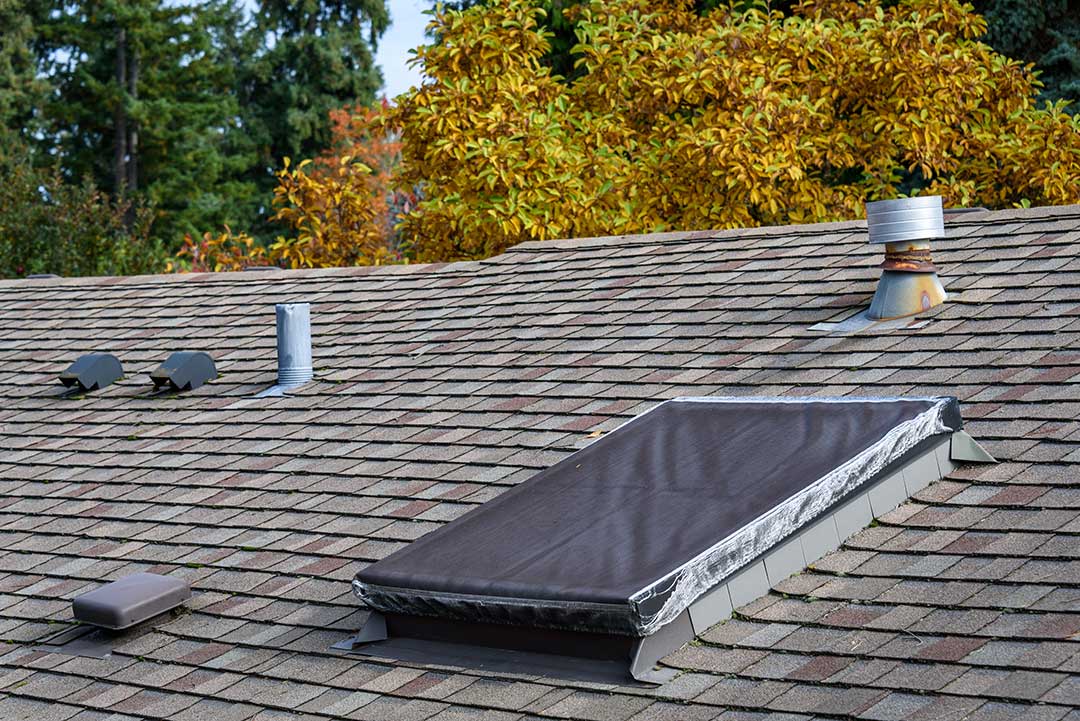
Roofing materials respond differently to sunlight.
Asphalt shingles may lose flexibility, shed granules, fade, crack, or curl as they age. Darker colors generally absorb more solar heat, although color alone does not determine durability.
Wood shingles and shakes can dry, split, and weather unevenly. Sun-exposed portions may become brittle while shaded areas retain more moisture, producing different aging patterns across the same roof.
Metal roofing can experience coating fade and thermal expansion. Quality finishes are designed to resist weathering, but scratches, exposed fasteners, and poorly detailed seams can create localized problems.
Single-ply membranes and other low-slope materials may be affected by ultraviolet exposure, temperature changes, and ponding water. Seams, penetrations, and edge details often need closer observation than the broad surface.
Slate and tile are generally resistant to ultraviolet damage, but individual pieces can still crack, loosen, or break from impact, freeze-thaw conditions, or movement in the supporting structure.
The roof covering is only one layer. Underlayment, flashing, ventilation, insulation, and the roof deck also influence how well the system handles heat and moisture.
What should local residents look for during a roof check?
A visual check from the ground can reveal useful information without requiring anyone to climb onto the roof. Look for uneven color, missing or lifted shingles, excessive granules near downspouts, sagging areas, damaged flashing, and branches resting on the roof.
Inside the attic, warning signs may include:
- Damp insulation
- Water stains on sheathing
- Musty odors
- Daylight visible through the roof deck
- Rust around fasteners or metal components
- Excessive heat or poor air movement
Not every stain means the current roof is leaking, and not every roof problem is caused by sunlight. Water can travel along the underside of the roof deck before appearing indoors. An inspection is especially appropriate when roof access would involve steep slopes, icy surfaces, loose materials, or other hazards.
Can ventilation reduce sun-related roof damage?
Proper ventilation can help moderate attic temperatures and remove moisture, but it does not make the roof surface cool or stop ultraviolet aging. Its main role is to support a balanced movement of air through the attic while reducing heat and moisture buildup below the roof covering.
Ventilation works best when paired with adequate insulation and properly sealed air pathways. Adding a vent without considering intake airflow can produce little improvement. Blocked soffit vents, compressed insulation, or poorly placed exhaust vents can also limit performance.
During roof repairs or replacement, ventilation should be evaluated as part of the complete roofing system rather than treated as an isolated feature.
When does sun exposure become a repair concern?
Sun exposure becomes more concerning when several signs occur together: brittle or curling shingles, widespread granule loss, exposed underlayment, open seams, recurring leaks, or flashing that has separated from the roof surface.
A single faded area may be cosmetic. Widespread surface deterioration suggests that the roof’s protective layer is declining. If damage is limited to one slope, the cause may involve orientation, shade patterns, nearby trees, or a localized installation issue.
Keeping records of roof age, repairs, leaks, and visible changes can help distinguish normal weathering from a developing problem. Seasonal checks are useful in this region, particularly after winter and after periods of strong wind, heavy rain, or prolonged heat.
