

Roof flashing is the thin, water-resistant material installed around roof joints, edges, and openings to direct water away from vulnerable areas. It matters because most roof leaks begin where different surfaces meet, rather than in the middle of an otherwise intact shingle field.
In Ithaca, NY, flashing has to perform through rain, snow, freeze-thaw cycles, wind, and repeated seasonal expansion and contraction. Even a small failure can allow water to reach roof decking, insulation, walls, ceilings, or framing.
What is roof flashing?
Roof flashing is a barrier placed at transitions and penetrations in a roofing system. It is commonly made from metal, but some applications use specialized membranes or other water-resistant materials.
Flashing does not usually stop water by creating a completely sealed surface. Instead, it works through overlapping layers and carefully directed drainage. Water should move over the flashing and away from the building, not behind it.
Typical flashing materials include:
- Aluminum
- Galvanized steel
- Stainless steel
- Copper
- Flexible membrane materials
- Preformed components designed for specific roof openings
The right material depends on the roof design, surrounding materials, exposure, and compatibility with other metals. Mixing incompatible metals can contribute to corrosion over time.
Where is flashing installed?
Flashing is needed anywhere water could collect, change direction, or enter through an opening. Common locations include:
Chimneys
Chimney flashing usually includes several parts. Base flashing meets the roof surface, while counterflashing is built into or attached to the chimney masonry. Together, these layers help prevent water from running behind the flashing.
A chimney may also need step flashing along its sides and special flashing at the upper, downslope portion where water naturally gathers.
Roof valleys
A valley is where two roof slopes meet. It carries a concentrated flow of water, snowmelt, and debris. Valley flashing may be visible or installed beneath the roofing material, depending on the roof design.
Because valleys handle more runoff than many other roof areas, poor installation or accumulated debris can create leaks even when the shingles appear to be in good condition.
Plumbing vents
Plumbing vent pipes pass through the roof and require a flashing boot or similar assembly. The flashing must fit around the pipe while remaining integrated with the surrounding roofing.
Rubber components can become brittle with age, while metal areas may corrode or separate from the roof surface.
Roof edges
Drip edge flashing is installed along eaves and sometimes along sloped rake edges. It helps direct water into gutters or away from the roof edge while protecting the underlying wood from moisture.
A damaged or missing drip edge can contribute to wet fascia boards, deteriorated roof decking, and water intrusion near the edge of the building.
Skylights, dormers, and walls
Any skylight, dormer, roof-to-wall intersection, or raised roof feature needs carefully layered flashing. These areas are especially vulnerable because water can move sideways, collect behind obstacles, or enter through small gaps.
Step flashing is often used where a sloped roof meets a vertical wall. Each section overlaps the next so water continues downward rather than entering the wall assembly.
Why does flashing matter so much?
Flashing protects the areas where roofing materials cannot provide a continuous, uninterrupted surface. Shingles or other roof coverings shed most water, but they must be interrupted around chimneys, vents, walls, valleys, and edges.
A flashing problem can cause:
- Water stains on ceilings or upper walls
- Damp insulation
- Rotting roof decking or framing
- Peeling paint or damaged plaster
- Mold growth in persistently damp areas
- Rusted fasteners or corroded metal
- Ice-dam-related leakage near roof edges
- Damage that remains hidden until it becomes extensive
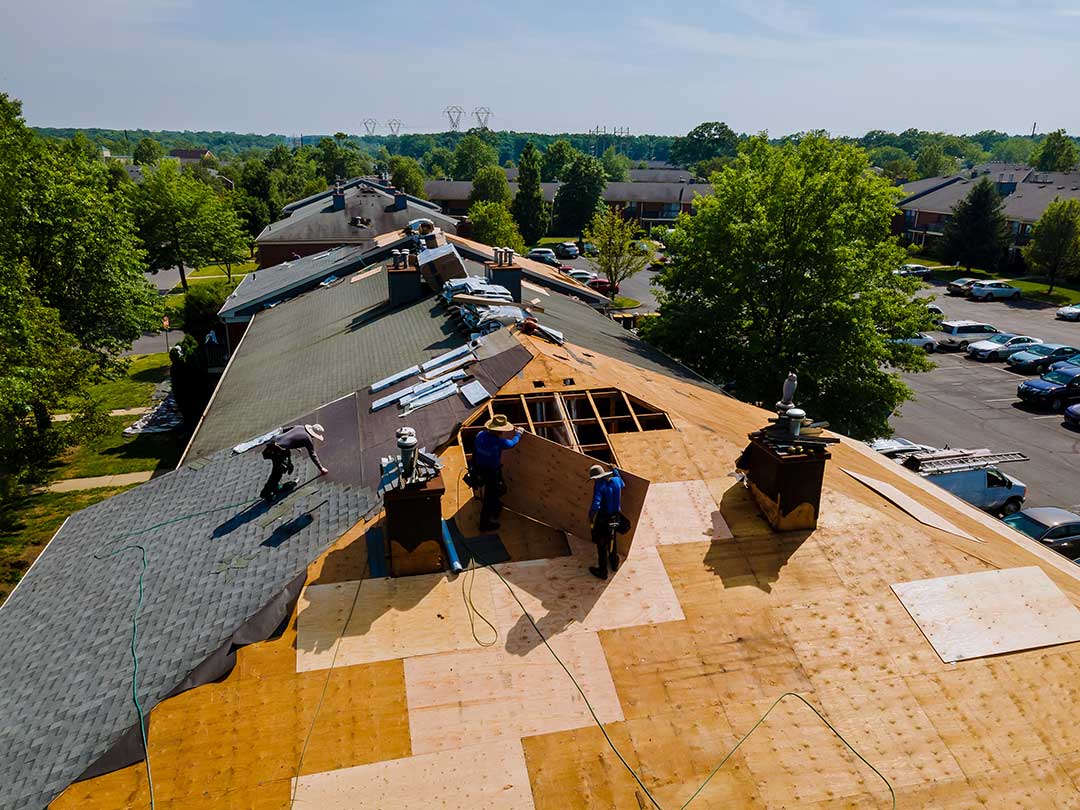
A roof may look acceptable from the ground while flashing is already failing beneath or beside the visible covering. Leaks can also travel along rafters, sheathing, and interior wall cavities, so the location of an indoor stain is not always directly below the entry point.
How do snow and freeze-thaw cycles affect flashing?
Cold-weather conditions place repeated stress on roof flashing. Snow can remain around chimneys, valleys, vents, and roof-to-wall transitions. When temperatures rise, melting snow may move beneath debris or refreeze at colder edges.
Freeze-thaw cycling can widen small openings, loosen fasteners, and stress sealants. Sealant may help as part of an installation, but it is not a substitute for properly layered flashing. A bead of caulk can deteriorate while the underlying drainage problem remains.
Ice dams are also relevant to flashing performance. An ice dam forms when melting snow refreezes near a colder roof edge. Water may back up beneath roofing materials and reach areas that normally stay dry. Good attic insulation, air sealing, ventilation, and properly installed edge details all influence how a roof handles winter moisture.
What are common signs of flashing failure?
Some warning signs are visible outside, while others appear indoors. Residents may notice:
- Loose, bent, lifted, or rusted metal around roof features
- Cracked or missing sections of sealant
- Shingles that are raised near a chimney, wall, or vent
- Water marks that appear after rain or snowmelt
- Dampness around attic penetrations
- Peeling paint near upper walls or ceilings
- Sagging areas in the roof or interior ceiling
- Granules or pieces of roofing material collecting below a flashing area
A musty smell or unexplained dampness in an attic can also indicate a roof leak, although condensation and ventilation problems can produce similar symptoms.
Can roof flashing be repaired?
Sometimes a localized repair is sufficient, particularly when the flashing is accessible, the surrounding roofing is sound, and the problem is limited to a loose edge, damaged fastener, or small deteriorated section.
Replacement may be more appropriate when flashing is badly corroded, incorrectly layered, embedded in failing masonry, or installed beneath roofing that has reached the end of its serviceable life. Covering damaged flashing with surface sealant may hide the symptom temporarily without restoring proper water flow.
The surrounding materials matter as much as the flashing itself. Replacing a metal piece without correcting damaged shingles, deteriorated wood, blocked drainage, or a poorly sealed wall intersection may leave the leak unresolved.
Can homeowners inspect flashing safely?
A ground-level inspection can provide useful information without requiring anyone to walk on the roof. Binoculars may help reveal lifted metal, missing pieces, rust, or visible gaps around roof features.
From inside the attic, look for daylight, damp insulation, stained wood, or water trails after precipitation. Avoid stepping on insulation or roof decking unless the walking surface is clearly supported.
Roof surfaces can be slippery, steep, and unstable, especially after rain, frost, or snow. Chimneys, skylights, and roof edges also create fall hazards. Conditions involving active leaking, structural damage, electrical fixtures, or unsafe access require qualified assessment rather than an improvised repair.
What should a proper flashing installation accomplish?
A sound flashing system should direct water downward and outward, use overlapping layers, remain secured without creating unnecessary openings, and allow adjacent materials to move slightly with seasonal changes. It should also be compatible with the roof covering, masonry, siding, gutters, and fasteners around it.
The main question is not whether flashing looks shiny or new. The useful question is whether water has a continuous, unobstructed path away from the building. In a climate with wet seasons, winter snow, and frequent temperature changes, that drainage path is one of the roof’s most important defenses.
