
What is roof flashing?
Roof flashing is thin, water-resistant material installed at roof joints, edges, and openings where water could otherwise enter. It directs rain and melting snow away from seams and into the roof drainage system.
Flashing is commonly made from aluminum, galvanized steel, copper, or other corrosion-resistant materials. Its purpose is not to cover the entire roof. Instead, it protects the vulnerable transition points where two surfaces meet or where something passes through the roofing system.
Typical flashing locations include:
- Around chimneys
- Along roof-to-wall intersections
- Around skylights
- Near plumbing vent pipes
- At valleys where roof slopes meet
- Around dormers and roof extensions
- Along roof edges, eaves, and rakes
- Around roof penetrations such as exhaust vents
A roof may have sound shingles and still leak if the flashing is poorly installed, damaged, or missing.
Why does flashing matter?
Flashing matters because water does not always travel straight down. It can move sideways beneath shingles, follow seams, collect behind obstructions, or enter small gaps created by movement and weathering.
Properly installed flashing creates a controlled path for water. It helps keep moisture out of roof decking, wall cavities, insulation, ceilings, and finished interior surfaces.
Without adequate flashing, a small defect can lead to:
- Damp or stained ceilings
- Rotting roof decking
- Deteriorated framing
- Mold or mildew growth
- Wet insulation
- Peeling paint or damaged plaster
- Corrosion around fasteners
- Higher heating and repair costs
In Ithaca, repeated freeze-thaw cycles can make flashing especially significant. Water can enter a narrow gap, freeze, expand, and gradually widen the opening. Snow accumulation and ice along roof edges can also place additional stress on flashing details.
Where is flashing installed on a roof?
Different roof locations require different flashing methods because water behaves differently at each joint.
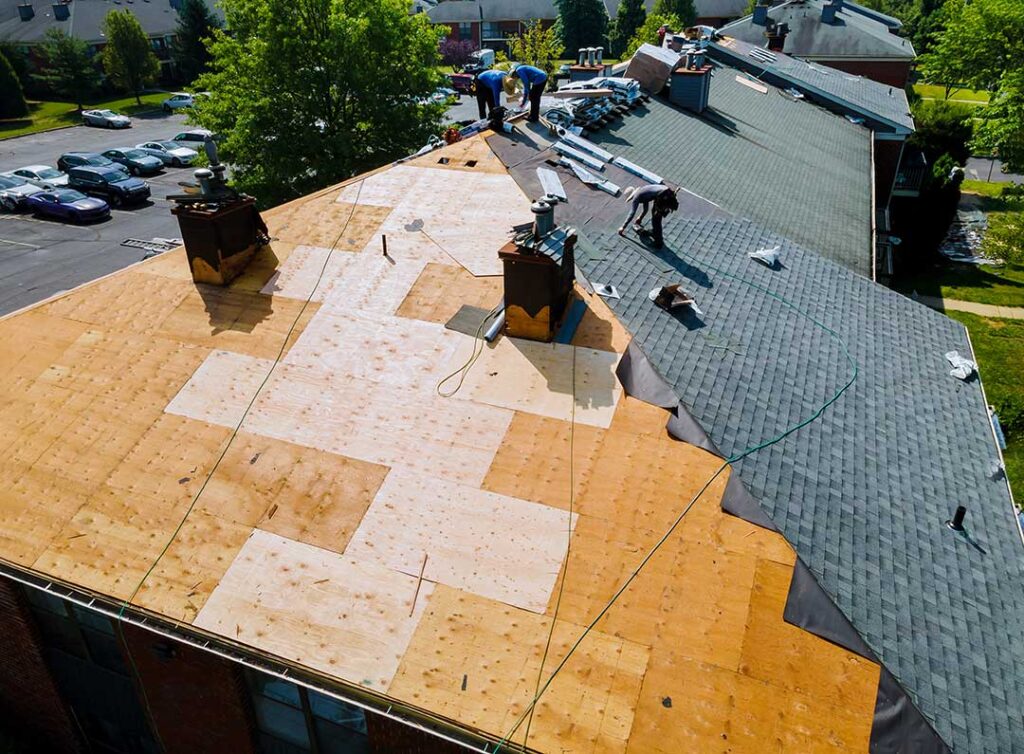
Chimney flashing
Chimneys typically use several pieces of flashing. Base flashing sits where the chimney meets the roof, while counterflashing is built into or attached to the chimney masonry and overlaps the base flashing.
A common problem occurs when counterflashing is sealed only with surface caulk. Caulk can shrink, crack, or separate over time. Flashing should be integrated with the masonry and roofing materials so water is directed outward rather than behind the chimney.
Wall and sidewall flashing
Where a roof meets a vertical wall, step flashing is often installed in short sections that overlap like stairs. Each piece should be covered by the roofing material above it and protected by siding, trim, or another wall-covering detail.
This area can leak when siding is installed too close to the roof, when step flashing is removed during exterior work, or when replacement shingles are layered over improperly positioned metal.
Valley flashing
A roof valley collects water from two sloping sections. Some valleys use metal flashing, while others use specialized underlayment and carefully arranged shingles.
Valleys are exposed to high water flow and often collect leaves, twigs, and ice. Damaged metal, exposed fasteners, or poorly cut shingles can create leakage paths.
Plumbing vent flashing
Plumbing vents pass through the roof and require a flashing boot or metal-and-rubber assembly. The upper portion must shed water over the roofing, while the lower portion remains sealed around the pipe.
Rubber components can become brittle or crack with age. A leaking vent flashing may show up as a ceiling stain below a bathroom or kitchen, although the visible stain may not be directly under the actual entry point.
Skylight flashing
Skylights depend on carefully layered flashing and underlayment. Problems can arise from deteriorated seals, incorrect installation, blocked drainage channels, or flashing that was damaged during reroofing.
A skylight leak does not automatically mean the skylight itself must be replaced. The surrounding flashing and roofing interface should be evaluated first.
What does damaged flashing look like?
Visible warning signs can include rust, lifted metal, loose edges, punctures, cracked sealant, missing pieces, or flashing that is bent away from the roof surface.
Some problems are less obvious. Flashing may be hidden beneath shingles, siding, or masonry. Interior signs can therefore be just as useful:
- Brown or yellow ceiling marks
- Damp drywall near an exterior wall
- Water stains that appear after wind-driven rain
- Peeling paint around a chimney or skylight
- Musty odors in an attic
- Damp insulation or darkened roof decking
- Drips that occur only during snowmelt
Water stains should not be judged only by their size. A small mark may indicate a problem that has been traveling through framing for some distance.
Is roof flashing the same as roof sealant?
No. Roof flashing is a physical water-shedding component, while sealant is a flexible material used to close certain joints or gaps.
Sealant can be useful around appropriate transitions, but it is not a substitute for correctly designed flashing. Applying more caulk over a failed flashing detail may hide the symptom temporarily without correcting the path water is taking.
Sealants also age differently depending on sunlight, temperature, moisture, and movement. In a climate with cold winters and frequent temperature changes, a sealed joint can eventually contract, expand, and open.
Can flashing be repaired, or does it need to be replaced?
The answer depends on the type and extent of damage. A small, accessible defect may be repairable if the surrounding materials remain sound. Replacement is more likely when flashing is corroded, deeply bent, missing, improperly installed, or trapped beneath roofing that has reached the end of its useful life.
A proper repair may require removing nearby shingles or siding so the flashing can be integrated correctly. Simply placing a metal patch over the top may not restore the drainage pattern.
If water is entering near electrical fixtures, spreading across a ceiling, or appearing during active rain, the affected area should be treated as a safety concern. Electricity and water create a serious hazard, and wet structural materials can deteriorate quickly.
How can homeowners reduce flashing problems?
Routine observation helps identify defects before they become interior damage. From the ground, residents can look for visibly loose metal, rust streaks, lifted shingles near roof joints, or damaged sealant around penetrations.
After major wind, heavy snow, or ice formation, it is sensible to check the attic if safe access is available. Look for damp wood, daylight through roof joints, wet insulation, or fresh water marks.
Other useful habits include:
- Keep roof valleys and drainage paths clear of accumulated debris where safely possible.
- Avoid attaching decorations, antennas, or other items through roof flashing without proper waterproofing.
- Be cautious when exterior siding, chimney masonry, or skylights are repaired.
- Do not assume a roof leak is located directly above the interior stain.
- Treat recurring leaks as evidence of an underlying drainage or flashing problem rather than repeatedly covering the stain.
Roof flashing is easy to overlook because much of it is hidden. Yet these narrow strips and layered details often determine whether rain and melting snow leave the roof safely or enter the building envelope. Understanding where flashing is used makes it easier to recognize early warning signs and interpret roof maintenance needs accurately.
