
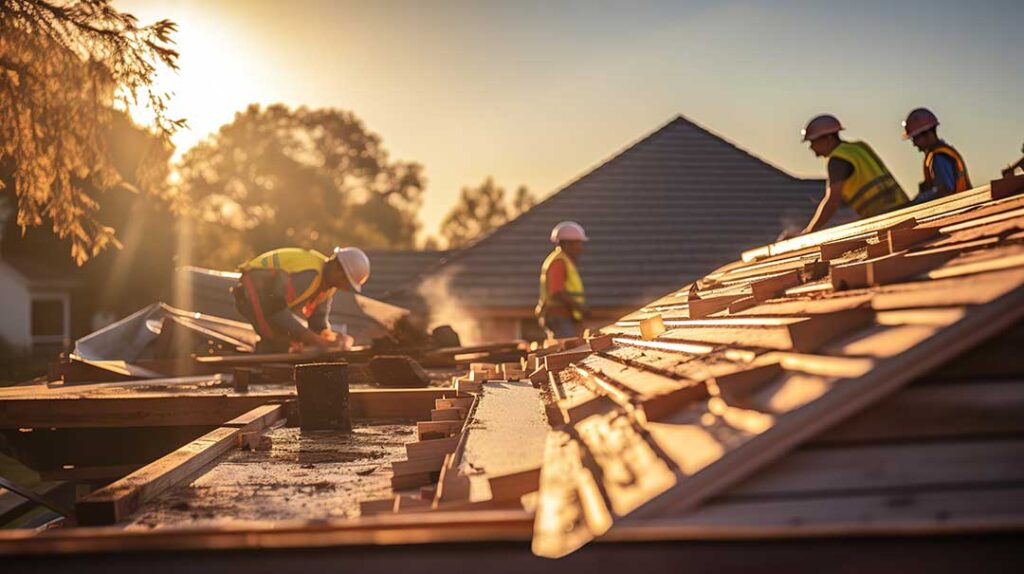
A roof replacement can help reduce energy bills, but the savings usually come from improving the entire roof assembly—not simply installing new shingles. In Ithaca, NY, the most meaningful improvements often involve air sealing, insulation, ventilation, moisture control, and correcting areas where the roof has allowed heat to escape.
Can replacing a roof lower energy bills?
Yes, a roof replacement can lower heating and cooling costs when it addresses heat loss, air leakage, poor insulation, or ventilation problems. A roof that is replaced without improving those conditions may provide better weather protection but produce little change in monthly energy use.
During winter, warm indoor air naturally rises. If the attic floor, ceiling plane, or roof assembly has gaps and insufficient insulation, heated air can escape through the upper part of the home. The heating system then has to run longer to maintain the desired temperature.
A roof project may improve energy performance by:
- Adding or upgrading attic insulation
- Sealing gaps around electrical penetrations, chimneys, plumbing, and ducts
- Repairing damaged roof decking and areas exposed to wind
- Improving intake and exhaust ventilation
- Reducing moisture that can weaken or compress insulation
- Replacing dark, deteriorated roofing materials that absorb excessive summer heat
The roof covering itself is only one part of the system.
Why does the roof matter so much in Ithaca?
Local homes experience long heating seasons, freezing temperatures, snow, wind, rain, and repeated periods of thawing and refreezing. Those conditions place demands on both the exterior roof covering and the insulated boundary between the living space and the outdoors.
In older houses, the roof may have been repaired several times without addressing the insulation or air barrier below it. Some homes have shallow attic spaces, finished upper floors, additions, or roof sections built at different times. These details can create uneven temperatures and isolated areas where heat escapes.
A roof replacement provides an opportunity to inspect the roof deck, attic floor, rafters, valleys, eaves, and penetrations as one connected system. That broader inspection can reveal energy problems that are not visible from the ground.
Does new roofing material make a major difference?
Usually, the material alone has a limited effect on heating bills. Shingles or other roof coverings protect the building from weather, but they do not replace missing attic insulation or stop air leakage through the ceiling.
Reflective or lighter-colored roofing can reduce heat absorption during sunny summer conditions. However, cooling savings may be modest in homes that do not use much air conditioning. In this region, winter heat loss is often a more significant energy concern than summer roof temperature.
The condition of the roof covering still matters. A deteriorated roof can allow water into insulation, and wet insulation performs poorly. Leaks can also lead to mold, damaged sheathing, and drafts around repaired areas. Replacing the exterior roof may therefore support energy efficiency indirectly by keeping the insulation dry and maintaining a continuous building envelope.
Should insulation be added during a roof replacement?
Insulation should be evaluated whenever roofing work exposes the roof structure or attic. The right location depends on the home’s design.
For many homes with an accessible attic, the most practical approach is improving insulation on the attic floor and sealing air leaks at the ceiling plane. This keeps the attic outside the heated living area while reducing heat transfer through the ceiling.
A roof with limited attic space may require insulation between or above rafters instead. That approach needs careful planning because the assembly must control heat flow, air movement, and moisture. Simply filling rafter cavities without preserving the required ventilation path can create condensation and roof-deck problems.
New York’s energy and building requirements apply to certain roof and ceiling alterations. Requirements can vary based on the scope of work, the existing assembly, and whether the project exposes or changes insulated portions of the building. Energy performance should be considered alongside structural and weatherproofing requirements.
How do ventilation and air sealing affect energy use?
Ventilation and air sealing solve different problems. Air sealing limits uncontrolled movement of indoor air. Ventilation helps remove heat and moisture from the attic or roof assembly when the design calls for a vented space.
Common air-leakage locations include:
- Attic access panels
- Recessed lights and ceiling fixtures
- Plumbing and electrical openings
- Chimney or flue transitions
- Duct penetrations
- Gaps at top plates and wall intersections
- Openings around bathroom exhaust fans
A well-ventilated attic should have a balanced path for air to enter near the lower roof edges and leave near the upper roof area. Blocking intake vents with insulation, installing too little exhaust ventilation, or mixing incompatible ventilation strategies can reduce performance.
More ventilation is not automatically better. Unplanned openings can allow wind-driven snow, rain, or cold air into the attic. The goal is controlled airflow combined with a continuous air and thermal barrier.
Can a new roof prevent ice dams?
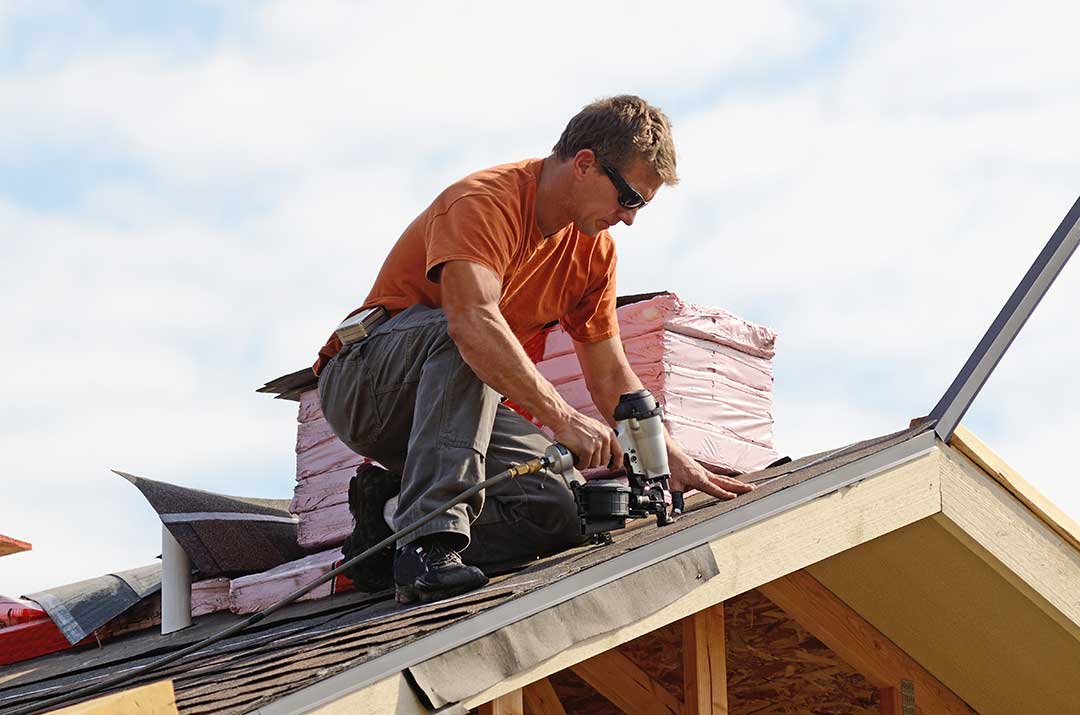
A roof replacement can reduce ice-dam risk when it corrects heat loss and improves attic airflow, but it cannot guarantee that ice dams will never form. Ice dams develop when heat escaping from the home warms portions of the roof while colder eaves remain below freezing. Meltwater can then refreeze near the roof edge.
Reducing the risk generally involves:
- Sealing air leaks between the home and attic
- Installing adequate insulation
- Maintaining proper ventilation
- Keeping gutters and roof drainage paths clear
- Using appropriate water-shedding protection at vulnerable roof edges
Snow accumulation, sun exposure, roof shape, nearby trees, and weather patterns also affect ice-dam formation. A roof that has no visible leak can still lose heat through poorly insulated sections.
How much can a household save?
There is no reliable single savings percentage for every home. Results depend on the starting condition of the roof, insulation levels, air leakage, heating system, fuel prices, thermostat settings, house size, and the amount of roof area connected to heated space.
A home with a dry, well-insulated attic may see little energy reduction after a roof replacement. A home with wet insulation, major air leaks, or large uninsulated roof sections may see a more noticeable improvement after those problems are corrected.
The most useful comparison is often not “old roof versus new roof,” but “existing roof assembly versus improved roof assembly.” Energy savings should be attributed to the specific upgrades—such as insulation and air sealing—rather than assumed to come from the new exterior covering alone.
What should homeowners check before approving energy-related roof work?
Ask for a clear explanation of what will change below the roof covering. Useful questions include:
- Will the attic or roof cavities be inspected?
- Is existing insulation dry, evenly distributed, and free of damage?
- Where are the major air leaks?
- Will ventilation pathways remain open?
- Are bathroom or kitchen exhaust fans properly vented outdoors?
- Will the work affect a finished upper floor?
- Which improvements are required by current code, and which are optional upgrades?
- How will moisture and condensation be controlled?
It is also useful to review several months of heating bills before the project and compare them with similar weather periods afterward. Energy savings can be difficult to identify from one bill because fuel prices, winter temperatures, occupancy, and thermostat settings change from month to month.
A roof replacement is most likely to help with energy bills when it is treated as an opportunity to improve the home’s complete upper boundary: roof covering, flashing, deck, insulation, air sealing, ventilation, and moisture control working together.
