

What usually shortens a roof’s life?
The most common causes of premature roof failure are trapped moisture, poor drainage, neglected flashing, inadequate ventilation, and repeated physical damage. In Ithaca, seasonal snow, freezing temperatures, thawing cycles, wind, fallen leaves, and summer humidity can all add stress to roofing materials.
A roof often declines gradually rather than failing all at once. Small problems around a vent, chimney, skylight, valley, or gutter may allow water into the roof assembly long before a ceiling stain appears. Routine observation and timely maintenance can help prevent minor defects from becoming structural damage.
How often should a roof be inspected?
A roof should be checked from the ground several times a year and more closely at least once each spring and fall. Additional inspections are sensible after a major windstorm, heavy snowfall, or a period of rapid thawing.
A ground-level inspection can reveal:
- Missing, cracked, curled, or lifted shingles
- Dark areas that may indicate moisture or algae growth
- Sagging roof lines
- Loose or damaged metal around chimneys, vents, and wall intersections
- Gutters pulling away from the roof edge
- Granules collecting in gutters or downspouts
- Branches, leaves, or other debris resting on the roof
Walking on a roof is not necessary for ordinary household monitoring. Shingles can be damaged by foot traffic, and steep, wet, icy, or moss-covered surfaces create a serious fall hazard.
Why are gutters and downspouts so important?
Gutters protect the roof edge, siding, foundation, and surrounding soil by directing rain and melting snow away from the structure. Clogged or poorly draining gutters allow water to back up under the roof edge, soak fascia boards, and freeze inside joints during cold weather.
Clean gutters in late spring and late fall, then check them after major storms. Homes near mature trees may require more frequent attention. Downspouts should discharge far enough away from the foundation to prevent water from collecting beside the building.
Look for these warning signs:
- Water spilling over the front of the gutter
- Rusted seams or separated joints
- Sagging sections
- Wet soil directly beside the foundation
- Ice buildup along the eaves
- Gutter streaks or staining below a leak
Gutter guards can reduce debris, but they do not eliminate the need for inspection. Leaves, roof granules, and ice can still obstruct the system.
How can ice dams be reduced?
Ice dams form when snow melts on a warmer section of the roof and refreezes near the colder eaves. The resulting ridge of ice can hold water against the roof covering and allow it to move beneath shingles or into the attic.
The most effective long-term approach is to keep the roof surface more evenly cold by improving attic insulation, sealing air leaks between the living space and attic, and maintaining proper intake and exhaust ventilation. Simply adding more roof vents without addressing air leakage may not solve the problem.
During winter:
- Keep attic access panels well sealed.
- Avoid blocking soffit vents with insulation.
- Watch for unusually heavy ice along the eaves.
- Use a roof rake from the ground only if the equipment and conditions allow safe use.
- Never chip at ice with a shovel, axe, or similar tool.
Large snow accumulations, sagging rafters, cracking sounds, or doors that suddenly stick may indicate excessive structural loading. Those conditions require prompt safety attention rather than routine maintenance.
What should homeowners do about roof moss and algae?
Moss grows where roofing remains damp and shaded. It can lift shingle edges, hold moisture against the roof surface, and interfere with drainage. Algae may create dark streaks but does not always cause immediate structural harm.
Trim branches that keep sections of the roof shaded and damp, while preserving appropriate clearance from the roof surface. Do not pressure-wash shingles. High-pressure water can remove protective granules and shorten the roof’s service life.
Chemical treatments should be used cautiously and according to the roofing material’s requirements. Copper or zinc strips may help limit future growth in some situations, but they are not a substitute for correcting persistent shade, poor drainage, or excessive moisture.
How can roof flashing and penetrations be protected?
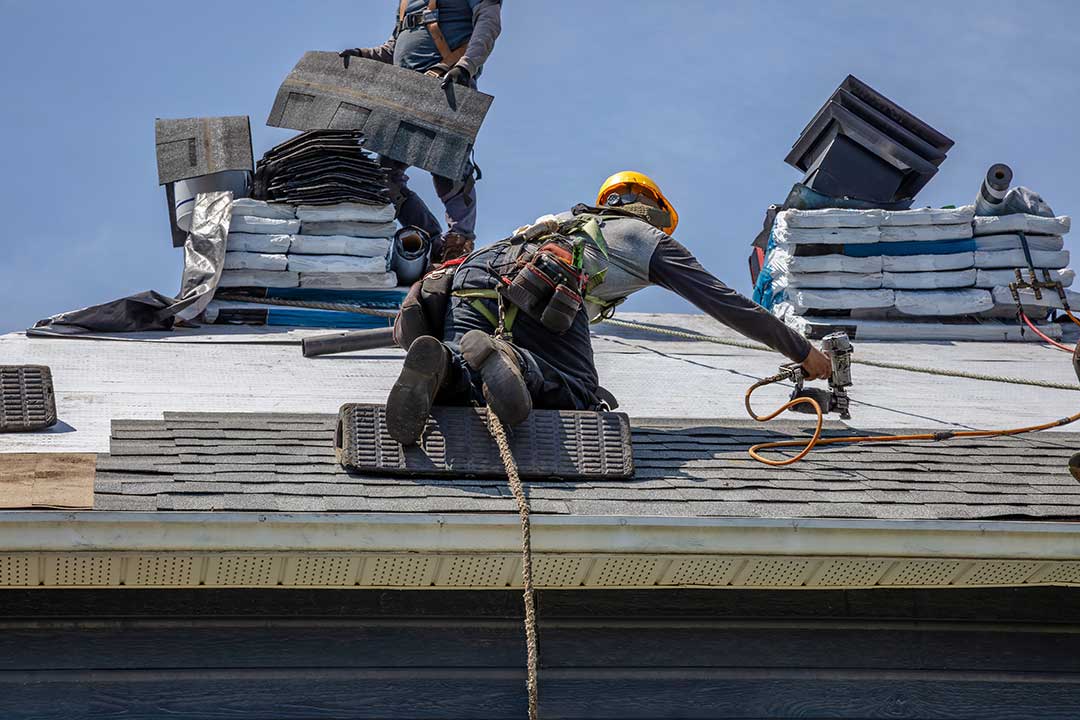
Flashing is installed where the roof meets another surface or where an opening passes through it. These areas include chimneys, plumbing vents, skylights, dormers, sidewalls, and roof valleys. Because they interrupt the roof’s continuous drainage plane, they are frequent locations for leaks.
Inspect visible flashing for:
- Gaps or lifted edges
- Missing sealant
- Rust or corrosion
- Damaged metal
- Cracked rubber boots around plumbing vents
- Water stains in the attic near penetrations
Sealant is not a permanent repair for every flashing problem. Repeatedly applying caulk over deteriorated materials may hide the source while allowing moisture to continue entering the roof system.
Does attic ventilation really affect roof life?
Yes. Proper attic ventilation helps control heat and moisture, which can reduce condensation, mold growth, wood deterioration, and uneven snow melting. In winter, warm moist air from the home can enter a cold attic through light fixtures, plumbing penetrations, attic hatches, and other gaps.
In summer, poor ventilation can cause excessive attic heat that contributes to material aging and increases indoor cooling demand. Ventilation must be balanced: intake air at the lower roof edge needs a clear path to exhaust openings higher on the roof.
Adding vents without enough intake air may provide little benefit. Attic insulation should also be kept clear of designed ventilation channels.
What household habits help protect the roof?
Several ordinary habits can prevent avoidable damage:
- Keep tree limbs from rubbing against shingles.
- Do not attach equipment or decorations by driving fasteners through roofing unless the penetration is properly designed and sealed.
- Keep chimney and exhaust systems maintained so moisture and combustion byproducts do not damage nearby materials.
- Watch for indoor stains, peeling paint, musty odors, or damp insulation after rain.
- Check the attic after major storms for daylight, wet wood, or water trails.
- Avoid allowing roof debris to remain in valleys or behind rooftop equipment.
A roof’s age also matters. Older roofing should be observed more closely, especially if repairs are becoming frequent or if several areas show wear at the same time. The expected service life varies by material, installation quality, ventilation, exposure, and maintenance history.
When is a roof problem unsafe to handle personally?
Roof maintenance should not involve climbing during rain, snow, ice, high winds, or darkness. Extra caution is needed around power lines, steep slopes, fragile skylights, and roofs with accumulated snow.
Professional evaluation is appropriate when there is active leaking, visible sagging, widespread shingle loss, structural damage, suspected mold, or a roof area that cannot be reached safely. Prompt attention is particularly important after winter storms because water can enter beneath intact-looking shingles when flashing or ice barriers have been compromised.
Good roof care is mainly a matter of controlling water, limiting moisture, keeping drainage paths clear, and identifying damage before it spreads. For homes in Ithaca, a seasonal inspection routine is especially useful because the roof must handle snow, freeze-thaw movement, wind-driven rain, and summer heat within the same year.
