

Roof maintenance is mostly about finding small problems before moisture, ice, wind, and repeated freeze-thaw cycles turn them into expensive damage. For homeowners in Ithaca, a practical maintenance routine should focus on visual inspections, drainage, attic conditions, and seasonal preparation rather than climbing onto the roof for every task.
What roof maintenance can a homeowner safely do?
Most routine maintenance can be completed from the ground, from a window, or from a securely positioned ladder used only for limited inspection. Homeowners can look for missing shingles, clogged gutters, damaged flashing, standing water, moss, exposed fasteners, and signs of leaks inside the house.
Walking on a roof is a different matter. Roofing surfaces may be slippery from dew, frost, algae, or loose granules. Steeper roofs, wet roofs, icy conditions, and roofs near overhead electrical lines should not be treated as do-it-yourself work areas.
A safer homeowner inspection may include:
- Viewing roof slopes from the yard with binoculars
- Checking gutters and downspouts from a stable ladder
- Looking for water stains in the attic or upper ceilings
- Trimming branches that touch or overhang the roof
- Removing leaves from accessible valleys and roof edges with a roof rake or soft tool
- Photographing questionable areas for comparison after storms
Never inspect a roof during rain, snow, high wind, or icy conditions.
How often should a roof be inspected?
A basic inspection twice a year is appropriate for many homes: once in spring and again in early fall. Additional checks are useful after strong wind, heavy snow, ice buildup, or a fallen branch.
Spring inspections help identify damage that developed during winter. Look for lifted shingles, bent metal flashing, clogged drainage paths, and areas where snow or ice may have pulled on gutters. Fall inspections should confirm that gutters are clear, attic ventilation is unobstructed, and vulnerable roof details are ready for colder weather.
Older roofs or homes surrounded by mature trees may need more frequent visual checks. Heavy shade can keep surfaces damp longer, while nearby branches can deposit leaves and create persistent wet areas.
What should homeowners look for on shingles?
Shingles that are cracked, curled, blistered, loose, or missing may allow water beneath the roof covering. A few damaged shingles do not always mean the entire roof needs replacement, but they should not be ignored.
From the ground, watch for:
- Uneven or wavy roof sections
- Shingles that appear lifted along their edges
- Dark patches that remain after surrounding areas dry
- Excessive granules collecting in gutters
- Exposed underlayment or roof decking
- Metal flashing that is bent, separated, or heavily rusted
- Loose materials in the yard after a windstorm
Color variation alone does not necessarily indicate a problem. Moss and algae, however, deserve attention when they hold moisture against the surface or lift shingles. Avoid pressure-washing asphalt shingles, since forceful water can remove protective granules and drive water beneath the roofing materials.
Why are gutters and downspouts part of roof maintenance?
A roof drainage system protects the roof edge, siding, foundation, and surrounding soil. Clogged gutters can cause water to back up beneath the roof edge or spill against exterior walls.
Clean gutters at least in spring and late fall, with additional attention after nearby trees shed leaves. While cleaning, check whether the gutters are sagging, separating at joints, or pulling away from the fascia. Downspouts should discharge water far enough away from the foundation to prevent repeated saturation near the basement walls.
Do not rest a ladder directly against a gutter. Use a stable setup that does not place weight on the gutter itself, and keep the ladder on firm, level ground. If the roof edge cannot be reached safely, ground-level maintenance is the better choice.
How can attic inspections reveal roof problems?
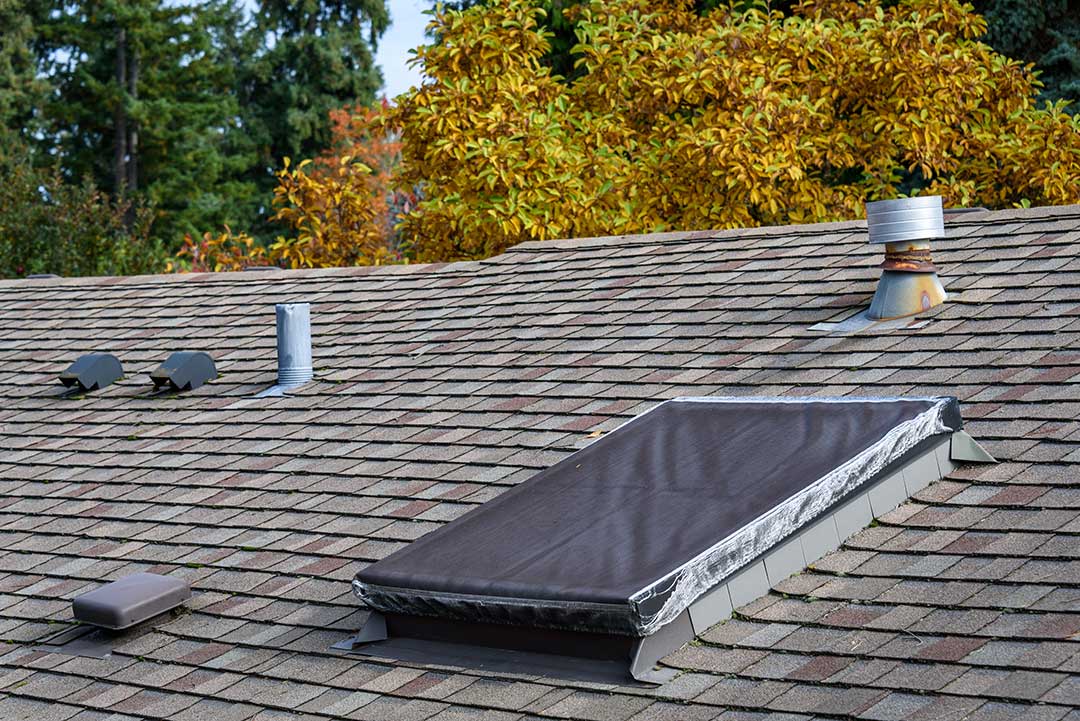
The attic can show evidence of a roof leak before the ceiling below becomes visibly damaged. Inspect the underside of the roof deck, rafters, insulation, and areas around chimneys, vents, skylights, and plumbing penetrations.
Look for:
- Dark water marks or fresh discoloration
- Damp insulation
- Mold-like growth caused by persistent moisture
- Rusted nails or metal components
- Daylight visible through the roof deck
- Frost or excessive condensation during cold weather
Not every attic moisture problem comes from a roof leak. Poor ventilation, air leakage from the living space, bathroom exhaust venting into the attic, and inadequate insulation can also create condensation. Bathroom and kitchen exhaust should discharge outdoors through properly sealed vents, not into the attic.
What should be done before winter?
Before winter, clear gutters, inspect flashing, remove leaves from roof valleys that can be safely reached, and trim branches that may break under snow or ice. Confirm that attic vents are not blocked by insulation or stored items.
Avoid using salt or chemical ice-melting products on roofing materials unless the product is specifically approved for that application. Improper chemicals can damage metal components, gutters, plants, and exterior surfaces.
Large ice dams are a warning sign, not simply a cosmetic nuisance. They can allow meltwater to move beneath shingles. Repeated ice dams may be connected to heat loss, insufficient insulation, air leaks, or inadequate attic ventilation. Removing ice with a hammer or chisel can damage shingles and create a fall hazard.
Can homeowners repair a small roof problem themselves?
Some minor tasks, such as replacing a missing gutter fastener or resealing a small exposed exterior fastener, may be manageable when performed from a safe position and with materials compatible with the existing roof. Roof repairs are less forgiving than many household projects because an incorrect patch can redirect water or trap moisture.
Avoid covering a damaged area with a random coating, roofing cement, or household sealant. These materials may fail under temperature changes and can make later repairs more difficult. Do not fasten new materials over wet or deteriorated decking without understanding the source of the damage.
A repair should be treated as urgent when water is actively entering the home, the roof deck is sagging, a large section of shingles is missing, flashing has separated around a chimney or vent, or a tree has struck the roof. Electrical hazards, structural damage, steep slopes, and any work requiring roof access justify stopping the project rather than attempting it alone.
What roof maintenance mistakes are most common?
The most common mistakes are waiting for an interior ceiling stain, using a pressure washer, walking on wet or icy shingles, and assuming a new roof needs no inspections. Even newer roofing systems still depend on intact flashing, clear drainage, proper attic ventilation, and prompt attention to storm damage.
Another overlooked issue is documentation. Take dated photographs during routine inspections and keep notes about leaks, repairs, gutter cleaning, and storm events. Comparing images over time can help distinguish normal aging from a developing problem.
Regular observation from safe locations is often the most valuable do-it-yourself maintenance. In a climate with snow, wind, shaded areas, and repeated freezing and thawing, early awareness can prevent a small drainage or flashing issue from becoming interior water damage.
