
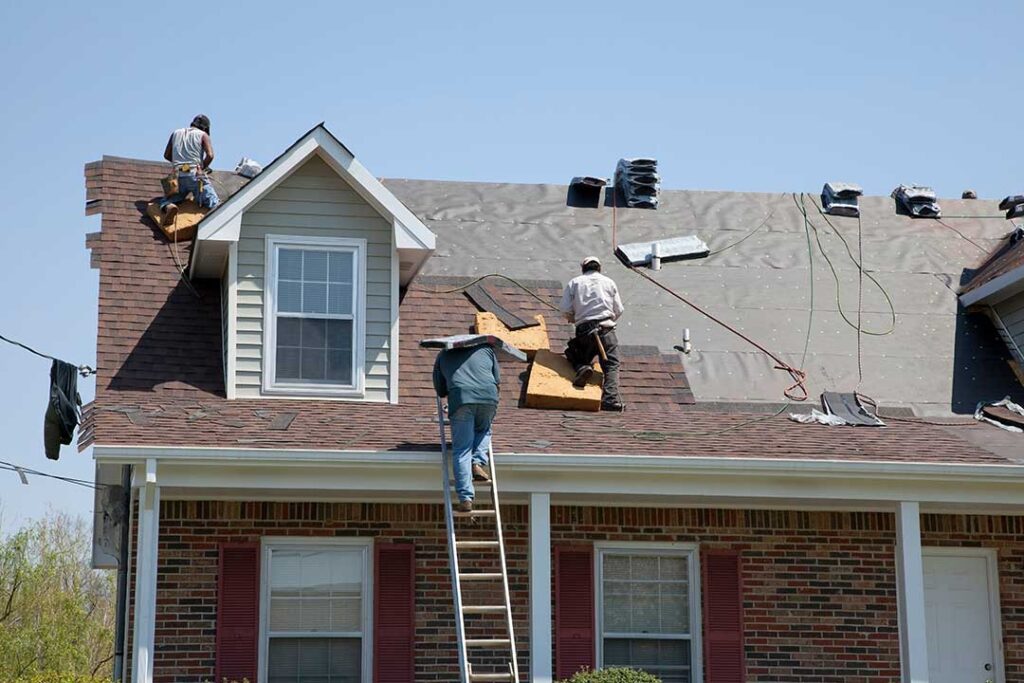
Storm damage is not always obvious from the ground. Strong wind, hail, heavy rain, ice, and wet snow can loosen roofing materials, damage flashing, block drainage, or create leaks that appear hours or days later. A careful inspection from safe locations can help identify problems before they spread.
What should you do first after a storm?
Start with safety, not the roof. Wait until lightning, strong wind, falling branches, and active precipitation have passed. Do not climb onto a wet, icy, or debris-covered roof, and do not inspect near downed power lines.
Walk around the property from ground level. Look for:
- Fallen branches or trees touching the roof
- Loose or missing shingles
- Pieces of roofing, flashing, or metal in the yard
- Sagging areas along the roofline
- Damaged gutters, downspouts, or chimney components
- Water entering through ceilings, walls, windows, or attic areas
- Broken vents, skylights, or other roof openings
In Ithaca, winter storms can involve a mixture of snow, ice, rain, and wind. That combination may leave damage hidden beneath snow or ice, so a roof that looks normal from the ground may still need closer observation once conditions improve.
How can you inspect the roof without climbing on it?
Use binoculars from the ground or look from an upper-floor window if the view is safe. Compare the roof with photographs taken before the storm if available.
Look for shingles that are:
- Missing completely
- Lifted, curled, folded, or displaced
- Split, cracked, or showing exposed underlayment
- Covered with fresh dark marks or areas where granules have been knocked away
A few loose granules in a gutter do not always prove storm damage. Asphalt shingles naturally shed some granules over time. A sudden increase, especially alongside bruised shingles or visible impact marks, is more concerning.
Check roof edges and transitions carefully. Damage often occurs at:
- Ridge caps
- Valleys where roof sections meet
- Eaves and rakes
- Areas around chimneys, vents, and skylights
- Flashing near walls or dormers
- Places where an older roof meets an addition
A roof may remain watertight even when a shingle is damaged, but exposed seams and underlayment can deteriorate quickly with additional rain or freezing temperatures.
What does hail damage look like?
Hail damage can appear as small dents, bruises, or circular areas where the shingle surface has been struck. The marks may be easier to see after the roof dries.
Possible signs include:
- Soft spots that look darker than surrounding areas
- Missing granules in concentrated patches
- Cracks around the edges of shingle tabs
- Damage to metal vents, gutters, downspouts, siding, or outdoor equipment
- Hail marks on decks, window trim, or other horizontal surfaces
Do not press on roof materials from a ladder or attempt to test shingles by hand. Older shingles may already be brittle, and walking on them can cause additional damage.
How do you check the attic and ceilings?
The attic can reveal water entry that is not yet visible in living areas. Inspect only from a stable floor or walkway, using a flashlight. Do not step between ceiling joists or onto insulation.
Look for:
- Damp insulation
- Dark stains on wood framing or roof decking
- Drips or puddles
- Mold-like growth
- Rust around nails or metal fasteners
- Daylight visible through the roof
- Freshly disturbed insulation
- Wet electrical components or wiring
Inside the home, check ceilings, upper walls, and areas around light fixtures for stains, bubbling paint, soft drywall, or peeling surfaces. Water can travel along rafters and framing, so the indoor stain may be some distance from the actual roof opening.
If water is near electrical fixtures, switches, outlets, or wiring, avoid touching the area. If safe to do so, keep people away from the space and address the electrical hazard through the appropriate emergency channel.
What should you do if water is entering the house?
Place containers under active drips and move furniture or other belongings away from the affected area. Take clear photographs before making temporary changes.
A temporary cover may help limit further water entry, but roof coverings should only be installed from a safe position. Do not climb onto the roof during rain, wind, snow, or icy conditions. Never use a tarp near power lines or in a way that requires standing on unstable roofing.
If a ceiling is bulging, keep away from it. A water-filled ceiling can become heavy and may fail without much warning. Do not puncture it unless directed by an appropriate emergency authority, because water may be near electrical components.
Can snow and ice hide roof damage?
Yes. Snow can conceal missing shingles, damaged flashing, and fallen debris. Ice can also block gutters and create temporary water backup.
Avoid scraping or shoveling the roof from a ladder. Removing snow incorrectly can damage shingles, gutters, flashing, and roof edges. It can also create a falling-snow hazard for people below.
After temperatures rise and the roof surface becomes visible, inspect again from the ground. Pay particular attention to:
- Icicles forming in unusual locations
- Water stains that appear during thawing
- Gutters pulling away from the house
- Ice buildup along roof edges
- Areas where snow melts faster than on surrounding roof sections
Uneven melting can result from heat loss, sun exposure, ventilation differences, or concealed damage. It is a clue to investigate, not proof of a single cause.
What should you document?
Photographs and notes are useful for tracking changes and explaining what happened. Photograph the entire roof from several angles, then take closer images of visible damage. Also document:
- Fallen branches or trees
- Damaged gutters and downspouts
- Interior stains or leaks
- Hail marks on nearby surfaces
- The date and approximate time of the storm
- Weather conditions such as high wind, hail, heavy rain, or wet snow
Do not discard damaged roofing materials before documenting them. Avoid making permanent repairs before the condition has been recorded, unless immediate action is necessary to protect people or prevent serious additional damage.
When is a roof inspection unsafe to handle yourself?
Stay off the roof when it is wet, icy, steep, unstable, covered with debris, or visibly sagging. Avoid ladders near overhead wires and do not approach a roof with a tree or large branch resting on it.
A qualified roof or building inspector is appropriate when there is structural damage, a suspected leak, significant material displacement, or uncertainty about whether the roof is safe. Electrical hazards, gas concerns, major flooding, and unstable trees may require different emergency specialists rather than a roof inspection alone.
A storm inspection is not only about finding missing shingles. It is also about recognizing hazards early, preventing additional water intrusion, and distinguishing visible damage from conditions that require a closer assessment.
