
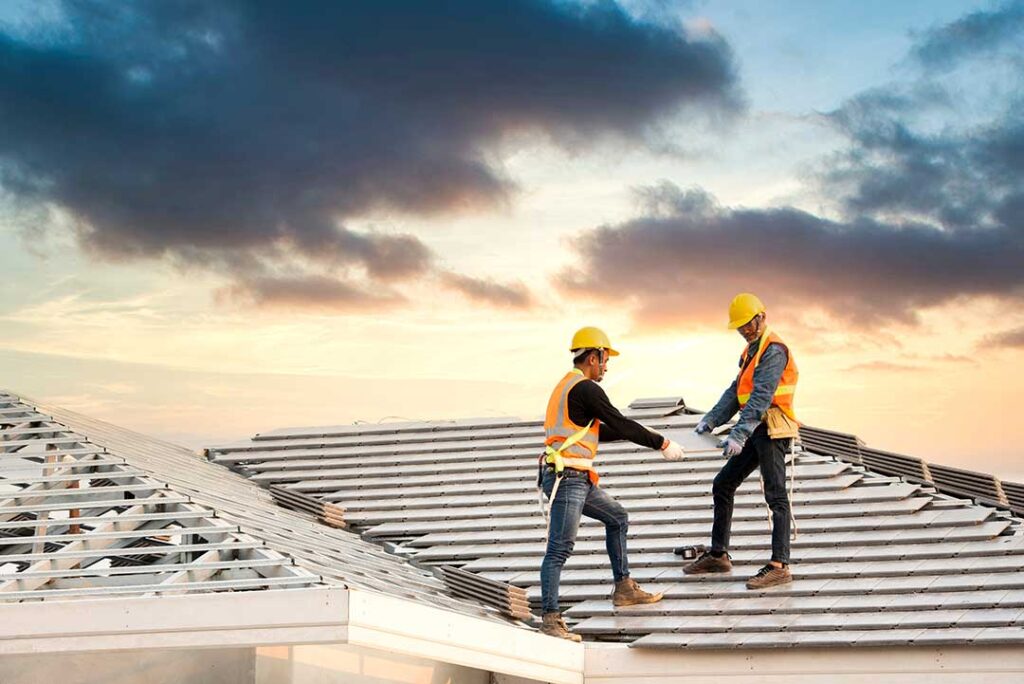
Rain can sound much louder indoors when it strikes a thin, rigid roof surface, a loosely supported roof deck, a skylight, or an exposed metal flashing. In Ithaca, NY, where homes experience frequent rainfall along with winter snow and freeze-thaw conditions, reducing roof noise often involves improving the entire roof-and-ceiling assembly rather than changing only the outer roofing material.
Why does rain sound loud on some roofs?
Rain noise is created when water droplets strike a surface and cause it to vibrate. Those vibrations can travel through the roof covering, roof deck, framing, attic, and ceiling below.
The sound is usually more noticeable when:
- The roof covering is metal or another thin, rigid material.
- The roof has little attic insulation.
- The roof deck is flexible, damaged, or poorly fastened.
- A room has a vaulted ceiling with little space between the ceiling and roof.
- Rain falls directly onto skylights, porch roofs, awnings, or low-slope additions.
- Gutters or downspouts are loose and vibrate during storms.
- Water drops from an upper roof edge onto a lower roof section.
A conventional pitched roof with a ventilated attic often provides more separation from the living space than a shallow roof or cathedral ceiling. That extra air space can reduce the amount of impact noise that reaches bedrooms and living areas.
Can attic insulation reduce the sound of rain?
Yes. Adding or improving attic insulation is often the most practical interior measure for reducing rain noise. Fiberglass, mineral wool, and cellulose can absorb some of the sound energy that enters the attic and limit the amount that reflects toward the ceiling.
Insulation works best when it is part of a complete assembly. It should not be compressed, wet, or placed in a way that blocks required ventilation paths at the eaves. In a cold-climate home, ventilation and moisture control matter because damp insulation can lose effectiveness and contribute to mold, rot, or poor indoor air quality.
For an unfinished attic, useful improvements may include:
- Installing missing insulation over the ceiling plane.
- Replacing wet, settled, or contaminated insulation.
- Sealing air leaks around light fixtures, wiring penetrations, plumbing vents, and attic access panels.
- Adding insulation to the attic access door or hatch.
- Preserving clear ventilation channels near soffits and roof edges.
Air sealing helps with sound because small openings allow noise to travel directly into the rooms below. It also reduces heat loss during the cold season.
Does changing the roofing material make a roof quieter?
Roofing material affects sound, but it is only one part of the result. Heavy, multilayer roofing assemblies generally transmit less impact noise than thin, lightweight surfaces. Asphalt shingles installed over a properly supported roof deck are often quieter indoors than exposed sheet metal, although the underlayment, attic insulation, ceiling construction, and roof shape may matter just as much.
Metal roofing can still be relatively quiet when installed over a solid deck with suitable underlayment and insulation. A metal roof installed over open framing, purlins, or a lightly built addition is more likely to produce a sharp drumming sound.
If a roof is already due for replacement, noise can be considered during planning. Questions worth asking include:
- Is the roof deck solid and securely fastened?
- Will the new covering be installed over a continuous deck?
- Is there an attic or ceiling cavity beneath the roof?
- Can acoustic or thermal insulation be added without creating moisture problems?
- Are skylights, dormers, and roof additions contributing more noise than the main roof?
Replacing a serviceable roof solely to reduce rain noise may not be the most cost-effective solution. Interior insulation, air sealing, or correcting loose components may provide a noticeable improvement with less disruption.
What can be done about a noisy metal roof?
A noisy metal roof is usually quieted by adding mass, absorption, or separation between the exterior panel and the occupied space. Possible approaches include installing insulation beneath the roof panels, improving the roof deck, and adding a finished ceiling with sound-absorbing material.
The correct method depends on how the roof was built. Insulation placed directly against a metal roof without proper moisture planning can trap condensation. This is especially relevant in a region with cold winters, snow cover, and repeated temperature changes.
During a reroofing project, a continuous underlayment and well-fastened deck can reduce vibration. In some assemblies, specialized acoustic layers may also help. These materials must be compatible with the roof design and should not interfere with drainage, ventilation, fire safety, or the manufacturer’s installation requirements.
Could gutters and downspouts be causing the noise?
Yes. Sometimes the roof itself is not the main source of the disturbance. Loose gutters can rattle, while water flowing through a partially blocked downspout can create a hollow, repetitive sound near a wall or bedroom.
Check for:
- Loose gutter hangers or end caps.
- Downspouts touching siding or framing.
- Water spilling over clogged gutters.
- A sharp drop from an upper roof into a lower gutter.
- Elbows or extensions that vibrate during heavy flow.
- Dripping from a roof edge onto a porch roof or metal flashing.
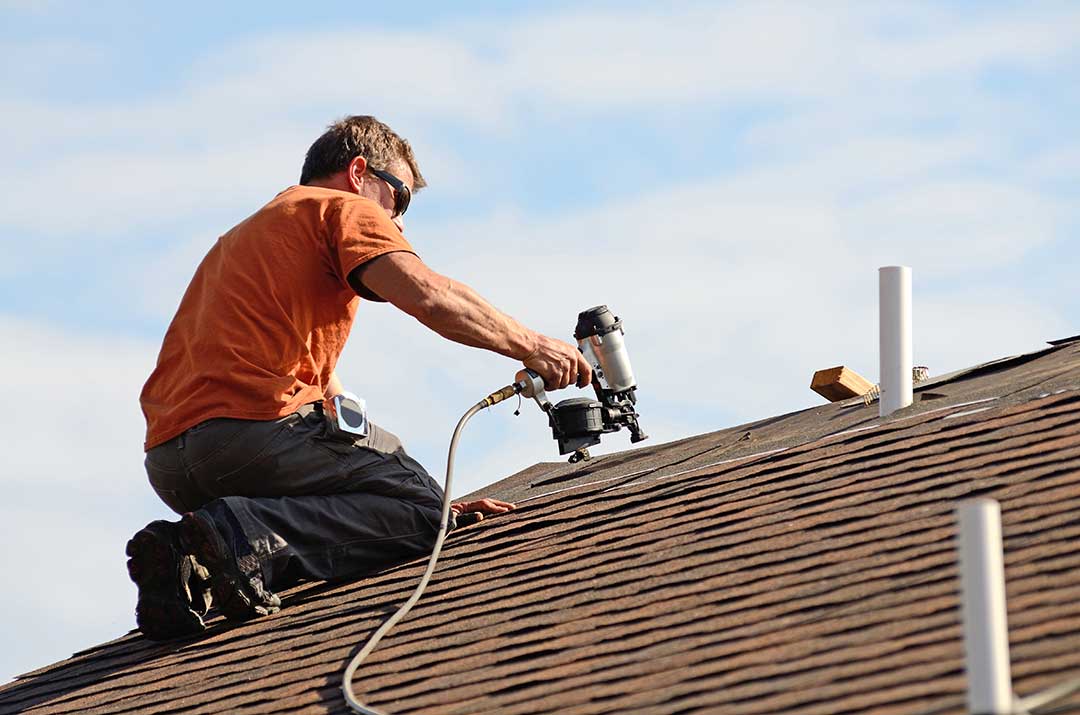
Cleaning leaves and debris from drainage systems, tightening loose components, and securing downspouts can reduce storm noise. Any work involving ladders, steep slopes, ice, or wet roofing surfaces presents a fall hazard and should not be attempted casually.
Are skylights and roof windows a major source of rain noise?
They can be. A skylight has less mass than many surrounding roof assemblies, so raindrops may sound sharper beneath it. The effect is often strongest during intense storms or when water collects briefly above the unit.
Noise may be reduced by:
- Closing interior blinds or shades during storms.
- Adding a properly fitted interior treatment designed for the skylight.
- Improving insulation around the skylight shaft.
- Sealing air leaks at interior trim.
- Checking for loose exterior flashing or signs of water intrusion.
A skylight that rattles, leaks, fogs between panes, or shows damaged flashing needs attention for reasons beyond sound. Do not cover a skylight with loose materials on the roof, since they can damage the unit or create a hazard.
What should homeowners inspect before adding insulation?
Rain noise can sometimes signal a roof or ceiling problem. Before increasing insulation, look for water stains, musty odors, peeling paint, sagging drywall, rusty fasteners, daylight in the attic, or damp insulation.
Also inspect whether the roof deck appears loose or damaged. A poorly fastened deck can vibrate during rain and wind, and deterioration may worsen under the weight of winter snow or ice.
In older homes, it is wise to consider electrical wiring, recessed lighting, bath-fan ducts, and chimney clearances before adding insulation. Materials must be kept away from heat-producing equipment and installed so that attic ventilation remains functional.
Which solution is usually the best starting point?
Start by identifying where the sound is strongest and whether it comes from the roof surface, attic, skylight, gutter system, or ceiling. For many homes, the most reasonable sequence is:
- Check gutters, downspouts, flashing, and loose exterior components.
- Inspect the attic or ceiling cavity for moisture and roof-deck problems.
- Improve air sealing around penetrations and attic access points.
- Add or repair insulation while preserving ventilation.
- Consider roofing-system changes only when the roof already needs repair or replacement.
In a home with a vaulted ceiling, exposed metal roofing, or a roof addition over a bedroom, reducing noise may require a more specialized assembly. In those cases, safety, moisture control, structural condition, and local building requirements should guide the work as much as sound reduction.
