
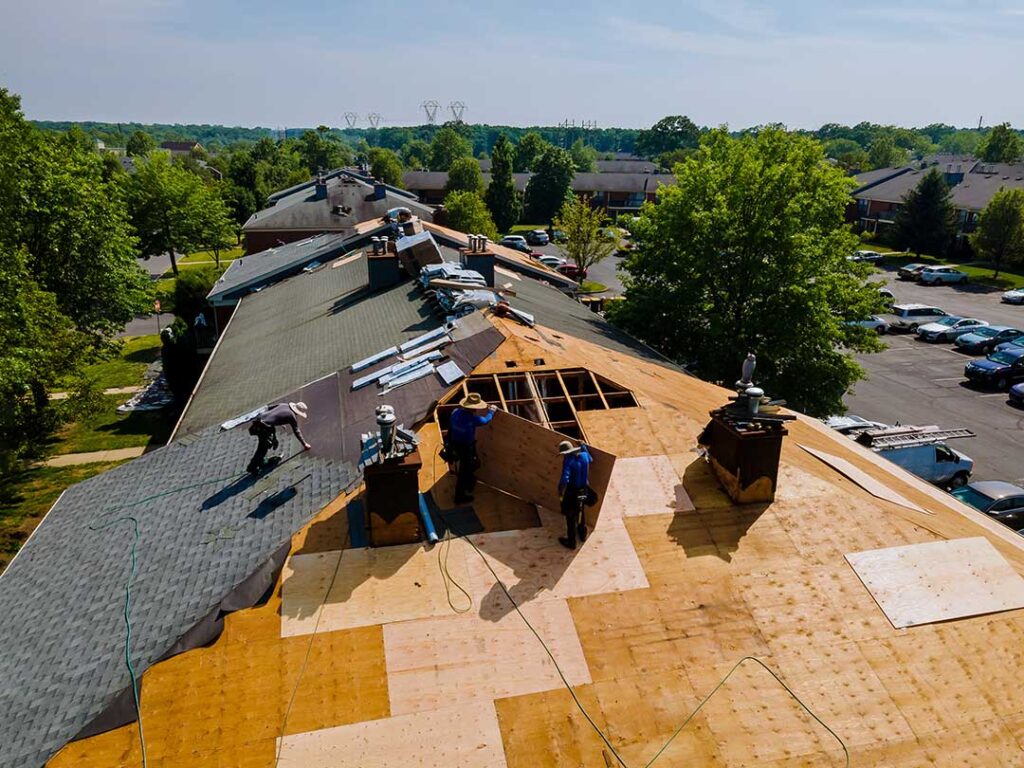
How can homeowners tell whether a roof is aging?
Aging usually appears as a pattern of gradual changes rather than one dramatic defect. Look for worn surface materials, recurring moisture problems, sagging or distortion, and roof details that no longer shed water effectively.
In Ithaca, roofs experience repeated freeze-thaw cycles, snow, wind, rain, shaded moisture, and falling leaves. These conditions can make a roof look serviceable from the ground while hidden deterioration develops around valleys, chimneys, skylights, eaves, and attic penetrations.
A roof does not necessarily need replacement simply because it has reached a certain age. Condition, installation quality, ventilation, materials, and past repairs all affect how long it remains dependable. Age is best treated as a reason for closer evaluation, not as a diagnosis by itself.
What does aging look like on asphalt shingle roofs?
Asphalt shingles commonly show aging through surface loss and changes in flexibility. The most recognizable signs include:
- Granules collecting in gutters or at the base of downspouts
- Shingles with bare, dark, or uneven patches
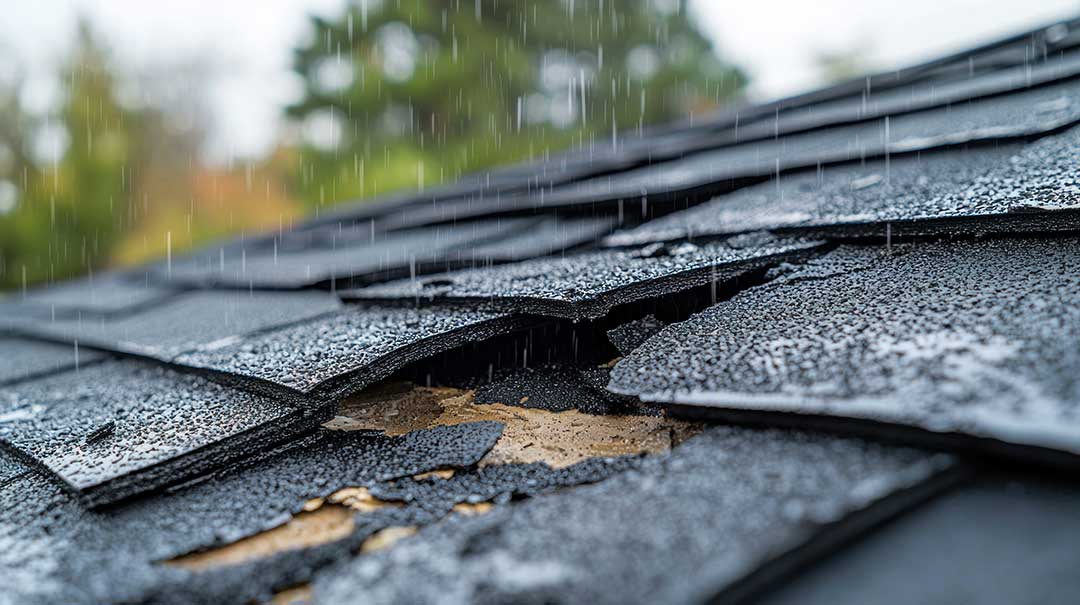
- Curling edges, lifted corners, or cracked tabs
- Shingles that appear brittle or break when disturbed
- Missing shingles after ordinary wind
- Areas that look wavy, buckled, or uneven
- Dark streaks or moss growth in persistently shaded areas
Granule loss is especially significant when it occurs across large sections rather than in one isolated spot. Granules protect the asphalt coating from sunlight and weather. Some loose granules are normal on a newer roof, but widespread loss can indicate that the shingle surface is nearing the end of its useful life.
Curling does not always mean the entire roof has failed. Poor attic ventilation, manufacturing defects, installation problems, and prolonged heat exposure can all contribute. However, curled or brittle shingles are less able to resist wind and water, particularly during winter weather.
How does metal roofing show its age?
Metal roofs often age differently from asphalt roofs. They may remain visually intact while fasteners, seams, coatings, or flashing begin to deteriorate.
Common signs include:
- Rust around exposed fasteners, cut edges, or damaged coating
- Loose or backed-out screws with worn washers
- Opened seams or separated panels
- Water stains below roof penetrations
- Punctures, dents, or distorted sections
- Peeling paint or chalky surface coating
- Corrosion where dissimilar metals meet
A small amount of cosmetic discoloration does not automatically indicate structural trouble. The more concerning signs are active leaks, loose connections, expanding rust, and movement at panel joints.
Older metal roofs may also have many layers of paint or patching. Repeated coating can conceal corrosion, so appearance alone may not reveal the remaining serviceability of the metal. Snow and ice can also stress exposed fasteners and trim, particularly at eaves and roof edges.
What aging signs appear on wood shingles and shakes?
Wood roofing tends to show its condition through moisture damage, splitting, and biological growth. Aging wood shingles or shakes may have:
- Long cracks or splits
- Soft, spongy, or decayed areas
- Missing pieces
- Warped or cupped surfaces
- Dark staining caused by prolonged dampness
- Moss, lichen, or fungal growth
- Excessive gaps between roofing pieces
Wood roofing needs the ability to dry after rain or snow. Heavy shade, leaves, and restricted airflow can keep the material damp for extended periods. In the local climate, repeated wetting and freezing can enlarge existing splits and accelerate decay.
Moss is not always the primary problem, but it can hold moisture against the roof surface. Scraping or pressure washing may damage the wood and remove protective surface material. Any cleaning approach should avoid breaking or loosening the roofing pieces.
How can aging be identified on slate, tile, and synthetic roofing?
Slate and tile roofs can last a long time, but individual units and supporting components still age. With slate, watch for cracked, broken, slipping, or delaminating pieces. Delamination occurs when layers of slate begin separating, often producing a flaky or layered appearance.
Clay or concrete tile may show cracks, chips, displaced pieces, and damaged mortar or flashing. Walking directly on tile can cause breakage, so visual observation from the ground, attic inspection, or a properly conducted roof evaluation is safer.
Synthetic roofing materials vary widely. Aging may appear as fading, brittleness, cracking, warping, or loss of flexibility. Because synthetic products differ in composition and expected service life, their condition should be judged by the specific material rather than by appearance alone.
Which roof areas age first?
Roof edges and penetrations often show problems before the main field of the roof. Check these areas carefully:
- Valleys, where water and leaves concentrate
- Eaves and rake edges, where wind can lift materials
- Around chimneys, skylights, vents, and dormers
- Areas beneath large tree branches
- Low-slope sections that drain slowly
- Places where two roof sections meet
- Roof sections shaded by nearby trees or structures
Flashing is particularly important. It directs water away from joints and penetrations, but it can corrode, loosen, crack, or separate as the roof moves through seasonal temperature changes. A roof may have sound shingles and still leak because the flashing has aged.
What can homeowners check from inside the attic?
An attic can reveal roof aging that is not visible outdoors. Look for daylight entering through the roof deck, water stains, damp insulation, rusty nails, mold-like growth, or darkened wood.
Check whether the moisture appears active or old. A dry stain may reflect a past repair, while fresh discoloration, damp wood, or wet insulation suggests an ongoing problem. Moisture can also result from condensation rather than a roof leak, especially if warm indoor air reaches a cold, poorly ventilated roof deck.
The underside of the roof should be inspected only from a stable, safe location. Avoid stepping on exposed ceiling surfaces or navigating areas without proper flooring. Electrical wiring, nails, low headroom, and insulation can create hazards.
Does moss, algae, or staining mean a roof is failing?
Not necessarily. Staining and biological growth indicate that the roof has experienced moisture and shade, but they do not by themselves prove that the roofing material has failed.
Moss is more concerning when it lifts shingles, blocks drainage, or keeps the roof surface continuously wet. Algae-related discoloration may be mostly cosmetic. Leaves and organic debris are more urgent when they collect in valleys, behind chimneys, or along gutters and prevent water from draining.
Removing debris carefully and improving nearby drainage can reduce moisture exposure, but aggressive brushing, scraping, or power washing may shorten the roof’s remaining life.
When does roof age become a safety concern?
Roof aging deserves prompt attention when there is active interior leaking, visible sagging, large areas of missing material, exposed underlayment, widespread decay, or structural movement. A sagging roofline may indicate problems with the roof deck, framing, or long-term moisture intrusion rather than ordinary surface wear.
After heavy snow, strong wind, or a major ice event, avoid walking on the roof. Wet surfaces, hidden weak spots, and icy edges make visual inspection from the ground safer. If water is entering near electrical fixtures, shut off power to the affected area only if it can be done safely and keep clear of the fixture.
For routine maintenance, documenting changes with dated photographs can help distinguish normal seasonal appearance from progressive deterioration. Comparing roof edges, valleys, flashing, gutters, and attic conditions over time gives a clearer picture than relying on a single inspection.
