

Does homeowners insurance cover roof damage?
Usually, homeowners insurance may cover sudden roof damage caused by a covered event, such as wind, hail, falling trees, fire, or the weight of snow. It generally does not cover problems caused by age, neglect, poor maintenance, defective materials, or ordinary wear and tear.
The exact answer depends on the policy, the cause of loss, the roof’s condition, and the type of coverage selected. Two homes with similar damage can receive different claim decisions because their policies, deductibles, roof ages, or maintenance histories may differ.
For households in Ithaca, NY, winter weather deserves particular attention. Freeze-thaw cycles, ice buildup, heavy snow, wind-driven rain, and falling branches can expose weaknesses around shingles, flashing, chimneys, skylights, and roof edges. Insurance typically focuses on whether a covered event caused the damage—not simply whether water entered the home.
What roof problems are usually not covered?
Insurance is not a substitute for routine roof maintenance. A policy will often exclude or limit damage that developed gradually, including:
- Old or brittle shingles reaching the end of their useful life
- Leaks caused by deteriorated flashing or failed sealants
- Rot, mold, or long-term moisture damage
- Damage from clogged gutters or neglected drainage
- Inadequate repairs or improper installation
- Pest damage
- Roof damage that existed before the policy began
- Water entering through an opening that was not promptly protected
For example, if a windstorm tears shingles from an otherwise serviceable roof, the resulting damage may be covered. If an aging roof has been leaking for months and a storm makes the ceiling stain worse, the insurer may separate the sudden storm damage from the pre-existing maintenance problem.
That distinction is often central to a claim.
Does insurance pay for a full roof replacement?
Not necessarily. Insurance generally pays for covered damage, subject to the policy’s terms and deductible. It does not automatically pay for a new roof simply because the roof is old or because one section has failed.
If a covered event damages part of a roof, the insurer may assess whether the damaged area can be repaired. A full replacement may be considered when repair is not practical, when matching materials is difficult under the policy, or when the damage is widespread. The policy language controls.
Coverage may also depend on whether the roof is insured at replacement cost or actual cash value.
Replacement cost coverage is intended to pay the cost of replacing covered damage with similar materials, usually subject to policy limits and the deductible. Some policies initially pay only part of the amount and release additional funds after repairs are completed.
Actual cash value coverage subtracts depreciation based on age and condition. A roof that is near the end of its expected life may have a much lower insurance payment even when the loss itself is covered.
A homeowner should check the declarations page and endorsements rather than rely on general terms used in advertisements or informal advice.
What is the roof insurance deductible?
The deductible is the amount the policyholder pays before insurance contributes to a covered claim. If covered repairs cost $8,000 and the deductible is $2,000, the insurance payment may begin with the remaining amount, subject to exclusions, limits, depreciation, and other conditions.
A deductible can apply separately from other home-related expenses, depending on the policy. Some policies use a flat dollar amount, while others may apply a percentage to certain types of losses. The wording matters.
Before filing a claim, compare the likely repair cost with the deductible. A small repair may not provide much financial benefit after the deductible is applied. However, delaying a necessary report or failing to protect the home can allow additional damage to develop.
What should be done after a roof leak or storm?
Take reasonable steps to prevent further damage, but avoid unsafe work or permanent repairs before the cause and extent of the damage are documented.
Useful first steps include:
- Move furniture, electronics, and other belongings away from active leaks.
- Place containers under drips and use temporary coverings where safe.
- Photograph the roof from the ground and document interior stains, damaged ceilings, and affected belongings.
- Record the date, approximate time, weather conditions, and when the problem was first noticed.
- Keep receipts for emergency materials, temporary protection, cleanup, or short-term lodging.
- Notify the insurance company according to the policy’s claim instructions.
- Avoid discarding damaged materials until the insurer has had a reasonable opportunity to inspect them, unless they create a health or safety hazard.
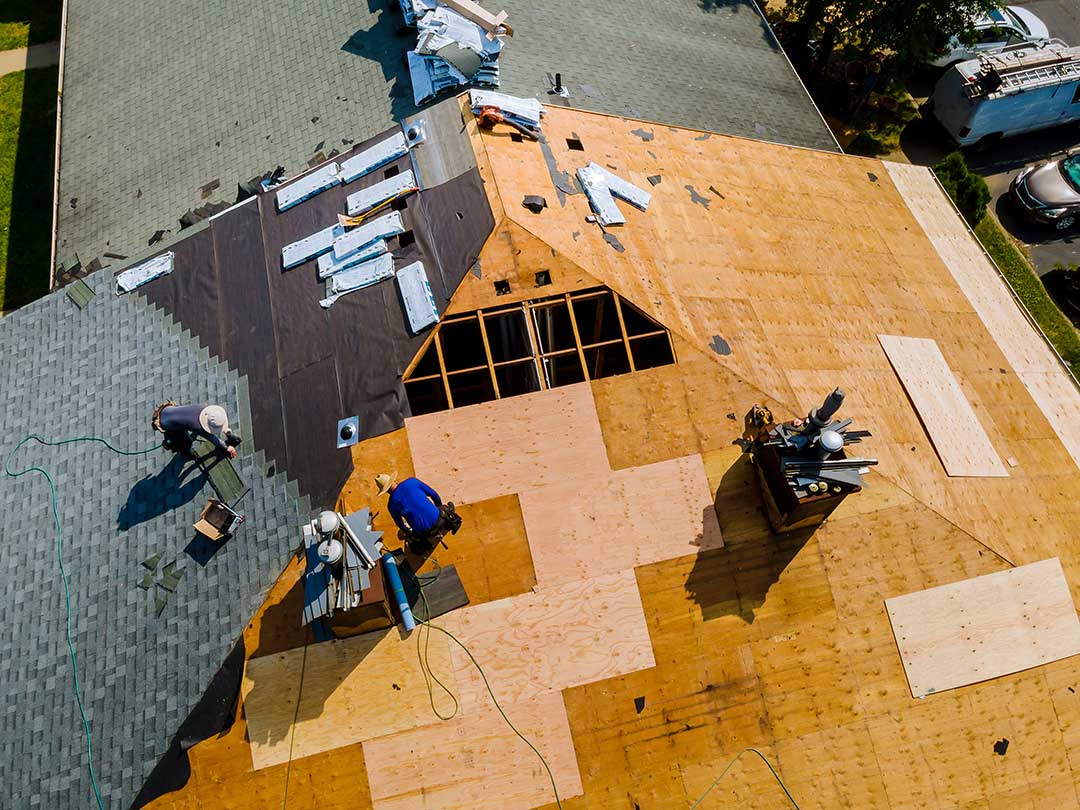
Do not climb onto a roof during high winds, rain, snow, or icy conditions. Roof surfaces, ladders, and tree debris can be hazardous, particularly during winter weather.
Can interior water damage be covered if the roof leak is not?
Sometimes. Coverage for interior damage may depend on the source of the water and whether the roof opening resulted from a covered event.
For instance, wind damages roofing materials and rain enters through the opening. The policy may cover certain resulting interior damage, while excluding the cost of correcting long-term deterioration. In another case, repeated seepage through an aging roof may be excluded altogether.
Policies may also treat water damage differently depending on whether it came from rain, melting snow, an ice dam, a plumbing failure, groundwater, sewer backup, or flooding. These distinctions are not interchangeable.
Most standard homeowners policies do not cover flood damage. Water that rises from outside the home can fall under a different type of insurance than rain entering through a storm-damaged roof. Separate endorsements may also be available for sewer backup, sump pump failure, or other water-related risks.
How can roof condition affect premiums or renewal?
Insurers may consider the roof’s age, material, condition, construction, and resistance to wind or hail when underwriting or renewing a policy. A roof that is older or visibly deteriorated may lead to higher premiums, restricted coverage, a roof-specific deductible, or a request for repairs or documentation.
Improvements can sometimes affect eligibility for discounts, but no particular roof feature guarantees a lower premium. Homeowners should ask how a new roof, stronger roof-to-wall connections, improved ventilation, or other protective measures will be treated under the specific policy.
Keep records of roof work, including invoices, permits when applicable, photographs, material information, and dates. These records can help establish the roof’s age and condition if a claim or renewal question arises.
What policy questions should homeowners ask?
A short policy review can reveal gaps before a storm occurs. Useful questions include:
- Is the roof covered at replacement cost or actual cash value?
- Are wind, hail, ice dams, falling trees, and snow weight covered?
- Is there a roof-specific or percentage deductible?
- Are matching materials covered if only part of the roof is damaged?
- Are leaks from faulty workmanship or old flashing excluded?
- Is water backup covered separately?
- Does the policy include temporary living expenses if the home becomes uninhabitable?
- Are detached garages, sheds, solar equipment, and personal belongings covered under separate limits?
- Are there maintenance or inspection requirements?
For complex losses, disputed claims, or questions involving policy interpretation, guidance from the insurer, the New York State insurance regulator, or a qualified insurance attorney may be appropriate. The most useful preparation is knowing the policy’s terms before a damaged roof turns into a larger household emergency.
