
How long should a roof last?
A typical asphalt-shingle roof often lasts about 15 to 30 years, but age alone does not determine whether replacement is necessary. Installation quality, ventilation, roof slope, sun exposure, storm damage, moisture, and maintenance all affect service life.
In Ithaca, NY, roofs must withstand repeated freeze-thaw cycles, heavy rain, wind, ice, and snow. These seasonal stresses can shorten the useful life of roofing materials, especially when water enters small cracks or backs up beneath shingles.
The roof’s installation date is a useful starting point. If records are unavailable, signs such as widespread granule loss, curling shingles, repeated leaks, and deteriorated flashing can help indicate whether the roof is nearing the end of its serviceable life.
What are the clearest signs that a roof needs replacement?
A roof may be ready for replacement when damage is widespread, recurring, or affecting the underlying roof structure. Common warning signs include:
- Shingles that are curled, cracked, blistered, or missing
- Bare areas where the protective granules have worn away
- Many loose or damaged shingles after wind or storms
- Sagging areas along the roofline or between rafters
- Water stains on ceilings or upper walls
- Damp insulation, musty odors, or visible mold in the attic
- Flashing that is rusted, loose, cracked, or pulling away
- Exposed roofing underlayment or roof decking
- Repeated repairs in several different areas
- Daylight visible through the roof deck from inside the attic
A few damaged shingles do not automatically mean the entire roof must be replaced. However, widespread deterioration suggests that isolated repairs may only provide temporary protection.
Does a roof leak always mean replacement?
No. A single leak caused by damaged flashing, a failed pipe boot, or a small area of storm damage may be repairable. The key questions are how long the leak has been present, whether the roof deck is damaged, and whether similar problems are appearing elsewhere.
Leaks should not be ignored simply because the ceiling stain is small. Water can travel along rafters and roof decking before becoming visible indoors. By the time a stain appears, insulation, wood, drywall, or electrical components may already have been affected.
A repair is more likely to be practical when:
- The roof is relatively young
- Damage is limited to a small, clearly defined area
- The shingles remain flexible and intact elsewhere
- The roof deck is dry and structurally sound
- Flashing or penetration details are the primary source of water
Replacement becomes more likely when leaks continue after repairs, the roof covering is brittle, or moisture has caused widespread deterioration.
How does roof age affect the decision?
Age is most useful when considered alongside condition. An older roof in good visible condition may continue to perform for some time, while a newer roof with poor ventilation or storm damage may fail earlier than expected.
For an aging roof, look for patterns rather than one isolated defect. Widespread granule loss, repeated patching, uneven shingle surfaces, and deteriorating valleys are more meaningful than a single missing shingle.
Homeowners should also consider what is beneath the shingles. If the roof covering is old but the decking and moisture-control details remain sound, replacement may involve mainly the exterior materials. If the decking is soft or rotted, the project becomes more extensive because the structural surface may also need attention.
Why are roof valleys, flashing, and penetrations important?
Many roof leaks begin at transition points rather than in the middle of an open shingle field. Valleys collect water and snowmelt. Flashing protects areas where the roof meets walls, chimneys, skylights, or other surfaces. Pipe penetrations depend on seals that can crack with age and temperature changes.
These locations deserve particular attention after winter and major storms. Ice and snow can place pressure on flashing, while repeated expansion and contraction can open small gaps. A roof may appear acceptable from the ground while vulnerable details are already failing.
A roof inspection should examine valleys, eaves, ridges, wall intersections, vents, and other penetrations—not just the visible shingles.
Can attic problems make a roof fail sooner?
Yes. Poor attic ventilation, air leakage, and excess indoor moisture can contribute to premature roof deterioration. Warm, moist air entering a cold attic may condense on the underside of the roof deck. In winter, uneven attic temperatures can also contribute to snow melting and refreezing near the eaves, which may create ice dams.
Warning signs inside the attic include:
- Frost or water droplets on the underside of the roof deck
- Damp or compressed insulation
- Dark staining on rafters or sheathing
- Rusted nails or metal fasteners
- Mold-like growth or persistent musty odors
- Blocked soffit or eave vents
Bathroom and kitchen exhaust should vent outdoors rather than into the attic. Insulation should not block designed ventilation paths at the eaves. Correcting moisture and airflow problems may help protect a roof, but it will not reverse structural damage or restore severely deteriorated shingles.
How do Ithaca winters affect roof condition?
Snow, ice, wind, and freeze-thaw cycles can expose weaknesses that are less noticeable during warmer months. Ice may lift shingles or damage flashing. Meltwater can enter small openings and later freeze, enlarging cracks. Heavy snow can also make sagging or drainage problems more apparent.
Spring is often a useful time for a careful visual check because snow has cleared and winter damage is easier to identify. Look for displaced shingles, damaged metalwork, granules in gutters, stains in the attic, and areas where water does not drain normally.
Trees near a home can add another local concern. Overhanging limbs may scrape shingles, drop branches, hold moisture against the roof, or shed leaves into valleys and gutters. This does not necessarily mean trees must be removed, but roof condition should be evaluated alongside drainage and branch contact.
Is replacement necessary if shingles are still on the roof?
Not necessarily. Shingles can remain in place while the roof’s protective performance declines. The absence of missing shingles does not rule out aging, moisture intrusion, or failing flashing.
Granules found in gutters are normal in small amounts, especially after installation, but a steady accumulation may indicate surface wear. Shingles that have become thin, brittle, or uneven may no longer provide dependable protection even if they appear intact from the ground.
A roof should also be evaluated after severe weather. Wind can loosen shingles without removing them completely, leaving lifted edges that allow water beneath the surface.
What should homeowners check before deciding?
Before choosing between repair and replacement, gather basic information:
- The approximate installation date
- Records of previous repairs or leaks
- Locations of ceiling stains and attic moisture
- Recent storm or tree-related damage
- The condition of flashing, valleys, gutters, and downspouts
- Whether the roof deck shows sagging, rot, or staining
- Whether attic ventilation paths are open and functioning
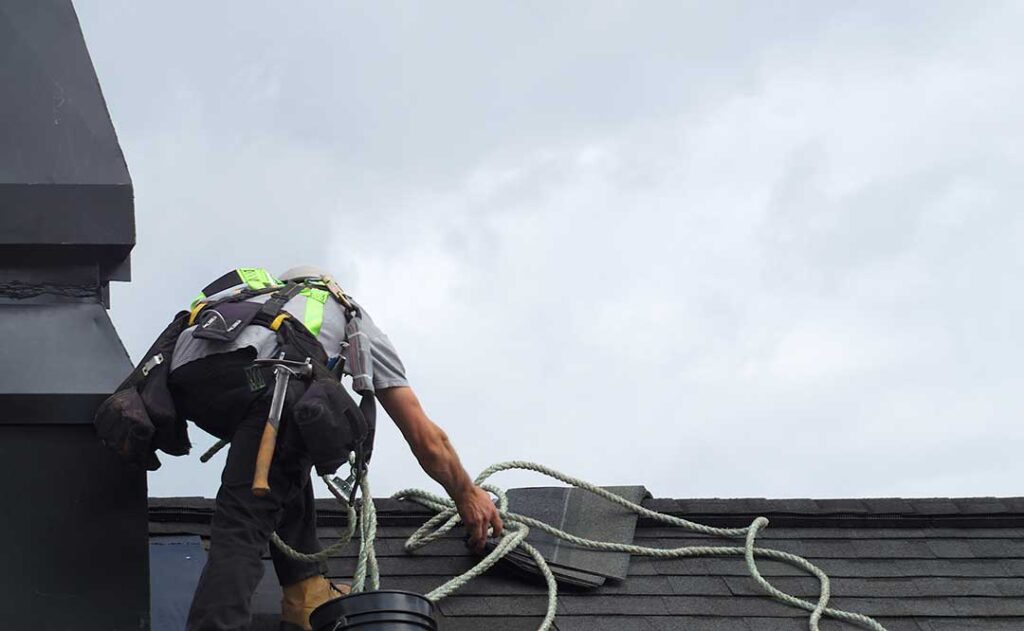
Safety matters. Walking on a steep, wet, icy, or visibly damaged roof can cause serious injury and may worsen the damage. Ground-level observations and attic checks from a safe location are generally more appropriate for routine evaluation.
The clearest indication for replacement is not one dramatic symptom but a pattern: an older roof with widespread surface deterioration, recurring leaks, failing details, and evidence that moisture has reached the underlying structure.
