
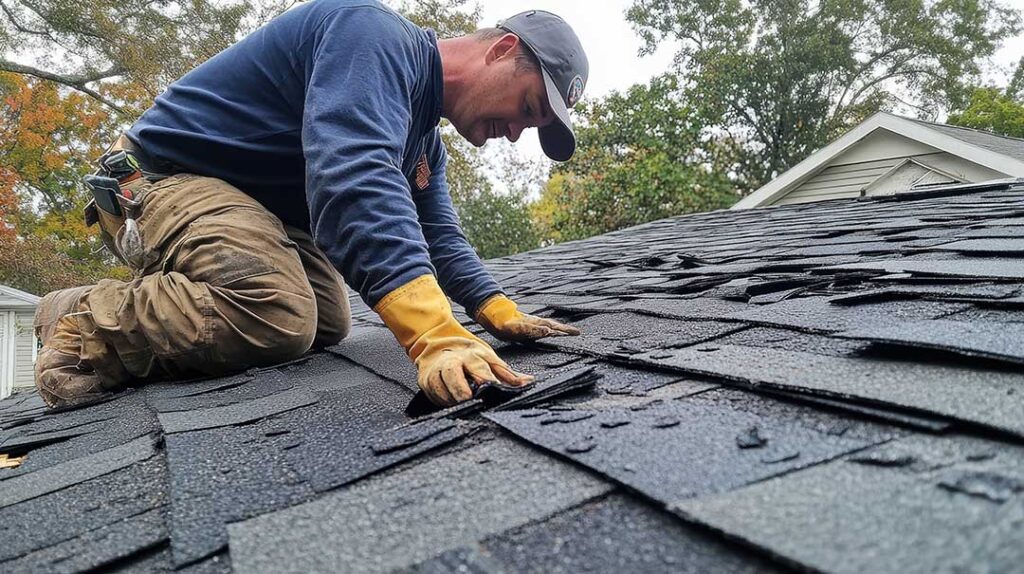
Roof cleaning is safest when it is treated as a low-impact maintenance task rather than a pressure-washing project. For many homes, the best approach is to remove loose debris from the ground, clean accessible areas gently, and avoid stepping onto a wet or steep roof.
In Ithaca, NY, repeated freeze-thaw cycles, damp shade, falling leaves, and winter moisture can encourage moss, algae, lichen, and debris to collect on roofing materials. Cleaning can help with drainage and appearance, but the wrong method can remove protective granules, loosen shingles, damage flashing, or create a serious fall hazard.
Is it safe to clean a roof yourself?
It may be reasonable to handle light cleaning from the ground or from a securely positioned ladder, but walking on a sloped roof is risky for most homeowners. Wet shingles, moss, frost, and loose granules can make footing unpredictable.
Avoid climbing onto the roof if it is:
- Wet, icy, frosted, or covered with fresh dew
- Steep, unusually high, or difficult to access
- Soft, sagging, damaged, or visibly deteriorated
- Near overhead utility lines
- Surrounded by fragile skylights or poorly supported roof sections
A roof that appears dry from the ground may still be slick in shaded areas. Fall-protection equipment also must be properly selected, anchored, and used. A harness attached to an unsuitable point can create a false sense of security rather than reliable protection.
What should be done before cleaning?
Start with an inspection from the ground. Use binoculars if needed rather than climbing up to get a closer look. Check for missing or lifted shingles, dark stains, moss, damaged chimney flashing, clogged valleys, sagging areas, and branches resting on the roof.
Choose a mild, dry day with little wind. Avoid cleaning immediately before rain, since runoff can spread cleaning solution across siding, windows, gardens, and walkways. In the local climate, late spring through early fall is generally more practical than winter, when ice and cold temperatures increase slip risks.
Protect the area below the roof:
- Move outdoor furniture, toys, and equipment away from the work area.
- Cover delicate plants with breathable fabric or rinse them with clean water before and after cleaning.
- Keep people and pets away from falling debris and runoff.
- Make sure downspouts discharge away from foundations and planted areas.
- Close windows and doors near the cleaning area.
Read the product label for any cleaner being considered. Never mix bleach with ammonia, acids, or other household chemicals. Chemical mixtures can release dangerous gases.
How can loose debris be removed safely?
The safest first step is usually removal of leaves, twigs, and pine needles from the ground or from the lower edge of the roof. A soft roof rake designed for the purpose may be used from the ground, but it should be pulled gently and kept away from shingles, flashing, vents, and gutters.
Do not drag a stiff rake across the roof. Scraping can remove the granules that protect asphalt shingles from sunlight and weather. It can also lift shingle edges or push debris beneath overlapping courses.
For gutters, use a stable ladder on firm, level ground. Keep both feet on the ladder and avoid leaning sideways. A ladder should extend above the roof edge when used for roof access, but climbing from a ladder onto a roof does not make a hazardous roof safe to walk on.
Never stand on the top step or use makeshift supports to gain extra height.
What is the safest way to remove moss and algae?
Moss and algae should be treated gently rather than blasted away. Loose moss can sometimes be lifted carefully with a soft brush or removed with a roof-safe product, but aggressive scraping may damage shingle surfaces.
Pressure washing is generally a poor choice for asphalt shingles. The force can strip protective granules, drive water beneath shingles, damage flashing, and shorten the roof’s service life. High-pressure water can also affect painted surfaces, siding, windows, and nearby landscaping.
If a cleaning solution is appropriate for the roofing material, apply it according to the label and allow it to work for the stated time. Do not assume that a stronger mixture will produce a better result. Stronger chemicals can discolor materials, harm plants, corrode metal, and enter stormwater systems.
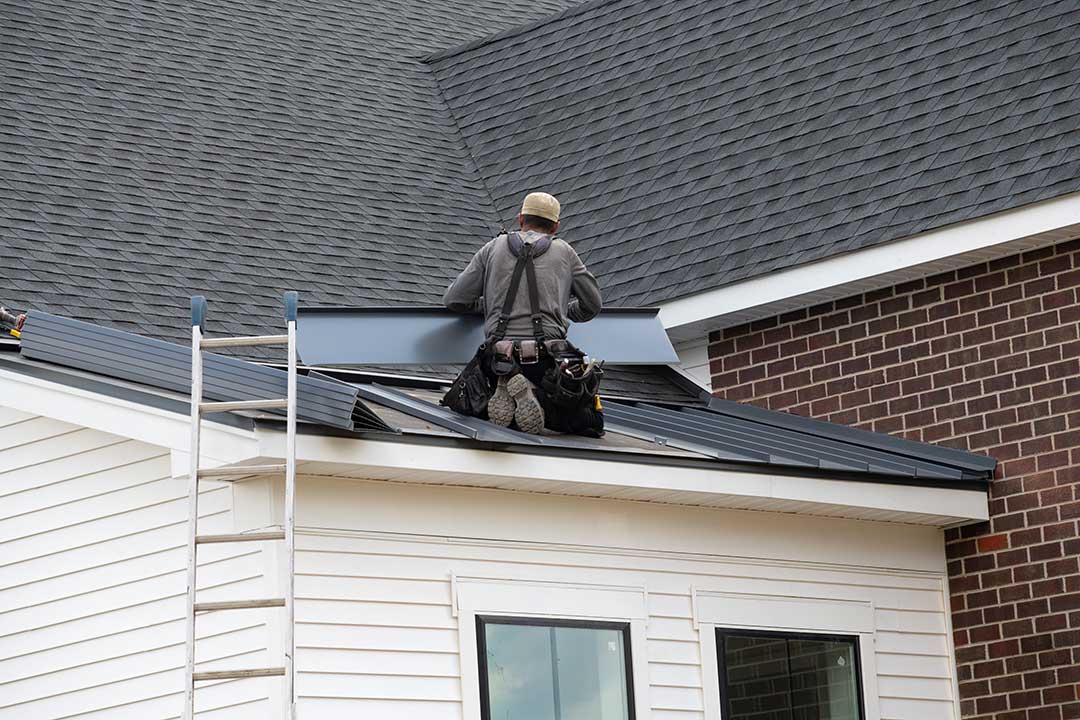
Algae often appears as dark streaks and may return after cleaning, especially on shaded slopes. Moss is more concerning when it becomes thick enough to lift shingle edges or hold moisture against the roof. Cleaning does not correct the underlying causes, such as overhanging branches, poor sunlight, blocked drainage, or persistent dampness.
Which roof-cleaning tools are appropriate?
For light maintenance, use tools that minimize abrasion and the need to climb:
- Binoculars for inspection
- A soft-bristle brush for accessible areas
- A roof-safe, nonabrasive treatment when the label permits its use
- A garden hose with gentle flow, if rinsing is recommended
- A stable extension ladder for gutter access
- Gloves, eye protection, and slip-resistant footwear
Avoid wire brushes, stiff metal tools, bare feet, smooth-soled shoes, and improvised roof anchors. Do not use a garden hose to direct forceful water under shingles or around vents.
The exact method also depends on the roof material. Asphalt shingles, wood shakes, slate, tile, and metal roofing do not respond identically to brushing, chemicals, or foot traffic. A cleaning method suitable for one surface may damage another.
How should runoff and gutters be handled?
Cleaning debris from a roof can send a large amount of material into the gutters. Clear the gutters before or during the work, but do not place yourself in an unsafe position to reach them.
After cleaning, inspect downspouts for blockage and confirm that water flows freely. Moss, leaves, granules, and chemical residue should not be washed toward a foundation, private well area, vegetable garden, pond, or storm drain.
Residents should also check local rules before using chemical treatments near waterways or drainage systems. Even ordinary household cleaners can harm plants and aquatic life when used carelessly.
When should roof cleaning stop?
Stop immediately if shingles begin shedding large amounts of granules, the roof surface feels soft, a ladder shifts, wind increases, or runoff enters an unintended area. Stop if a suspected leak appears inside the attic or ceiling.
Professional assistance is warranted when the task requires walking on a steep or fragile roof, using fall-arrest equipment, handling extensive moss, working near electrical lines, or addressing damaged roofing. This is not simply a matter of convenience: fall protection, roof access, and chemical handling can exceed what household equipment safely supports.
For routine upkeep, ground-level inspection, careful gutter maintenance, and trimming branches away from the roof often prevent the heaviest buildup. In a damp, snowy climate, those small maintenance steps can reduce moisture retention without putting the roof or the person cleaning it at unnecessary risk.
