
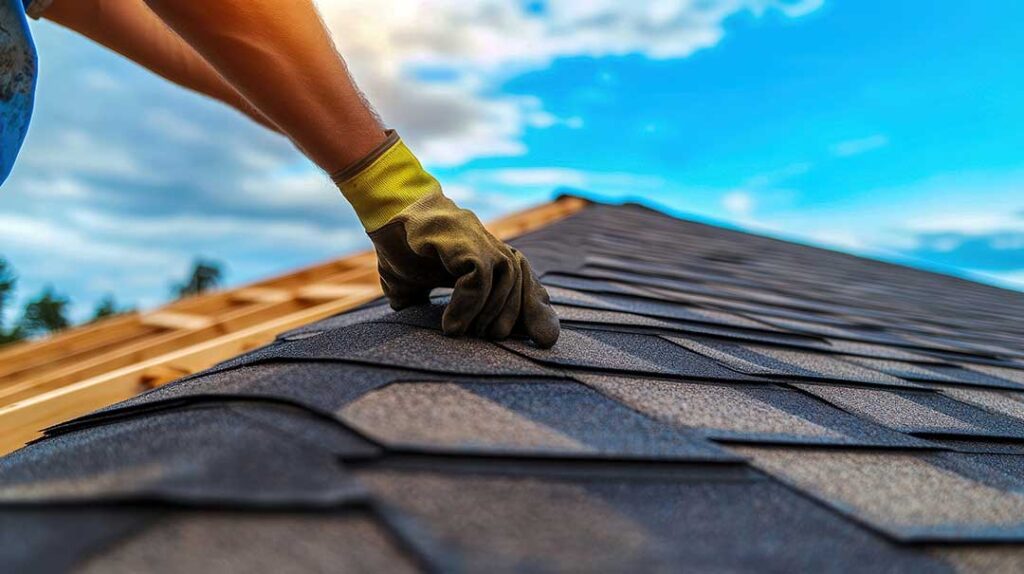
Walking on a roof is riskier than it appears. Roof surfaces can be steep, fragile, wet, icy, or weakened by age, and a fall from even a one-story roof can cause serious injury. In Ithaca, NY, changing weather, winter snow, freeze-thaw cycles, moss, and damp shaded areas can make roof access especially hazardous.
The safest approach is to avoid climbing onto the roof unless the task truly requires it. Many inspections can be completed from the ground, from an attic, or with a camera mounted on an extension pole.
Is it safe for a homeowner to walk on a roof?
It may be possible to walk safely on a sound, dry, low-slope roof, but no roof should be treated as automatically safe. A homeowner should not climb onto a roof if the surface is wet, icy, snow-covered, damaged, steep, or difficult to access.
Before considering roof access, check these conditions:
- The roof is dry and free of frost, snow, ice, and loose debris.
- Wind is light enough to maintain balance.
- The roof covering appears intact, with no sagging, soft spots, exposed decking, or loose materials.
- The ladder can be placed on stable, level ground.
- There is a safe way to get on and off without stepping onto fragile edges or gutters.
- Another adult is present on the ground and knows where the person is working.
If any of these conditions are uncertain, staying off the roof is the safer choice.
Which roofs are easiest and hardest to walk on?
Low-slope roofs with durable membrane or metal systems may be easier to cross than steep roofs, but they still contain hidden hazards. Asphalt-shingle roofs can be walked on carefully when dry, although the granules become slippery and can be damaged by repeated foot traffic.
Steep roofs should generally be treated as work areas requiring specialized fall protection. A roof that feels manageable near the lower edge may become much more dangerous closer to the ridge, valleys, dormers, or upper sections.
Extra caution is needed around:
- Skylights, which may not support a person even when they look solid
- Roof valleys, where water, ice, and debris collect
- Dormers and roof transitions
- Areas near chimneys, plumbing vents, and roof hatches
- Older roofs with brittle shingles or deteriorated decking
- Solar equipment, antennas, cables, and other rooftop fixtures
- Gutters, eaves, and overhangs, which are not walking surfaces
Never assume a clear plastic, translucent, or weathered panel can support body weight.
How should a ladder be used to reach a roof?
Most roof accidents begin before a person steps onto the roof. A ladder must be the correct length, placed at a stable angle, and secured against movement.
Set the ladder on firm, level ground. Do not place it on loose soil, wet grass, snow, ice, boxes, stacked lumber, or other objects used to gain extra height. The ladder should extend above the roof edge enough to provide a secure handhold while stepping on or off.
Keep three points of contact whenever possible: two hands and one foot, or two feet and one hand. Face the ladder while climbing, keep the body centered between the rails, and avoid carrying tools in both hands. Use a tool belt or raise equipment separately with a rope after reaching a stable position.
A ladder should not rest against a gutter unless it is designed and secured for that use. Gutters can bend, pull away from the fascia, or fail under side pressure. The ladder should also be secured at the top or otherwise prevented from sliding, with someone stabilizing it during setup and use.
What footwear and clothing are safest?
Wear clean, closed-toe footwear with a firm, slip-resistant sole. Shoes with worn soles, heavy mud, loose tread, or smooth leather are poor choices. Avoid sandals, slippers, and footwear that can catch on roofing materials.
Clothing should allow unrestricted movement. Avoid loose straps, dangling cords, and bulky layers that can snag on vents, branches, ladders, or equipment. Gloves may improve grip, but they should not reduce the ability to feel the roof surface or handle ladder rails securely.
Before climbing, remove mud, wet leaves, and other debris from footwear. Small stones carried onto asphalt shingles can also scratch the surface and increase the chance of slipping.
How should a person walk on shingles?
Move slowly and keep the body low enough to maintain balance without crouching so far that movement becomes awkward. Face uphill when possible on a sloped roof, and take short, deliberate steps.
Place feet on the stronger lower portions of shingles rather than directly on exposed edges or tabs. Avoid stepping on loose, curled, cracked, or missing shingles. Do not jump across roof sections, walk backward, or turn quickly.
Distribute weight evenly and avoid twisting while reaching. If something is beyond a comfortable distance, reposition the feet first. Reaching sideways from an unstable stance is a common cause of falls.
Do not walk directly along the roof edge. Keep well away from eaves and gable ends, and remember that roof overhangs can conceal weak decking. Stay clear of gutters because they are not designed to support a person.
Can a roof be walked on after rain or during winter?
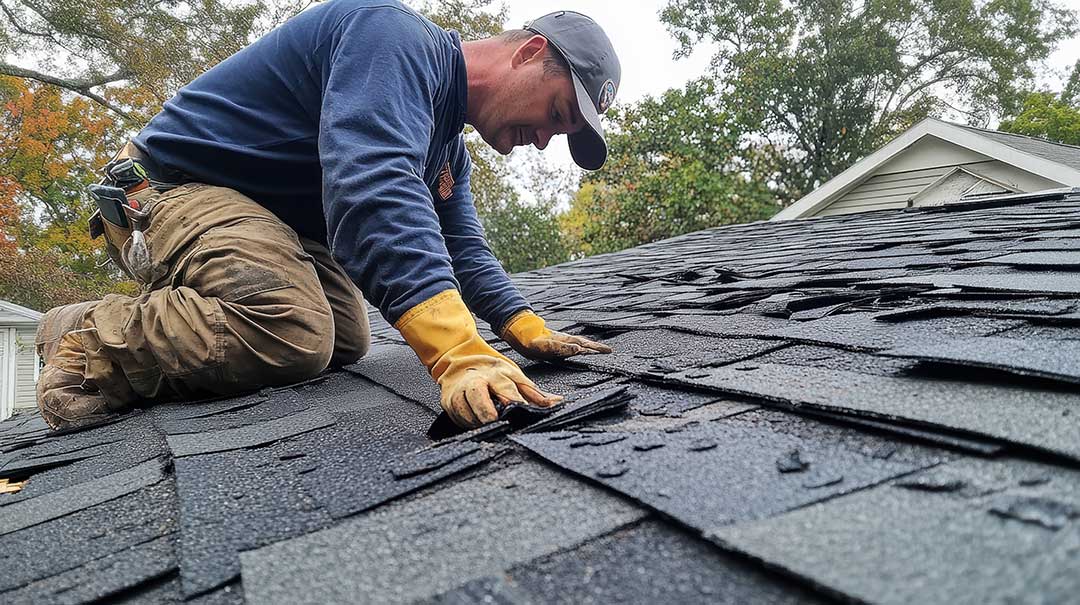
A roof should not be walked on when wet, icy, frosted, or covered with snow. In Ithaca, freeze-thaw conditions can create a thin, nearly invisible layer of ice on shaded slopes, metal flashing, and north-facing roof sections. Snow can also hide damaged shingles, skylights, weak decking, and changes in roof height.
Wait for the roof to dry completely after rain or melting snow. Do not assume a warm afternoon has removed all ice, particularly in shaded areas or near roof valleys. Wind can also create a serious balance hazard, especially when carrying tools or inspecting upper roof sections.
After a heavy snowfall, do not climb onto the roof to remove snow without proper equipment and fall protection. Snow removal can damage shingles and place a person near unstable roof edges or falling snow loads.
Does a harness make roof walking safe?
A harness alone does not prevent a fall. It must be part of a properly planned fall-protection system that includes a suitable anchor, compatible connectors, correct adjustment, and a method for preventing a dangerous swing or suspension injury.
Do not attach a lifeline to a chimney, plumbing vent, antenna, gutter, ridge vent, or another component that has not been specifically designed and verified as a fall-protection anchor. A makeshift attachment can fail during a fall.
Construction safety rules generally require fall protection for workers exposed to unprotected edges at significant heights, but a homeowner should not interpret that rule as permission to work without protection below that height. Residential falls can be severe from a single-story roof.
If a harness system has not been properly selected, installed, and understood, climbing onto the roof to use it can create a false sense of security.
What should be done if the roof looks damaged?
Do not walk over visibly sagging areas, soft spots, holes, missing decking, or sections damaged by fallen branches or ice. Interior stains, daylight visible through the attic, unusual ceiling movement, or a roof that appears uneven can indicate a structural or moisture problem.
A roof may also be unsafe after fire, severe wind, heavy tree impact, or prolonged water intrusion. In these situations, inspect from the ground or attic only if those areas are safe. Access may require trained personnel, temporary platforms, guardrails, or other protective equipment.
For routine tasks such as checking a vent, retrieving an object, examining suspected storm damage, or clearing a roof obstruction, a ground-level inspection is usually safer than climbing. If roof access is unavoidable and the conditions are hazardous, the appropriate solution is a properly equipped roofing or safety professional rather than improvised equipment.
What are common mistakes to avoid?
The most frequent errors are simple but serious:
- Climbing up “just for a minute”
- Using a ladder on snow, ice, or uneven ground
- Walking on a roof in wet shoes
- Stepping on skylights or plastic panels
- Treating gutters as handholds or platforms
- Carrying tools while climbing
- Working alone
- Assuming a harness is effective without a rated anchor
- Continuing after feeling tired, dizzy, cold, or unsteady
- Ignoring wind because the roof surface appears dry
A roof inspection should end before balance, visibility, weather, or judgment begins to deteriorate.
