
Hanging seasonal lights on a roof can make a home feel welcoming, but the work involves two separate hazards: falling from a height and creating an electrical problem outdoors. In Ithaca, NY, winter weather adds extra concerns because cold temperatures, snow, ice, wind, and early darkness can make roof access unpredictable.
The safest approach is to decorate from the ground whenever possible, use equipment designed for outdoor lighting, and avoid placing yourself on a roof that is wet, icy, steep, fragile, or difficult to access.
Is it safe to hang lights directly on a roof?
It can be safe to install lights along accessible eaves or gutters if the work can be completed from a properly positioned ladder or another stable surface. Walking on the roof itself creates greater risk, especially after rain, frost, snow, or freezing temperatures.
Before starting, inspect the area from the ground. Look for:
- Loose or damaged shingles
- Sagging gutters
- Low-hanging branches
- Overhead utility wires
- Steep roof sections
- Ice, frost, or wet leaves
- Decorative features that require reaching or leaning
If the lighting plan requires walking across a steep roof, stepping onto a slick surface, reaching beyond the ladder’s safe working position, or working near electrical wires, the task is not suitable for ordinary household ladder work.
What kind of lights should be used outdoors?
Use lights specifically labeled for outdoor use. Indoor-only light strings may not have adequate protection from moisture, temperature changes, or ultraviolet exposure.
Before installing a string, check the entire length for:
- Cracked or brittle insulation
- Exposed copper wire
- Loose sockets
- Bent or corroded plugs
- Missing bulbs or damaged seals
- Heat damage near the plug or connector
Do not use a light string that trips a circuit, becomes unusually warm, smells like burning plastic, or has been repaired with ordinary tape. A damaged cord can allow moisture to reach energized parts.
LED light strings generally produce less heat and use less electricity than older incandescent styles. That does not eliminate the need for outdoor-rated cords, weather protection, and correct electrical connections.
How should lights be attached to shingles, gutters, and siding?
Use light clips made for the surface being decorated. Plastic clips can often attach to gutters, shingle edges, fascia, railings, or siding without puncturing the roofing material.
Avoid:
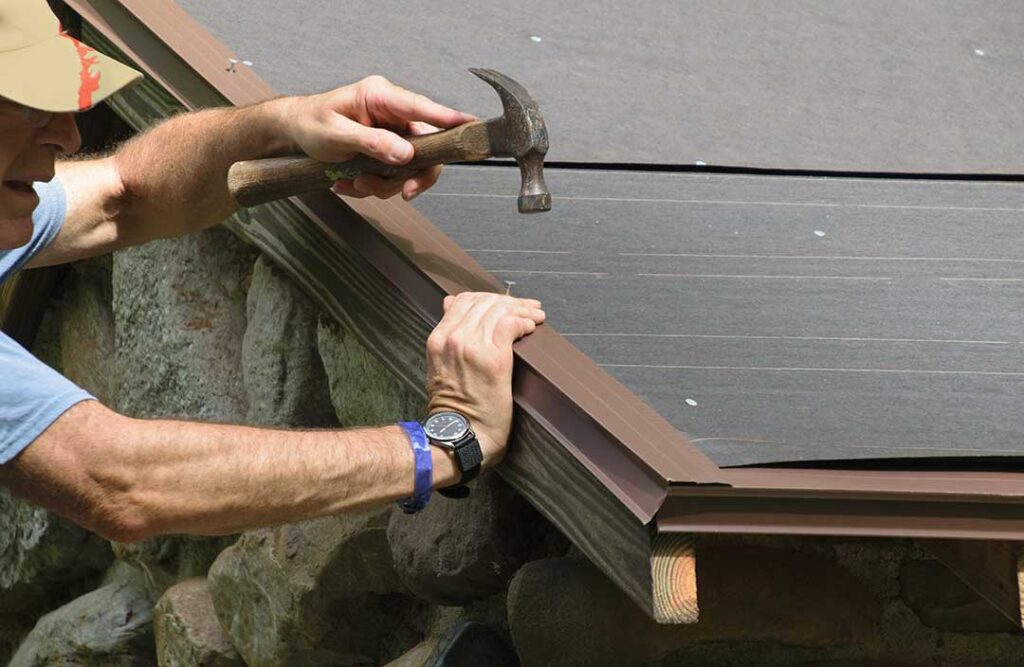
- Nails, screws, and staples driven through shingles
- Staples placed over or through electrical cords
- Adhesive products that may pull off paint, siding, or roofing granules
- Clips that pinch the wire tightly
- Attaching lights to damaged gutters or loose trim
Puncturing shingles can create openings where water enters the roof assembly. Even a small hole may become a leak after repeated cycles of rain, snow, ice, and thawing. Staples can also cut through insulation and create a hidden electrical hazard.
Place clips at regular intervals so the string is supported without sagging heavily. Keep the cord from rubbing against sharp metal edges, rough masonry, or places where it could be crushed by a window or door.
How can a ladder be used safely for roof lights?
Most seasonal lighting injuries happen during installation or removal, rather than while the lights are operating. Ladder placement deserves as much attention as the lights themselves.
Set the ladder on firm, level ground. Do not place it on snow, ice, loose soil, stacked boards, boxes, or improvised supports. Clear snow and ice from the area first, and keep the ladder away from downspouts, uneven landscaping, and wet leaves.
A few basic rules help:
- Maintain three points of contact while climbing.
- Keep the belt buckle between the ladder rails.
- Do not stand on the top step or the highest step marked unsafe.
- Do not lean sideways to reach the next section.
- Move the ladder instead.
- Have another adult stabilize the ladder when conditions are uncertain.
- Keep tools in a belt or raised with a rope rather than carried in both hands.
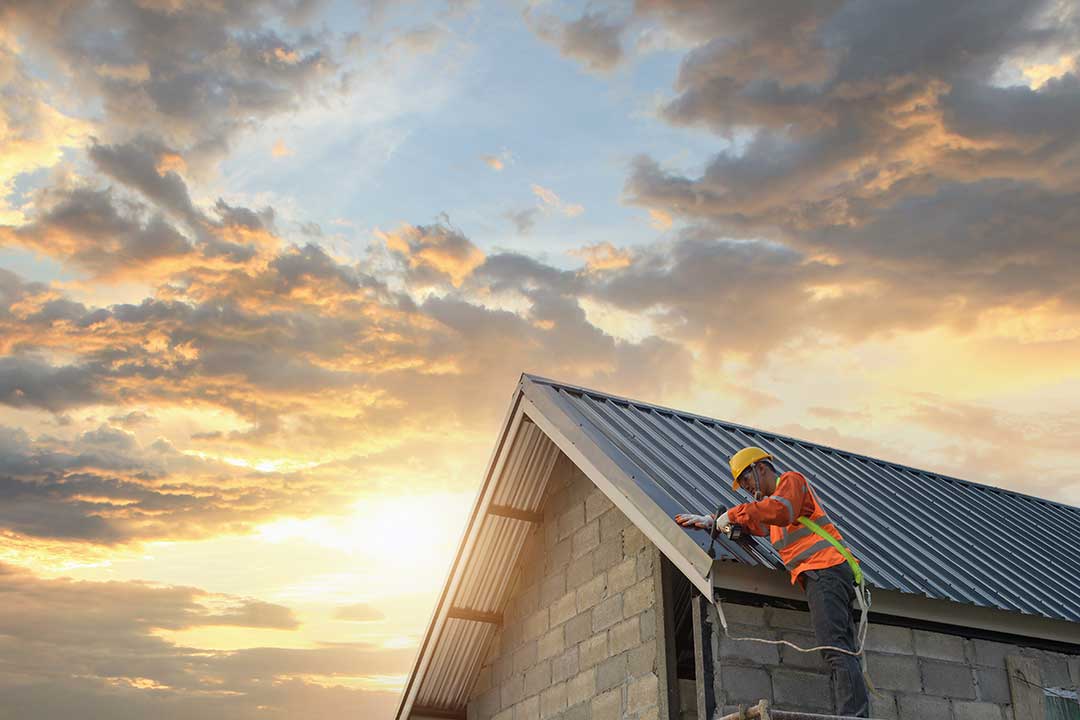
An extension ladder should extend above the roof edge only when it is being used for safe access to a properly accessible landing area. It should not be used as a platform for reaching across a roofline. Never place a ladder near overhead electrical wires, even if the wires appear insulated.
What electrical precautions matter most?
Outdoor lights should be connected to an outdoor-rated receptacle protected by a ground-fault circuit interrupter, commonly called a GFCI. This protection can shut off power quickly if electricity travels through an unintended path, such as wet ground or a person.
Keep plug connections off the ground and away from snowmelt and standing water. Weather-resistant covers or connection boxes can help protect the connection, but they do not make damaged cords safe.
Do not overload a receptacle or connect more light strings than the manufacturer permits. Follow the instructions for the particular lighting set, since allowable connections vary. Extension cords should be rated for outdoor use, sized for the electrical load, and routed where they will not become a tripping hazard.
Do not run cords under rugs, through doorways that pinch them, or across walkways where snow removal equipment may cut or crush them. Avoid connecting several extension cords end to end unless the product instructions specifically allow it.
How should lights be handled during Ithaca winters?
Cold and moisture can change conditions quickly. A dry installation day may be followed by freezing rain, wind, or heavy snow that places stress on the light clips and roof edge.
Leave room for natural movement. Do not pull strings tight between corners, trees, gutters, or architectural features. Wind can turn a tightly stretched cord into a repeated pulling force on the clips and the roof edge.
After a storm, inspect the installation from the ground. Look for:
- Hanging or detached sections
- Cords buried under snow
- Icicles forming around lights
- Fallen branches
- Water collecting near connections
- Lights that have gone dark or begun flickering
Do not climb onto the roof to remove snow from the lights. Snow rakes and ground-level inspection may reduce risk, but electrical cords should never be pulled free from packed snow or ice while connected to power.
Can lights be attached to gutters?
Lights may be attached to sound gutters with suitable clips, but gutters should not be treated as ladders, handholds, or support points. A gutter can bend, pull away from the fascia, or fail under a person’s weight.
Before installation, check whether the gutter is already loose, overflowing, rusted, or separated at a joint. Do not add lighting to a gutter that is unstable or holding ice. Keep clips away from downspout openings so leaves, water, and melting snow can still move freely.
Light strings should also be positioned so they do not block roof drainage. Winter ice dams and clogged drainage paths can cause water to back up beneath roofing materials.
When should the work be stopped?
Stop immediately if wind increases, surfaces become wet or icy, the ladder shifts, or the task requires unsafe reaching. Electrical work should also stop if a GFCI repeatedly trips or any part of the light string shows damage.
Some situations warrant qualified help because the risk cannot be controlled with ordinary precautions. These include steep or high roofs, fragile roofing materials, rooftop access near power lines, significant ice buildup, damaged electrical wiring, and installations that require standing on the roof for extended periods.
A ground-level lighting plan is often safer and just as effective. Lights can be placed along accessible eaves, porch railings, shrubs, windows, and other features without turning a seasonal decorating project into a roof-access problem.
