
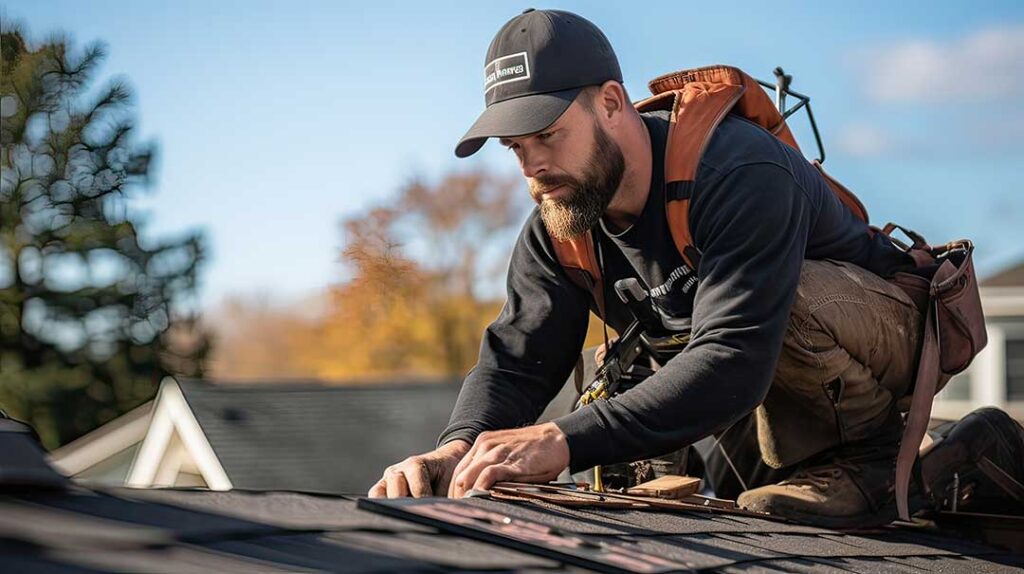
A roof tear-off is the removal of existing roofing materials before a new roof system is installed. In Ithaca, NY, the process may involve stripping away shingles, underlayment, flashing, and damaged decking so the roof structure can be inspected and rebuilt correctly.
What does a roof tear-off involve?
A tear-off usually begins with removing the visible roof covering down to the roof deck, which is the wood or structural panel beneath the shingles. Workers may also remove older underlayment, ice-barrier materials, metal flashing, ridge vents, and deteriorated trim.
The exact work depends on the roof’s age and construction. A typical asphalt-shingle roof may contain:
- Shingles
- Ridge caps and starter strips
- Underlayment
- Ice-barrier membrane near eaves and valleys
- Step flashing around walls and chimneys
- Pipe collars and roof vents
- Roof decking or sheathing
New York’s residential code generally treats roof replacement as removal of existing roof coverings down to the roof deck. A roof overlay, sometimes called a recover, may be allowed in limited situations, but it is not appropriate when the existing roof is badly deteriorated, water-soaked, or already has multiple layers.
Why remove the old roofing instead of covering it?
The main reason is inspection. Once the old materials are removed, hidden problems become visible.
A tear-off can reveal:
- Soft or rotted roof decking
- Water staining around valleys, walls, and penetrations
- Improperly installed flashing
- Sagging or uneven roof surfaces
- Old nails or fasteners that may interfere with the new roof
- Inadequate ventilation
- Evidence of ice dams or repeated winter leakage
Covering an existing roof can be acceptable in some conditions, but it hides the roof deck and adds weight. On older homes, particularly those with several previous roofing layers, a tear-off provides a clearer picture of the roof’s actual condition.
What happens on the day of the tear-off?
The work is usually noisy, dusty, and active. Crews protect areas around the building, then remove roofing materials in sections. Shingles are loosened with roofing tools and carried or moved into collection containers.
Homeowners should expect:
- Hammering and scraping sounds
- Roofing debris near exterior walls
- Temporary coverings over exposed roof areas
- Workers moving across the roof and around the property
- Limited access to porches, decks, or areas directly below the work
- Nails and small debris requiring careful cleanup
A tear-off may take part of a day or longer, depending on roof size, pitch, number of layers, weather, and the amount of decking that needs replacement. A steep, complicated, or older roof generally takes more time than a simple roof with one layer of shingles.
What if the roof deck is damaged?
Damaged decking should be replaced before new roofing is installed. The roof deck supports the underlayment and shingles, so weak or water-damaged sections can affect the finished roof.
Not every dark mark means the wood must be replaced. Some discoloration is old staining without active deterioration. A section is more likely to need replacement if it is soft, swollen, cracked, delaminated, or unable to hold fasteners securely.
The amount of replacement may not be known until the tear-off begins. This is one reason a written scope of work should explain how hidden damage will be handled and how additional materials will be documented.
How does Ithaca weather affect the process?
Weather is a major factor in this area. Rain, wet snow, freezing temperatures, wind, and rapid changes between thawing and freezing can interrupt roof work or make exposed decking unsafe.
A roof should not be left open during an approaching storm. During a tear-off, exposed sections are normally protected with temporary coverings or installed underlayment. Even a small opening can allow water into insulation, ceilings, wall cavities, or electrical areas.
Cold-weather work also requires attention to material handling. Some roofing products become less flexible in low temperatures, and sealant strips may not bond immediately without sufficient warmth and sunlight. Winter installation is possible in some circumstances, but weather conditions can affect scheduling, sealing, and cleanup.
Spring and fall often bring mixed conditions. A clear morning may be followed by rain or wind, so the daily work plan can change quickly.
What should residents do before work begins?
Preparation reduces damage and disruption inside and outside the home.
Before the tear-off, it is sensible to:
- Remove fragile wall decorations, especially on upper floors
- Cover or secure items in the attic
- Move vehicles away from the work area
- Keep children and pets away from debris zones
- Close windows during active removal
- Protect outdoor furniture, grills, and garden equipment
- Identify exterior electrical, gas, or mechanical equipment
- Ask how gutters, landscaping, and walkways will be protected

Vibration from pounding and foot traffic can cause small objects to shift on interior shelves. Dust may also enter through attic openings, light fixtures, or poorly sealed penetrations.
How are old roofing materials handled?
Roofing debris is typically collected as the old material is removed. The collection method may involve a container placed near the building, ground-level tarps, or controlled loading from the roof.
Cleanup should include a careful inspection of:
- Driveways and walkways
- Mulch and planting beds
- Porches and steps
- Gutters
- Areas beneath roof edges
- Spaces beside fences and sheds
Magnetic tools can help collect loose roofing nails, but no cleanup method is perfect. Residents should use caution around the work area until it has been checked and cleared.
Older homes may contain unusual roofing materials or layers installed decades ago. If a material appears suspicious, especially if it may contain asbestos, it should not be disturbed casually. Testing and regulated handling may be required before removal.
Are permits required for a roof tear-off?
Roofing work in Ithaca generally falls under building-permit requirements because it must comply with applicable building and energy codes. Permit responsibilities can vary based on the property, the scope of work, historic-district status, and whether structural repairs are involved.
A tear-off that exposes damaged framing, changes roof structure, alters ventilation, or involves other exterior work may require additional review. Property owners should verify requirements with the appropriate building department before work begins, particularly for older or historically designated properties.
A permit does not guarantee workmanship, but it helps establish which code requirements apply and whether inspections are part of the project.
What should be inspected before the new roof is installed?
The exposed roof should be checked for more than obvious leaks. Important inspection points include roof decking, eaves, valleys, wall intersections, chimneys, skylights, plumbing vents, and ventilation openings.
The roof should also be evaluated for signs of recurring ice dams. Problems may involve inadequate attic insulation, blocked ventilation, air leakage from the living space, or insufficient protection along the lower roof edge.
Replacing shingles without addressing these conditions can leave the underlying cause untouched. A new roof may look sound while moisture continues to enter during winter freeze-and-thaw cycles.
How can a homeowner tell whether the tear-off was complete?
A complete tear-off should leave the roof deck visible and accessible for inspection, except where specific materials or assemblies are intentionally retained under code-approved conditions. The surface should be reasonably clean, secure, and free of loose roofing debris before new underlayment is installed.
Homeowners can ask to review:
- Areas where decking was replaced
- Locations of new flashing
- Ice-barrier coverage at vulnerable edges and valleys
- Ventilation changes
- Any sections left in place
- The method used to protect the roof overnight or during bad weather
The most useful record is often a set of photographs taken after removal and before the new roof covers the deck. These images can document conditions that will no longer be visible once installation is complete.
