
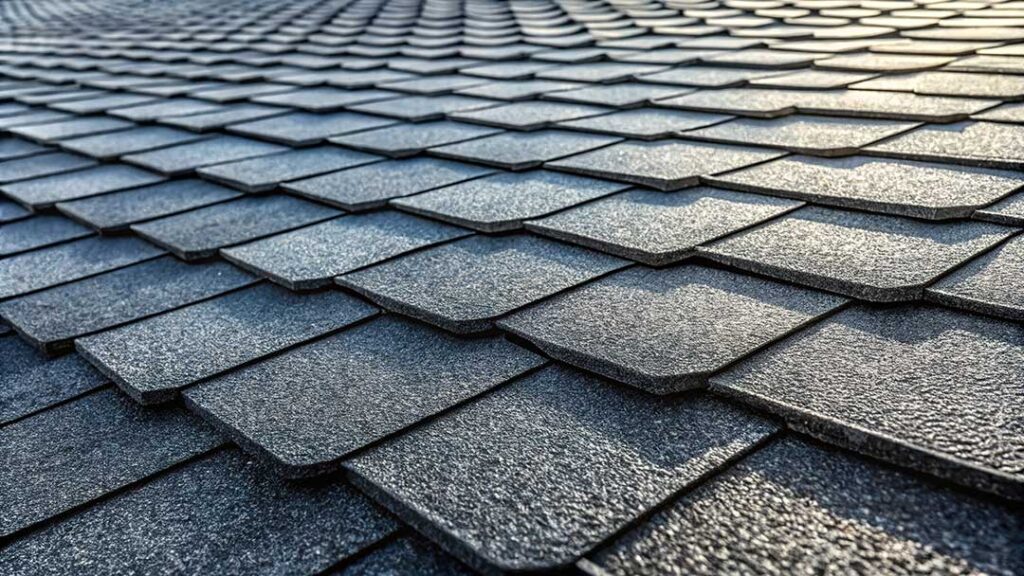
Roof stains are common on homes in Ithaca, NY, but discoloration does not always mean the roof is leaking or failing. Dark streaks, green growth, rust-colored marks, and interior ceiling stains each point to different causes. Identifying the type of stain first helps determine whether simple maintenance is appropriate or whether the roof needs closer evaluation.
What causes dark streaks on asphalt shingles?
Dark, vertical streaks are often caused by algae growing on the surface of asphalt shingles. The marks are especially noticeable on lighter-colored roofs and usually appear on roof slopes that receive limited direct sunlight.
Algae feed on moisture and small amounts of organic material that collect on shingle surfaces. Ithaca’s regular rainfall, snowfall, shaded roof areas, and seasonal humidity can create conditions where algae remain active for long periods. Algae staining may begin as a few narrow lines and gradually spread across an entire roof slope.
Algae are usually a cosmetic concern at first. However, persistent moisture can encourage moss and lichen, which may cause more direct damage by lifting shingle edges or keeping the roofing material damp.
Is roof moss more serious than algae?
Yes. Moss generally deserves more attention because it grows in thick, sponge-like mats and can work beneath shingle edges. As moss expands, it may lift or loosen shingles, interfere with water drainage, and hold moisture against the roofing material.
Moss commonly develops in areas with:
- Heavy shade from trees or nearby structures
- Poor roof drainage
- Accumulated leaves and organic debris
- Low roof slopes that dry slowly
- Gutters or downspouts that overflow onto the roof edge
Lichen can appear as pale green, gray, or yellowish crusts attached firmly to the shingles. It may not lift shingles as quickly as moss, but aggressive scraping can damage the protective granules embedded in the shingle surface.
What do rust-colored roof stains mean?
Rust-colored marks may come from exposed metal components, such as flashing, fasteners, chimney hardware, or ventilation parts. They can also develop when iron-containing particles wash across the roof surface.
A stain near a chimney, plumbing vent, skylight, or roof edge deserves closer observation. If the mark becomes darker after rain, spreads downward, or appears alongside dampness in the attic, the issue may involve corroded flashing or water movement rather than simple surface discoloration.
Rust on a metal roof can be different from rust-colored runoff on shingles. Small areas of surface oxidation may be manageable, but flaking metal, holes, open seams, or deteriorated fasteners can allow water to enter.
Could a roof stain indicate a leak?
A ceiling or wall stain inside the home may indicate a roof leak, but the location of the indoor mark does not always match the location of the roof problem. Water can travel along rafters, roof decking, insulation, wiring, and wall cavities before appearing indoors.
Signs that deserve prompt attention include:
- Brown or yellow ceiling rings
- Bubbling or peeling paint
- Damp insulation in the attic
- Wet roof decking
- Musty odors near the ceiling
- Water appearing after rain, snowmelt, or ice formation
- Stains that grow over time
A single old stain may reflect a past leak that has already stopped. Fresh discoloration, soft drywall, active dripping, or wet insulation suggests continuing moisture. Electrical fixtures beneath a wet area should be treated as a safety concern.
How should algae or moss be removed?
Surface growth should be removed gently, without using a pressure washer or stiff brush. High-pressure water can strip away shingle granules, force water beneath shingle edges, and shorten roof life.
For limited growth on an accessible, low-risk area, a garden hose directed downward along the slope may loosen surface material. Avoid spraying upward beneath the shingles. Moss should not be pulled away forcefully because attached growth can remove granules or tear the shingle surface.
Roof-cleaning products require careful handling. Read the label for approved roofing materials, dilution instructions, runoff precautions, and plant protection. Some treatments can damage landscaping, siding, painted surfaces, or metal if they are allowed to run uncontrolled. Never mix cleaning chemicals.
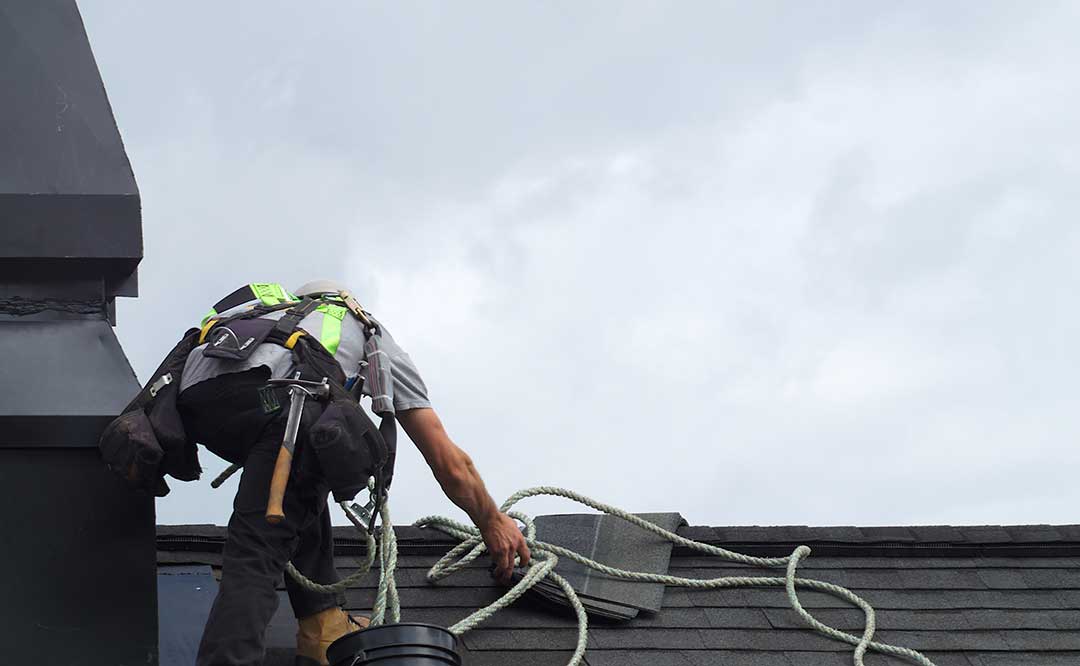
Walking on a roof creates additional risk, particularly when shingles are wet, frosty, steep, or weakened by age. Ladders also become unstable on icy ground or uneven terrain. If reaching the stained area requires climbing onto the roof, safety should take priority over cosmetic cleaning.
Should bleach be used on roof stains?
Bleach-based cleaning may remove visible algae, but improper use can damage nearby plants, metal, siding, and painted surfaces. Strong solutions can also affect roofing materials and create hazardous runoff.
A cleaning method should be compatible with the specific roof covering. Asphalt shingles, painted metal, wood shingles, and synthetic materials do not all respond the same way to chemical treatment. Scrubbing, scraping, or applying a concentrated solution can create more damage than the original stain.
The safest approach for any treatment is to follow the roofing material manufacturer’s maintenance instructions and avoid methods that remove the protective surface granules.
How can new stains be prevented?
Prevention depends on keeping the roof dry, clear, and able to drain properly.
Useful maintenance steps include:
- Remove leaves and small branches before they remain wet against the shingles.
- Keep gutters and downspouts clear so water does not back up beneath the roof edge.
- Trim branches that heavily shade the roof or drop large amounts of debris.
- Watch for overflowing gutters during heavy rain.
- Check attic ventilation and insulation for signs of excess moisture or condensation.
- Inspect roof valleys, flashing, and penetrations after severe weather.
- Keep records of recurring stains, including photographs taken from the ground.
Zinc or copper strips are sometimes used near the roof ridge to discourage algae and moss growth as rainwater moves over the metal. These products are not suitable for every roof, and they do not correct shade, drainage, or ventilation problems.
When does a roof stain require immediate attention?
A stain should be treated as more than a cosmetic issue when it appears with active water entry, lifted shingles, missing roofing material, sagging decking, exposed underlayment, or damaged flashing.
After a heavy snow, windstorm, or freeze-thaw cycle, look from the ground for displaced shingles, dark wet patches, hanging metal, and unusual buildup near valleys or roof edges. Do not climb onto an icy or snow-covered roof. Roof surfaces can remain slippery even when they appear clear from below.
For older roofs, widespread staining may be one visible sign of general wear rather than the primary problem. Granule loss in gutters, brittle shingles, repeated leaks, and exposed fasteners provide more useful information about remaining roof performance than color alone.
A roof stain is often a clue rather than a diagnosis. Identifying whether it comes from algae, moss, rust, debris, condensation, or water intrusion helps protect the roof without causing unnecessary damage during cleaning.
