
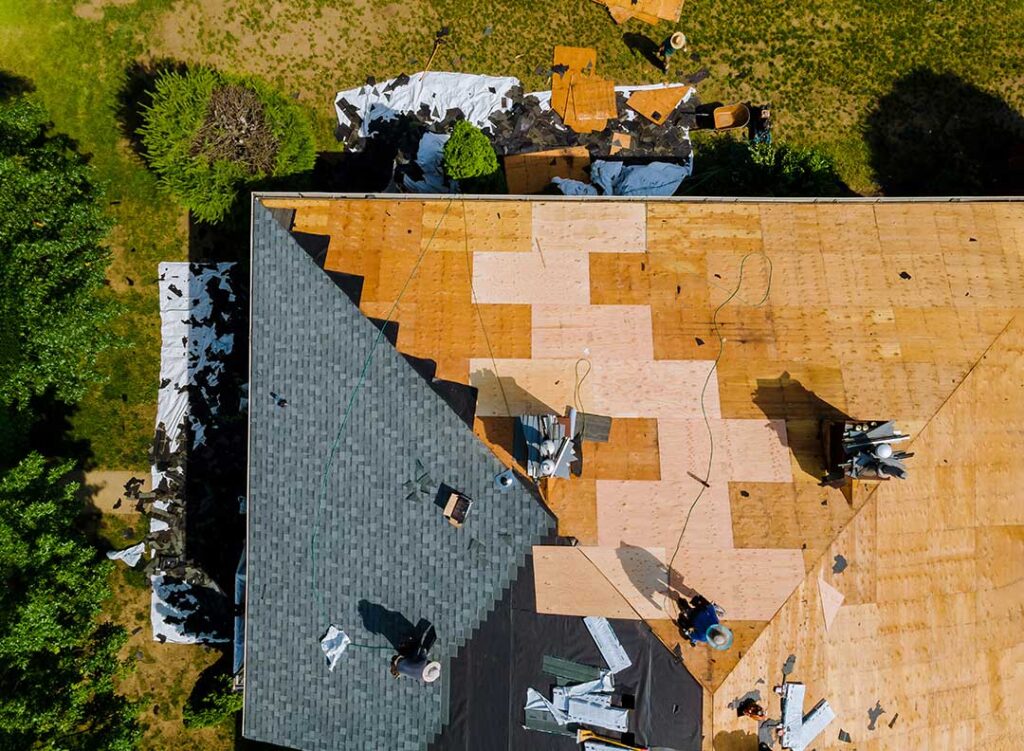
What does a roof tear-off involve?
A roof tear-off is the removal of existing roofing materials before a new roof system is installed. In most cases, the work includes removing shingles, underlayment, flashing that cannot be reused, and sometimes damaged roof decking.
For homeowners in Ithaca, NY, a tear-off can reveal conditions that were hidden beneath the old roof. The visible roofing may look worn but relatively sound, while the decking underneath may have moisture damage, rot, mold-like staining, or weakened areas caused by long-term leaks and seasonal weather.
A tear-off is different from a roof overlay, in which new shingles are installed over existing ones. Overlays may appear faster, but they can conceal damaged materials, add weight, and make it harder to inspect the roof structure.
What happens before the old roofing is removed?
Before work begins, the roof area and surrounding property should be prepared. This usually includes protecting windows, siding, doors, landscaping, outdoor furniture, and heating or cooling equipment near the building.
Household preparation may include:
- Moving vehicles away from the work area
- Removing fragile wall decorations from upper floors
- Covering items stored in an attic or top-floor room
- Keeping children and pets away from the work zone
- Closing windows during active tear-off
- Identifying outdoor electrical wires, low branches, or other obstacles
Roof removal is noisy. Scraping, hammering, footsteps, and the movement of materials can be heard throughout the building. Vibrations may also cause small amounts of dust or debris to fall from attic insulation, especially in older homes.
Weather planning matters in this area. Roof work requires conditions that allow materials to be removed, exposed surfaces to be protected, and new roofing products to be installed correctly. Rain, strong wind, freezing temperatures, and snow can interrupt the schedule or require temporary protection.
How is the tear-off performed?
Workers generally begin at the roof edges and remove the shingles in sections, working upward toward the ridge. Roofing nails and underlayment are removed along with the shingles. Materials are often placed into a disposal container or lowered to the ground through controlled methods.
The roof should not be left exposed longer than necessary. As sections are opened, the underlying decking is inspected. If weather threatens, exposed areas may be covered with temporary waterproof materials, although temporary coverings are not intended to serve as a finished roof.
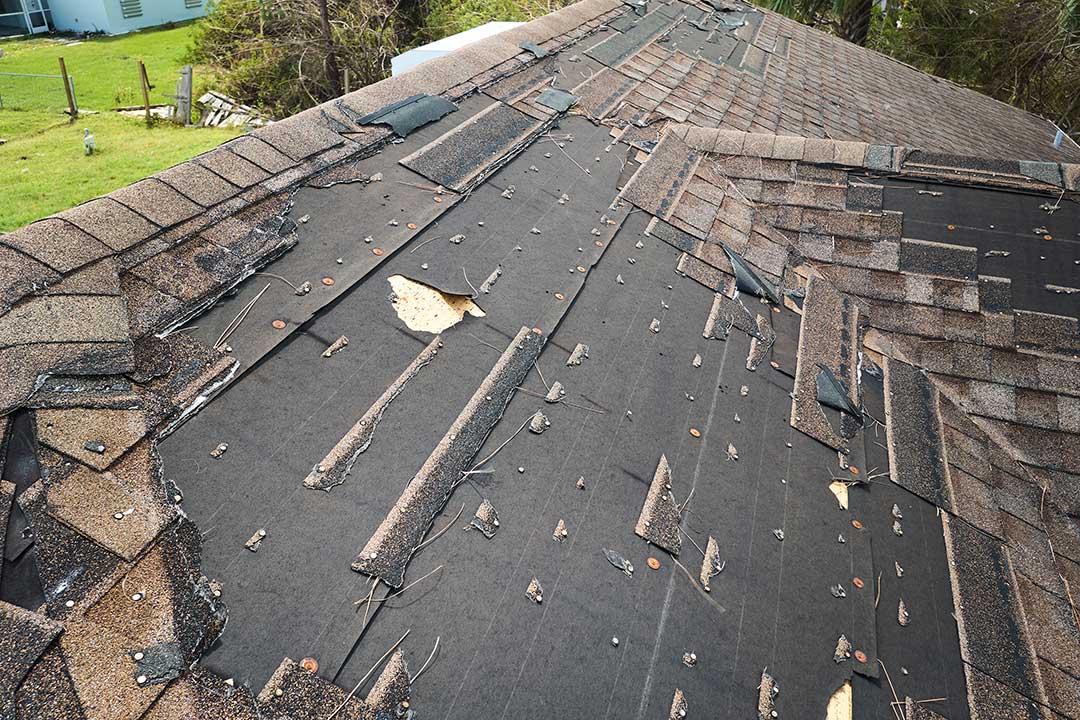
Older roofing systems can create additional work. Several layers of shingles, heavy roofing felt, wood shingles, deteriorated flashing, or previous repairs may need to be removed separately. Each extra layer increases labor, debris, and the amount of time the building is exposed.
What problems might be found underneath?
The most common surprise during a tear-off is damaged roof decking. Decking is the structural layer beneath the roofing materials. It may consist of plywood, oriented strand board, or older boards in houses built with earlier construction methods.
Common findings include:
- Soft or spongy areas caused by water intrusion
- Dark staining around valleys, chimneys, and roof penetrations
- Split or warped boards
- Rusted fasteners
- Improperly installed flashing
- Gaps around vents or other roof openings
- Evidence of ice dams or repeated winter leakage
Snow and ice can make roof problems more noticeable during colder months, but damage may have developed over many seasons. Repeated freeze-thaw cycles can open small cracks, loosen materials, and worsen weak flashing. Roofs with limited ventilation may also experience moisture buildup beneath the roof covering.
Not every stain means the decking must be replaced. The decision depends on the material’s strength, moisture level, condition around fasteners, and whether it can provide a secure base for the new roofing system. Any replacement should be documented so the homeowner understands what was found and why the work was necessary.
How long does a roof tear-off take?
A straightforward tear-off and replacement may be completed in a day or several days, but there is no reliable single schedule for every house. Roof size, pitch, access, number of existing layers, weather, disposal arrangements, and decking repairs all affect the timeline.
A compact, simple roof with clear access may move quickly. A steep roof, complex roofline, attached porch, dormer, chimney, or multiple valleys requires more careful work. Older homes may also contain several generations of roofing materials or construction details that slow removal.
Weather delays are not automatically a warning sign. Pausing work may be the safer choice if rain or high winds would leave the structure exposed or interfere with proper installation.
What should homeowners expect inside the house?
Most tear-off activity occurs outside, but some effects may be noticeable indoors. The building may experience vibration, temporary noise, and minor dust movement in attic spaces. Small pieces of old roofing material can occasionally fall through gaps around recessed lights, attic openings, or ceiling fixtures if the area is not protected.
A tear-off should not normally cause ceilings to sag or large amounts of debris to enter living spaces. If that occurs, the condition should be reported promptly so it can be inspected. Keeping attic access closed during active work can help limit dust and debris.
Are permits required for roof replacement?
Roofing work may require a building permit, depending on the property’s jurisdiction and the scope of the project. Within the City of Ithaca, roofing is listed among work that requires a building permit under the applicable building and energy codes. Properties in other jurisdictions may follow different administrative procedures.
Historic properties, designated districts, additions, and buildings with unusual structural conditions may have additional requirements. Permit questions are best checked with the code enforcement office serving the property before work begins. A permit does not guarantee construction quality, but it helps establish that the project is being reviewed under applicable requirements.
How is cleanup handled?
Roof tear-off creates a substantial amount of debris, including shingles, nails, felt, wood, flashing, and damaged insulation or sealants. Cleanup should include the roof surface, gutters, walkways, lawn, driveway, and areas beneath roof edges.
Magnetic tools are commonly used to locate loose roofing nails, but a single cleanup pass cannot guarantee that every nail has been found. Residents should use caution when walking around the property during and immediately after the project, particularly near landscaping, play areas, and driveway edges.
Gutters may also contain granules, dust, and small pieces of roofing material after removal. These materials should be cleared so they do not block drainage.
What should be documented before the project starts?
Photographs of the roof, siding, landscaping, attic, and nearby exterior areas can provide a useful record of the property’s condition before work begins. It is also helpful to keep written details about the planned roofing layers, ventilation changes, flashing replacement, decking repairs, cleanup responsibilities, and weather-related procedures.
The most useful questions are practical:
- How many existing roof layers will be removed?
- What happens if damaged decking is discovered?
- Which flashing components will be replaced?
- How will the roof be protected if rain arrives?
- How will debris and loose nails be collected?
- What inspection or permit steps apply to the property?
- What areas around the house need to remain clear?
A roof tear-off is disruptive, but it also provides the clearest opportunity to inspect the roof structure and correct hidden problems before new materials cover everything again. Understanding the process helps residents distinguish normal construction noise and debris from conditions that deserve prompt attention.
