
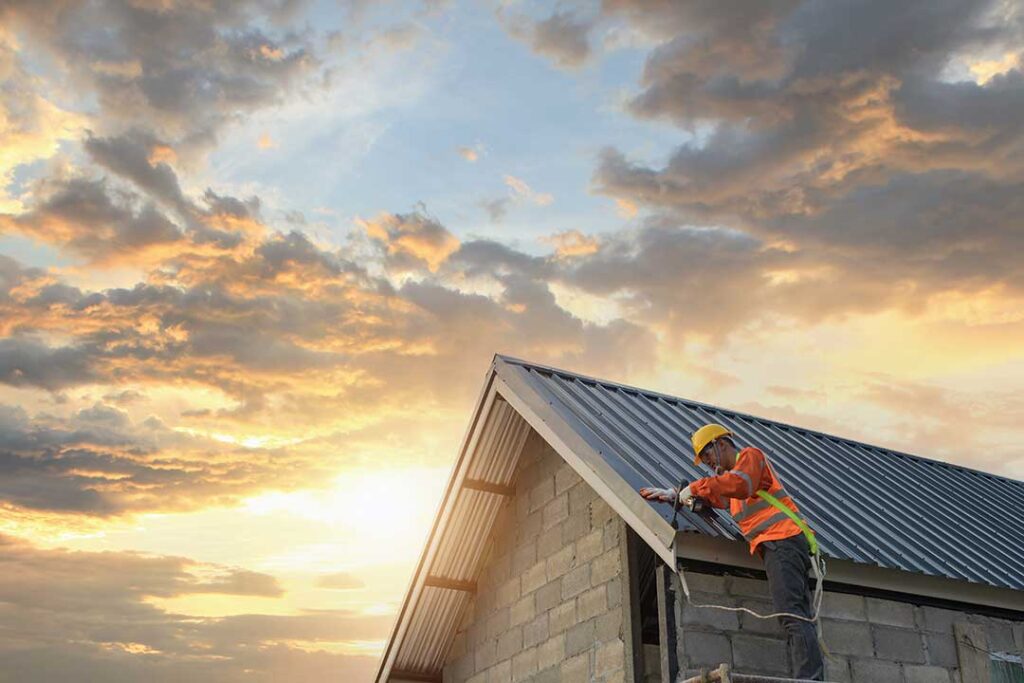
Fall maintenance helps a roof handle wet weather, falling leaves, freezing temperatures, and winter snow with fewer surprises. For households in Ithaca, NY, the most useful preparation is a careful inspection from the ground, safe removal of debris, attention to drainage, and early correction of small problems.
What should be checked on a roof in fall?
A fall roof check should look for damage, blocked drainage, and areas where water may enter before temperatures drop. Many problems are easier to identify and address before ice, snow, and shorter daylight make access more difficult.
From the ground, look for:
- Missing, cracked, curled, or visibly lifted shingles
- Dark patches, sagging areas, or uneven rooflines
- Loose or damaged flashing around chimneys, skylights, vents, and roof edges
- Granules collecting in gutters or near downspouts
- Moss or heavy organic growth, especially on shaded slopes
- Peeling paint, damp stains, or rotted wood near roof edges
- Daylight visible through the attic roof deck
Binoculars can help provide a closer look without climbing. A roof should not be walked on when it is wet, icy, steep, or covered with leaves. Even a low-slope roof can become slippery in autumn conditions.
How should leaves and roof debris be removed?
Leaves should be cleared from valleys, roof edges, gutters, and areas behind chimneys or other raised features. Valleys are especially important because they collect water from two roof slopes and can become blocked by wet leaves.
Avoid scraping shingles aggressively or using tools that can tear roofing materials. A soft broom or leaf blower used from a safe position may remove loose debris, but blowing leaves from a ladder or walking on the roof creates a fall hazard. Wet leaves can also conceal damaged shingles, open seams, and slippery surfaces.
Do not use a pressure washer on asphalt shingles. High-pressure water can remove protective granules, damage the shingle surface, and force water beneath roofing materials.
Moss should not be pulled off forcefully. Its roots can disturb shingles, and removal may expose weak areas. Moss growth often points to persistent shade or moisture, so trimming nearby branches and improving airflow may help reduce recurrence.
Why are gutters and downspouts so important before winter?
Gutters and downspouts carry roof water away from siding, foundations, walkways, and entry areas. If they are blocked, water may overflow beneath the roof edge, soak fascia boards, or collect beside the foundation.
After leaves have started falling, clear gutters and check that:
- Water can move freely toward each downspout
- Downspouts are firmly attached
- Elbows and outlets are not clogged
- Extensions discharge water away from the foundation
- Gutters are not pulling away from the fascia
- Standing water is not visible after rainfall
A simple hose test can reveal slow drainage, but it should be done only from a stable position. Do not lean beyond a ladder’s safe working angle or reach across a roof edge.
Gutter cleaning may need to be repeated later in the season if trees remain full or if another heavy leaf drop occurs. In a wooded neighborhood, one cleaning in early fall may not be enough.
What roof areas are commonly overlooked?
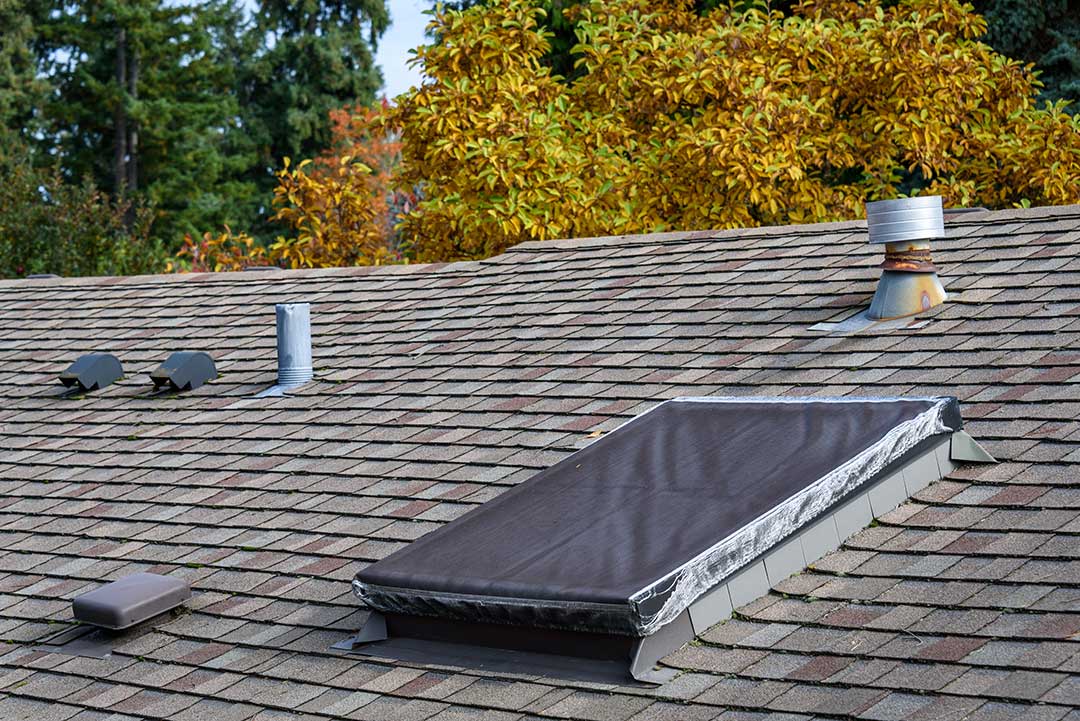
Roof penetrations and transitions deserve special attention because they are more likely to leak than uninterrupted shingle fields. Inspect the areas around plumbing vents, chimneys, skylights, dormers, roof-to-wall intersections, and attached porches.
Look for cracked or missing sealant, lifted flashing, rust, separated metal joints, and stains on nearby siding. Sealant is not a substitute for damaged flashing, and adding more caulk over an active leak may only hide the problem temporarily.
The attic can provide useful evidence. On a dry day, look for:
- Water stains or darkened wood
- Damp insulation
- Mold-like growth
- Rust around nails or metal fasteners
- Daylight entering through the roof deck
- Wet areas near vents or roof penetrations
A roof leak does not always appear directly below the exterior damage. Water can travel along rafters, sheathing, insulation, or interior framing before becoming visible on a ceiling.
Should roof ventilation be checked in the fall?
Yes. Adequate ventilation and insulation help manage moisture and temperature differences in the attic. They do not prevent every ice-related problem, but poor attic conditions can contribute to condensation, damp insulation, and premature deterioration of roofing materials.
Check that attic vents are not blocked by insulation, leaves, or nests. Do not cover ventilation openings simply to keep cold air out. Attic ventilation is designed to exchange air, while insulation belongs at the ceiling level in a properly configured attic.
Moisture from bathrooms, kitchens, and clothes dryers should vent outdoors rather than into the attic. Condensation becomes more noticeable as outdoor temperatures fall, so autumn is a practical time to look for dampness before winter conditions intensify.
How can homeowners prepare for freezing weather?
Before the first prolonged freeze, repair or document any known roof damage, confirm that drainage paths are clear, and make sure vulnerable exterior pipes or fixtures are protected. Water that enters a small opening can freeze, expand, and worsen the surrounding damage.
Keep an eye on ceiling stains after heavy rain. A stain that appears only during wind-driven rain may point to a flashing or edge problem rather than a broad failure of the roof surface.
Do not assume that a roof is ready for winter because it is relatively new. Installation details, flashing, ventilation, tree exposure, and storm damage all affect performance. Older roofs may still function well, while newer roofs can develop isolated problems after wind, falling branches, or improper drainage.
When is roof work unsafe to do personally?
Roof maintenance should be postponed when surfaces are wet, frosted, icy, snow-covered, or visibly unstable. Steep roofs, fragile roofing materials, high elevations, and suspected structural damage create additional hazards.
Professional evaluation is justified when there is active leaking, sagging, exposed decking, extensive storm damage, damaged chimney masonry, or a need to walk on a steep or difficult roof. Electrical lines, unstable ladders, and falling branches also require extra caution.
For routine seasonal care, many homeowners can safely inspect from the ground, clean accessible gutters with proper equipment, trim branches from a safe location, and monitor attic conditions. The goal is not to perform every repair personally; it is to identify concerns early and avoid turning seasonal maintenance into an injury or emergency.
What is a practical fall roof maintenance schedule?
A useful approach is to divide the work across the season:
- Early fall: Inspect the roof, attic, flashing, and roof edges before heavy leaf drop.
- Mid-fall: Clear gutters, valleys, and downspouts after leaves begin accumulating.
- Late fall: Repeat drainage checks, inspect after major windstorms, and confirm that water is directed away from the foundation.
- After the first freeze: Watch for ice-related overflow, new ceiling stains, and unusual attic moisture.
Keeping brief notes or taking ground-level photographs can make it easier to compare conditions from year to year. This record is especially helpful after severe wind, heavy rainfall, or a major tree-limb event.
