

Why does weather matter so much to a roof?
Weather affects nearly every part of a roofing system, including shingles, underlayment, flashing, gutters, attic insulation, and roof framing. In Ithaca, NY, roofs must handle snowy winters, freezing rain, repeated freeze-thaw cycles, spring moisture, summer heat, wind, and falling leaves.
A roof does not usually fail because of one storm alone. Damage often develops gradually as weather exposes small weaknesses. A lifted shingle can allow water beneath the roofing material. A clogged gutter can send runoff behind the fascia. Repeated expansion and contraction can loosen flashing around chimneys, vents, and skylights.
Understanding how each season affects the roof makes it easier to recognize problems before they spread into the attic or living areas.
How does winter snow affect a roof?
Snow adds weight, blocks drainage, and can hide existing damage. Most sound residential roofs are designed to carry expected local snow loads, but the risk increases when snow becomes wet and heavy or accumulates unevenly.
Areas that deserve attention include:
- Low-slope roof sections where snow remains longer
- Valleys where snow and ice collect
- Roof sections below higher slopes
- Places near dormers, walls, chimneys, and other changes in roof shape
- Older roofs with weakened framing or long-term moisture damage
Snow sliding from one roof section onto another can create concentrated loads. Drifting can also pile snow unevenly, especially where roof geometry or nearby structures interrupt normal wind patterns.
Heavy snow should not be climbed onto casually. Walking on an icy or snow-covered roof can damage shingles and create a serious fall hazard. If ceilings begin to sag, doors suddenly stick, or new cracking appears in walls, the building should be treated as a potential structural concern.
What causes ice dams and roof leaks?
Ice dams form when snow melts on a warmer part of the roof and refreezes at a colder roof edge. The resulting ice buildup can block drainage, allowing meltwater to work beneath shingles and into the roof assembly.
Warmth from the house can reach the attic through gaps around light fixtures, plumbing penetrations, attic hatches, chimneys, and partition walls. Insufficient insulation or poorly sealed heating ducts can also raise roof-deck temperatures. Sunlight may contribute to melting, even when outdoor air remains below freezing.
Icicles are not proof of a leak, but large or repeated icicles can indicate that melting and refreezing are taking place. Ice dams may cause:
- Wet attic insulation
- Stained ceilings and walls
- Peeling paint
- Damaged roof sheathing
- Mold growth where moisture remains
- Deteriorated gutters and roof-edge materials
The long-term solution usually involves improving the boundary between the heated home and the attic, correcting insulation gaps, and maintaining balanced roof ventilation. Roof-edge membranes and other protective details can reduce the consequences of ice damming, but they do not replace proper air sealing and moisture control.
How do freeze-thaw cycles damage roofing?
Freeze-thaw cycles are especially hard on roofs because water expands when it freezes. Water can enter small openings around flashing, exposed fasteners, cracked sealant, or aging shingles. After freezing, the expanding moisture can enlarge those openings.
The cycle may repeat many times during a changeable winter. A roof can appear intact from the ground while damage develops underneath.
Freeze-thaw movement can affect:
- Chimney flashing
- Plumbing vent boots
- Skylight edges
- Valley metal
- Ridge and hip caps
- Masonry near roof intersections
- Gutters and downspouts
Flashing is particularly important because it directs water around interruptions in the roof surface. Sealants may shrink, crack, or separate over time, but adding new caulk over a damaged or poorly fitted flashing detail is not always a lasting repair.
What problems can rain and spring moisture create?
Spring rain often reveals damage that winter weather has caused. Water may enter through a small opening and travel along roof sheathing, rafters, insulation, or wall framing before appearing indoors. The visible stain may be several feet away from the actual entry point.
Watch for:
- Brown or yellow ceiling stains
- Damp attic insulation
- Musty odors
- Water marks near exterior walls
- Drips around chimneys or vents
- Peeling paint near upper-floor ceilings
- Sagging drywall
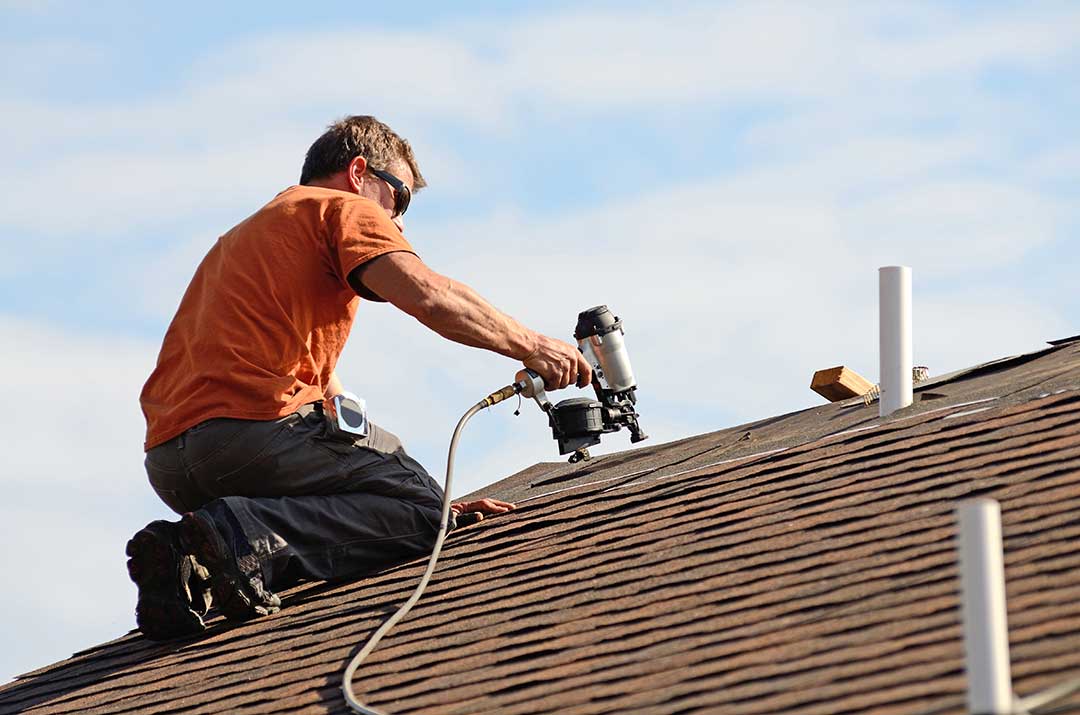
Gutters and downspouts play a major role in managing spring runoff. Leaves, twigs, ice, and roof granules can restrict flow. When gutters overflow, water may wet fascia boards, siding, window trim, and foundation-adjacent soil.
After a major rain, a visual check from the ground can identify overflowing gutters, displaced shingles, or new sagging. Attic inspections should be performed only where footing is secure and electrical or structural hazards are not present.
Does summer heat damage a roof?
Summer heat can accelerate the aging of roofing materials, especially on surfaces that receive strong afternoon sun. Repeated heating and cooling cause shingles and flashing to expand and contract. Over time, this may lead to curling, brittleness, cracked sealant, or loss of protective granules.
Poor attic ventilation can make the problem worse. An attic that stays excessively hot may transfer heat into the living space and increase stress on roofing materials. Ventilation should work with insulation and air sealing; adding vents without addressing blocked airflow or attic air leaks may not solve the underlying problem.
Summer storms can also bring short periods of intense rainfall and strong wind. Wind may lift shingles at their edges or loosen ridge caps. Missing granules in gutters after a storm can indicate normal aging, storm-related abrasion, or both.
How do wind and falling trees affect roofs?
Wind damage is not always dramatic. A roof may have no missing shingles but still contain lifted edges, loosened fasteners, or damaged flashing. These defects can allow water entry during the next heavy rain.
Trees near a home create additional concerns. Branches can scrape roofing, drop debris into valleys, shade damp areas, and clog gutters. Large limbs can cause direct structural damage during high winds or when weakened by ice and snow.
Branches that touch or regularly rub against the roof should be treated as a maintenance concern. Tree work itself can be hazardous near overhead wiring, steep slopes, and unstable limbs.
Which roof areas should residents check after severe weather?
A safe ground-level inspection can focus on changes that are easy to see:
- Missing, shifted, or visibly lifted shingles
- New piles of granules near downspouts
- Bent or detached gutters
- Loose metal flashing
- Damaged chimney caps
- Sagging rooflines
- Water stains in upper-floor rooms
- Wet insulation or daylight visible in the attic
- Debris lodged in valleys or drainage paths
Do not use a ladder during high winds, on icy ground, or when the ladder cannot be positioned securely. Roof damage involving active leaks, exposed electrical components, structural sagging, or large fallen limbs requires prompt attention because conditions can worsen before they are obvious from inside the home.
Weather cannot be controlled, but its effects can be managed through sound drainage, intact flashing, adequate insulation, balanced ventilation, and timely observation. In a climate with snow, rain, and frequent temperature changes, regular roof awareness is often more useful than waiting for a visible ceiling leak.
