
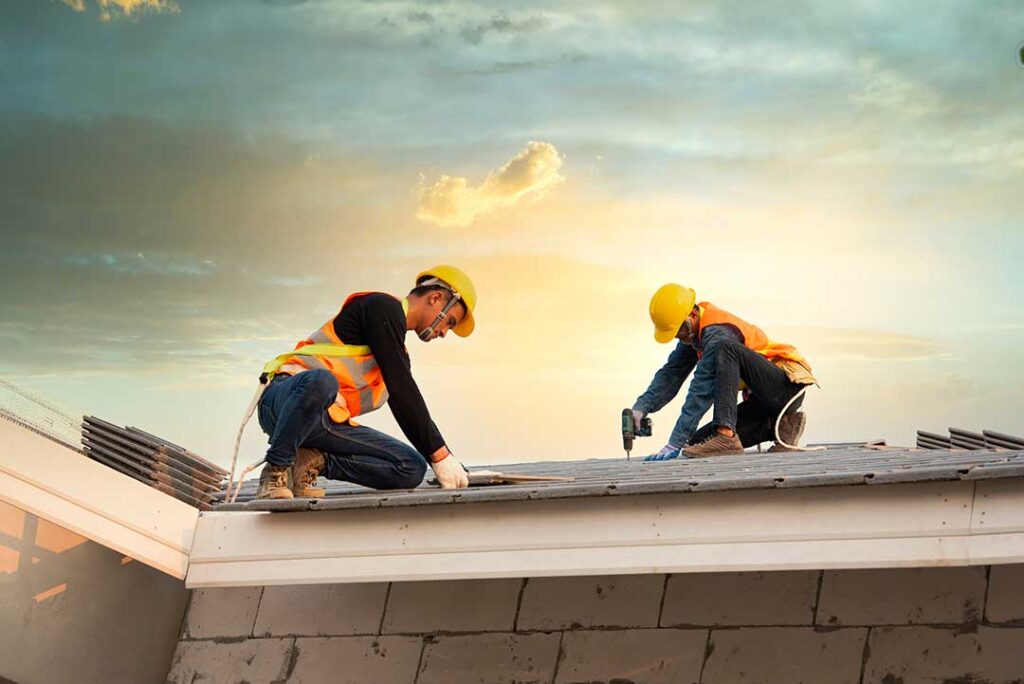
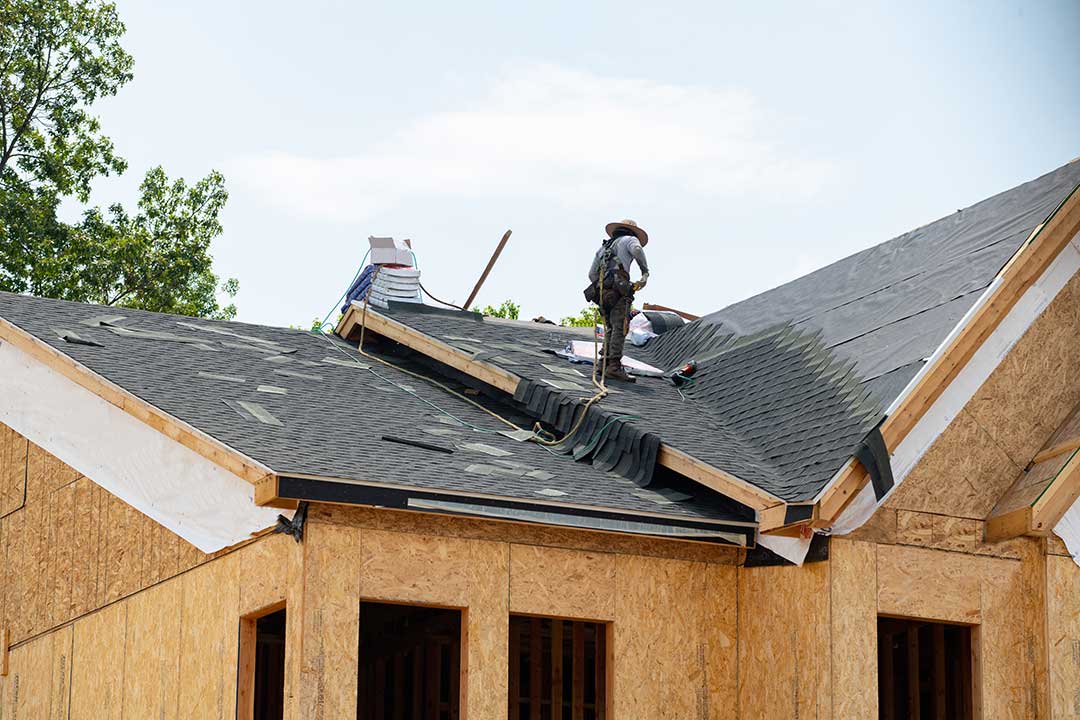
Roof decking, also called roof sheathing, is the structural surface attached to the rafters or trusses beneath the underlayment and shingles. It supports the roofing materials and helps distribute snow, wind, and maintenance loads across the roof structure.
In Ithaca, roof decking is exposed to repeated wetting, freezing, thawing, snow accumulation, wind-driven rain, and occasional ice damming. Those conditions can turn a small roof leak into a sheathing problem, especially around valleys, chimneys, skylights, roof edges, and other penetrations.
What are the clearest signs of damaged roof decking?
The most reliable warning signs are sagging, soft or springy areas, visible staining, crumbling wood, and recurring leaks. Some problems can be seen from the attic, while others are discovered only after roofing materials are removed.
Sagging roof surfaces
A dip, wave, or low area on the roof may indicate weakened decking or framing beneath it. From the ground, the roofline may look uneven. From the attic, the underside of the sheathing may appear bowed between rafters.
Sagging does not always mean the decking is failing. Uneven framing, installation issues, heavy roofing materials, or long-term snow loads can also contribute. However, a noticeable change in the roof shape deserves attention because weakened sheathing may no longer distribute loads properly.
Soft spots or a springy attic floor
If exposed decking feels soft, spongy, or unusually flexible, moisture may have damaged the wood fibers. This often occurs near a chimney, plumbing vent, valley, dormer, or roof edge.
Do not walk across questionable areas. Damaged sheathing may not support a person, and stepping on it can cause a fall through the roof cavity or ceiling below.
Water stains, darkened wood, or mold-like growth
Brown or yellow stains on the underside of the roof deck commonly indicate a past or active leak. Dark discoloration, peeling wood fibers, or surface growth may point to prolonged dampness.
A stain does not always show the exact location of the roof opening. Water can travel along rafters, underlayment, or other materials before appearing inside. A small mark near the eaves may originate higher up the slope.
Delamination, splitting, or crumbling plywood
Plywood decking can separate into layers after repeated moisture exposure. Oriented strand board may swell along its edges, develop fuzzy surfaces, or lose its compact structure.
Wood that flakes, crumbles, or no longer holds roofing fasteners securely is more than a cosmetic concern. The roof covering depends on a stable, sound surface beneath it.
Can roof decking be damaged even if there is no ceiling leak?
Yes. A roof can have damaged sheathing without producing an obvious indoor water stain. Insulation may absorb moisture, ventilation may dry a small leak before it reaches the ceiling, or water may remain concentrated near the roof edge.
Exterior clues may include:
- Shingles that appear uneven or dip between rafters
- Repeatedly lifted, cracked, or missing shingles in one area
- Rusted roofing nails visible in the attic
- Damp insulation or musty attic odors
- Condensation or frost on the underside of the roof deck
- Paint bubbling or trim discoloration near upper walls and ceilings
- Gutters or downspouts that overflow near a recurring problem area
A dry-looking ceiling does not prove that the roof assembly is dry. Attic inspection is particularly useful after heavy rain, snowmelt, or a freeze-thaw cycle.
How does Ithaca weather affect roof decking?
The local climate creates several pathways for moisture to reach the sheathing. Regular precipitation keeps roofing materials wet for extended periods, while winter freezing and spring thawing can enlarge small openings and stress flashing.
Ice dams are another concern. When heat escapes into a poorly insulated or poorly ventilated attic, snow can melt on warmer roof sections and refreeze near colder eaves. Water may then move beneath shingles and wet the decking.
Heavy snow also adds temporary load to the roof system. Sound decking and framing are designed to carry expected loads, but weakened or previously water-damaged wood has less reserve strength.
Trees can add risk as well. Falling branches, rubbing limbs, leaves trapped in valleys, and clogged gutters can all contribute to roof moisture problems.
What can be checked safely from inside the attic?
A visual attic check can reveal useful information, but it should be done cautiously. Use a bright flashlight, stay on designated walk boards or framing members, and avoid stepping on the ceiling below.
Look for:
- Staining concentrated around roof penetrations
- Wet or compressed insulation
- Rust around nails or fasteners
- Cracks, splits, or gaps in sheathing
- Soft-looking wood or areas with missing material
- Daylight visible through the roof assembly
- Condensation, frost, or persistent dampness
- Damaged rafters, trusses, or supports
Attic conditions can change quickly. A leak may be active only during wind-driven rain, while condensation may appear mainly during cold weather. Photographs and notes taken from a safe location can help document patterns over time.
Is every roof leak a roof-decking problem?
No. A leak may be limited to shingles, flashing, underlayment, a vent boot, or a gutter-related issue. The decking becomes a concern when moisture has remained long enough to swell, rot, delaminate, or weaken the wood.
The age of the leak matters. A single short-term leak may leave a stain but no structural damage. A slow leak that continues for months can weaken a much larger area, even if the indoor symptom seems minor.
The location also matters. Repeated moisture near roof edges, valleys, and penetrations deserves closer attention because these are common water-entry points.
When does roof decking need repair or replacement?
Repair is generally considered when the damaged area is limited, the surrounding wood remains sound, and the cause of the moisture has been corrected. Replacement may be necessary when the sheathing is extensively softened, delaminated, structurally compromised, or unable to hold fasteners.
New York’s residential code addresses existing sheathing when additional roofing is installed: it must not be water-soaked or deteriorated to the point that it is no longer an adequate base. This means covering damaged decking with new roofing materials is not an appropriate solution when the substrate cannot properly support them.
The underlying leak must also be corrected. Replacing wet wood without fixing failed flashing, poor drainage, inadequate ventilation, or another source of moisture can lead to repeated damage.
Which conditions require prompt attention?
Prompt evaluation is warranted if the roof or ceiling is actively leaking, the roofline is visibly sagging, the attic contains widespread wet or deteriorated wood, or a person could fall through the decking.
Extra caution is appropriate around electrical wiring, wet insulation, severe mold contamination, steep roofs, and areas affected by storm damage. Structural judgments about rafters, trusses, and load-bearing components may require a qualified building professional, architect, or engineer, particularly when safety or code compliance is involved.
A roof deck is easy to overlook because it is hidden beneath the visible roof covering. Yet changes in roof shape, attic moisture, recurring leaks, and soft or deteriorated wood can reveal problems before a larger section of the roof assembly fails.
