
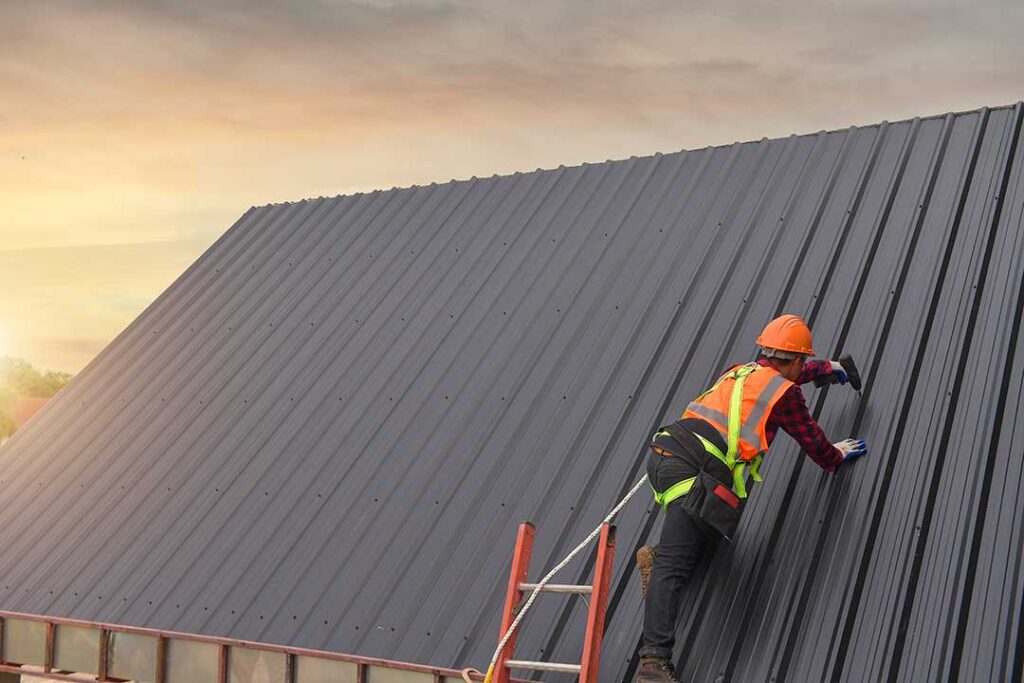
Roof work can sometimes be handled safely by a homeowner, but only when the task, roof, weather, and safety setup are all well within the person’s skill level. Ground-level inspections, minor gutter work from a stable ladder, and limited repairs on a low-slope roof may be reasonable. Walking on a steep, wet, icy, fragile, or unfamiliar roof is not a safe do-it-yourself project.
The main question is not simply whether a repair looks small. It is whether the work can be completed without creating a serious fall, electrical, structural, or weather-related hazard.
Which roof jobs are usually reasonable for a homeowner?
The safest projects are those that can be completed from the ground, from a properly positioned ladder, or from a low-slope roof with firm footing and reliable access.
Possible homeowner tasks include:
- Visually inspecting shingles, flashing, gutters, and downspouts from the ground
- Clearing leaves from a gutter while standing on stable, level ground
- Replacing a small section of gutter or downspout
- Applying a temporary tarp during a dry, calm weather window
- Replacing a few accessible shingles on a low-slope roof
- Re-sealing a small area of flashing when the surrounding materials are sound
- Cleaning moss or debris using methods that do not require walking on a steep roof
Even these jobs require preparation. A ladder should stand on firm, level ground, extend above the landing surface when applicable, and be secured against movement. Tools should be raised with a hoist or tool belt rather than carried while climbing.
A ground inspection is often more useful than an unnecessarily risky roof inspection. Binoculars, photographs taken from the yard, and inspection of the attic can reveal many problems without placing a person on the roof.
When should roof work not be done yourself?
A homeowner should not attempt roof work when a fall or structural hazard cannot be controlled. The following conditions are strong reasons to stop:
- The roof is steep, high, wet, frosted, snow-covered, or covered with loose granules
- Shingles, slate, wood shakes, or roof decking appear brittle or unstable
- The work requires stepping near an unprotected edge
- There are overhead electrical lines, service masts, or roof-mounted electrical equipment
- The roof has soft spots, sagging areas, water damage, or visible structural movement
- The repair requires removing large areas of roofing
- The project involves skylights, chimneys, dormers, or complicated flashing
- The work requires power tools in an awkward position
- Wind, rain, lightning, or rapidly changing temperatures are expected
- The person does not have a safe way to get materials and tools onto the roof
Roof damage can also be deceptive. A small ceiling stain may result from failed flashing, ice-related damage, damaged underlayment, or a problem several feet away from the visible interior mark. Covering the stain without locating the entry point can allow hidden rot or insulation damage to continue.
How high is too high for do-it-yourself roof work?
There is no single height that makes every project unsafe, but fall risk becomes serious well before a roof appears extremely high. Federal construction safety rules generally require fall protection for residential work six feet or more above a lower level. That does not mean a homeowner can safely work at five feet without protection. A fall from a lower roof, porch roof, or garage can still cause severe injury.
Fall protection must be properly selected, installed, and used. A harness attached to an improvised anchor is not a reliable safety system. Guardrails, roof brackets, scaffolding, and personal fall-arrest equipment each have specific requirements. Incorrect setup may create a false sense of security while adding trip or entanglement hazards.
If safe fall protection is not already available and understood, the project is generally beyond a reasonable do-it-yourself scope.
What weather conditions matter in Ithaca, NY?
Weather is one of the most important local considerations. The area experiences snow, freezing temperatures, rain, freeze-thaw cycles, and periods of strong wind. A roof that appears dry in the morning may become slippery from frost or condensation, particularly on shaded slopes.
Roof work should be postponed when:
- Snow or ice is present on the roof or ladder
- Rain has recently made shingles or metal surfaces slick
- Temperatures are near freezing and surfaces may be glazed
- Wind can shift a ladder, tarp, or loose roofing material
- Thunderstorms or lightning are possible
- Heat has made roofing materials soft enough to slide or tear
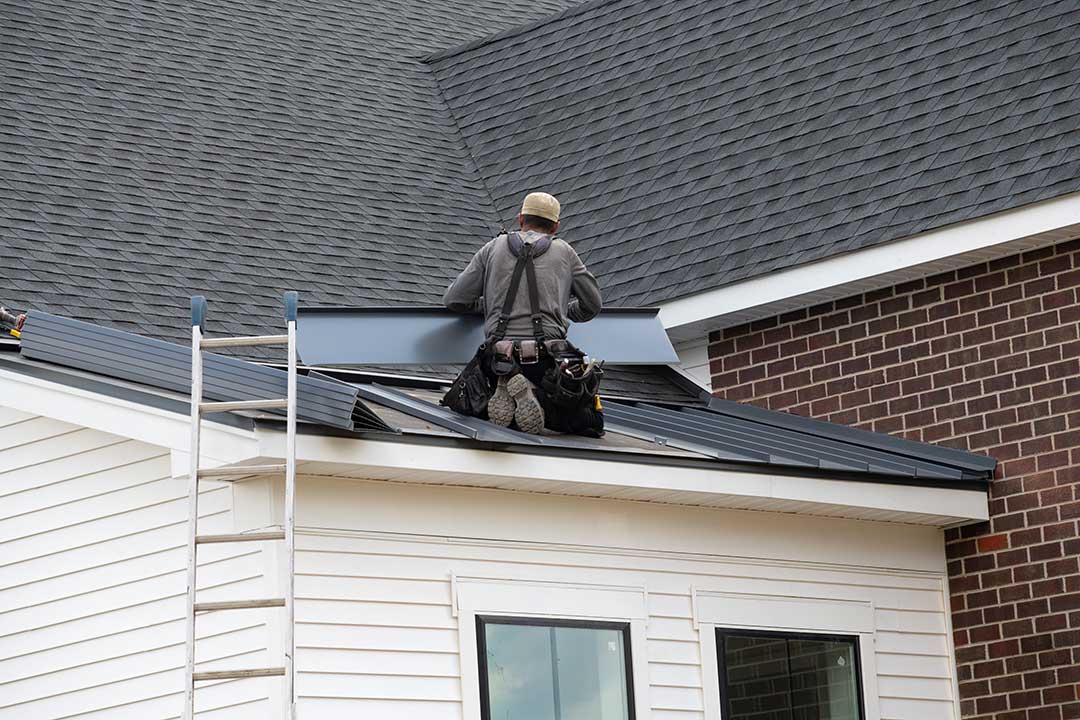
Winter roof access is particularly risky. Snow can conceal weak decking, skylights, roof edges, and ice beneath the surface. Removing snow from a roof can also damage shingles or overload a concentrated area if tools and snow are placed carelessly.
A dry, calm day with stable temperatures is usually safer than a warm day following rain or a cold day during a thaw.
Is it safe to repair a roof from a ladder?
A ladder is useful for access and limited edge work, but it is not a substitute for a safe work platform. A person should not lean sideways from a ladder to reach flashing, shingles, or gutters. Moving the ladder repeatedly is safer than stretching beyond its side rails.
Before climbing, check that:
- The ladder is rated for the user and the tools being carried
- Feet are placed on stable, non-slippery ground
- The ladder is not resting on ice, loose soil, or uneven blocks
- The top is secured when practical
- The area below is clear of children, pets, and moving vehicles
- Three points of contact can be maintained while climbing
If the task requires both hands for cutting, nailing, prying, or carrying materials, a ladder may not provide enough stability. A properly installed scaffold or other work platform may be necessary, but setting one up also requires knowledge and careful inspection.
What roof repairs involve more than shingles?
Some tasks carry risks that are not obvious from the outside. Chimney flashing may involve unstable masonry. Skylight repairs may involve fragile panels and hidden openings. Roof penetrations may conceal electrical wiring, plumbing vents, or damaged framing.
Replacing roof decking, repairing rafters, correcting sagging, or investigating widespread leaks should not be treated as ordinary patching. These projects may affect the roof’s ability to carry snow and maintenance loads.
Solar equipment, satellite equipment, and electrical components add another layer of risk. Work around electrical service lines or roof-mounted systems should not be attempted without the appropriate technical knowledge and safety controls.
Do roof repairs require a permit in Ithaca?
Permit requirements depend on the scope of work, the type of building, and the applicable local enforcement process. New York State building requirements apply to work covered by the Uniform Code, while local code-enforcement offices handle permits and inspections for their jurisdictions.
A simple maintenance task may not require the same approval as a roof replacement, structural repair, alteration, or work that changes roof materials or assemblies. Before beginning a substantial project, verify the current requirements with the building-code office serving the property. Insurance, historic-district, and property-specific rules may also affect what can be changed.
Skipping required approvals can create problems during future sales, insurance claims, or inspections.
How can a homeowner decide whether to proceed?
Use a conservative test:
1. Can the work be completed from the ground or a secure, low-risk platform?
2. Is the roof dry, stable, and free of snow, ice, and loose materials?
3. Can fall protection be provided correctly?
4. Are there no electrical, structural, skylight, chimney, or major flashing hazards?
5. Is the repair limited enough to understand before materials are removed?
6. Are permits and code requirements clear?
7. Is there a safe plan for tools, materials, cleanup, and people below?
If any answer is uncertain, the safest choice is to stop before climbing. Roof work becomes unsafe quickly when a minor repair turns into a hidden structural problem, a weather change, or an improvised attempt to reach an inaccessible area.
For many households, the most responsible do-it-yourself contribution is a careful ground inspection, prompt temporary protection from inside or below, and accurate documentation of what was observed. That approach can prevent additional damage without turning a manageable roof problem into a preventable injury.
