

Before leaving home, inspect the roof, gutters, attic, and nearby trees for conditions that could worsen while the house is unattended. In Ithaca, changing weather, heavy rain, freeze-thaw cycles, wind, and snow can turn a small maintenance issue into interior damage during even a short trip.
What should be checked before leaving?
A basic roof check should focus on visible signs of water entry, loose materials, blocked drainage, and objects that could damage the roof during wind.
From the ground, look for:
- Missing, lifted, cracked, or curled shingles
- Dark patches or streaks that may indicate moisture
- Sagging areas along the roofline
- Loose flashing around chimneys, plumbing vents, skylights, and roof edges
- Damaged gutters or downspouts
- Tree limbs touching or hanging over the roof
- Debris collecting in valleys or behind roof fixtures
Do not climb onto a wet, icy, steep, or visibly damaged roof before a trip. A ground-level inspection is often enough to identify obvious concerns, while unsafe conditions should be left for someone with appropriate equipment and experience.
Pay attention to ceilings and upper walls inside the home as well. Brown stains, peeling paint, bubbling drywall, musty odors, or damp insulation can signal a leak that may become worse during rain or snow.
Why do gutters matter while a house is empty?
Gutters and downspouts control where roof water goes. If they are clogged, rain can overflow against siding, enter around windows, collect near the foundation, or contribute to ice formation during freezing weather.
Before departure, remove leaves, twigs, and sediment from gutters if conditions are safe. Check that downspouts are firmly connected and discharge water away from the foundation. Extensions should remain in place and should not be crushed, blocked, or directed toward walkways where water can freeze.
In older homes and neighborhoods with mature trees, gutter debris can accumulate quickly during autumn. A roof that appears sound may still experience water problems if drainage is restricted.
Do not rely on gutter guards as a complete solution. They can reduce debris but may still require inspection and cleaning, especially where fine seeds, roof granules, or wet leaves collect.
Should roof repairs be completed before a vacation?
Repairs involving active leaks, missing roofing materials, exposed underlayment, damaged flashing, or unstable branches should not be postponed simply because the trip is short. Even a small opening can allow wind-driven rain or melting snow into the roof assembly.
Minor cosmetic concerns may not require immediate action, but the distinction is not always obvious from the ground. A lifted shingle, for example, may look insignificant while allowing water beneath adjacent materials.
Before leaving, give priority to conditions that involve:
- Current water entry
- Exposed wood or underlayment
- Loose metal flashing
- Sagging roof areas
- Damaged vents or skylights
- Large limbs resting on or near the roof
- Gutters pulling away from the fascia
- Ice-related damage that has not dried or been evaluated
Avoid temporary repairs that trap moisture, such as covering a roof with household plastic or applying sealant over wet surfaces without understanding the source of the problem. Temporary protection may be appropriate in an emergency, but it should not conceal ongoing damage.
What should be done about snow and ice?
Winter travel requires additional planning because snow and ice can conceal roof problems and add weight to the structure. Roof snow should not be removed by walking on the roof. Foot traffic can damage shingles and creates a serious fall hazard.
After a major snowfall, observe the roofline from the ground. Uneven snow accumulation, new sagging, large ice buildup, or snow pressing against lower roof edges may indicate a concern. Do not chip away ice with tools, since this can damage roofing, flashing, gutters, and the waterproof layers beneath the shingles.
Ice dams often form when heat escapes into the attic and melts snow on the warmer upper roof. The water can refreeze near colder eaves and back up beneath roofing materials. They are not solved reliably by simply removing visible ice. Attic insulation, ventilation, air sealing, and roof geometry all affect the problem.
If a winter trip is planned, make sure the attic is not unusually warm or damp before leaving. Frost on nails, moisture on roof sheathing, or persistent condensation can indicate ventilation or air-leakage issues that deserve attention.
Can tree branches damage a roof while residents are away?
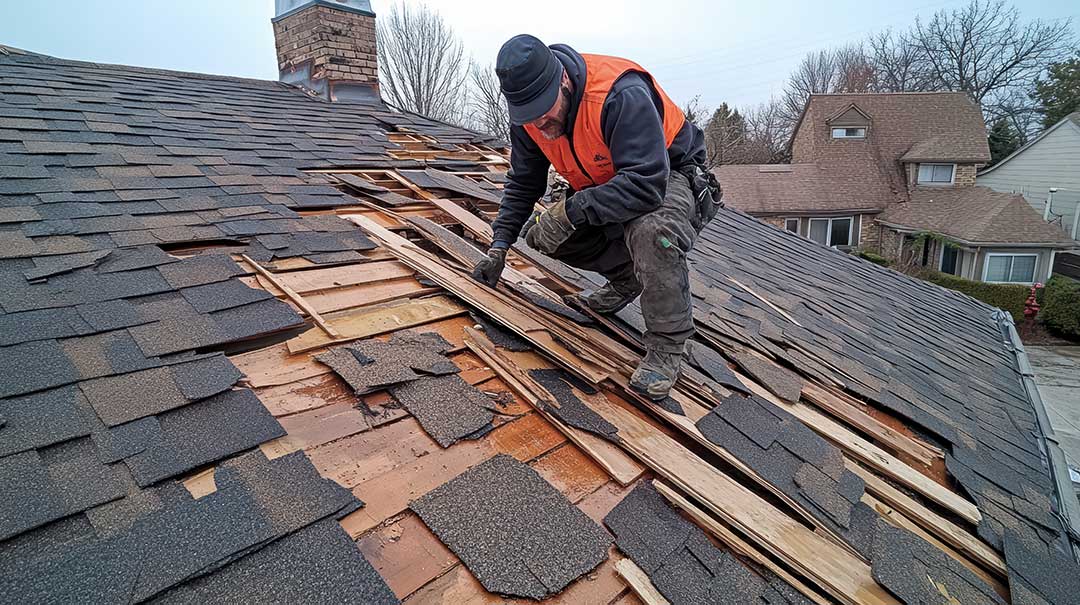
Yes. Wind, wet snow, and ice can cause branches to bend, break, or fall against roofing. Branches that already touch the roof may scrape shingles during ordinary gusts, while dead limbs can fail without warning.
Inspect trees near the house before a trip, especially those leaning toward the roof or carrying dead wood. Look for hanging branches, cracked limbs, cavities, and areas of decay. Do not attempt to cut large or elevated branches from a ladder.
Keep in mind that branches do not need to fall directly onto the roof to cause damage. They can block gutters, strike chimneys, damage power lines, or interfere with roof drainage.
How should the attic be prepared?
The attic provides useful clues about roof performance. Before leaving, check for damp insulation, daylight visible through roof joints, rust around nails, mold-like growth, or a strong musty smell.
Do not block soffit vents with stored items or insulation. Proper airflow helps reduce condensation and supports more even roof temperatures in cold weather. Bathroom and kitchen exhaust fans should vent outdoors rather than into the attic, where warm moisture can condense on cold surfaces.
Keep stored belongings away from roof sheathing and vents. Boxes placed directly beneath a suspected leak can hide new stains and make it harder to notice a problem after returning.
What should a house sitter or neighbor know?
A trusted person checking the home can catch problems that are not visible from the street. Provide clear instructions about what to look for rather than asking for a general “roof check.”
Useful items to share include:
- The location of water shutoff valves
- The location of the electrical panel
- Areas where previous leaks or ice dams occurred
- Instructions for checking ceilings and upper walls
- Contact information for emergency assistance
- Permission to photograph unusual stains, dripping, or fallen branches
Ask the person checking the house to look after heavy rain, strong wind, or substantial snowfall. A quick interior inspection can reveal a leak before water spreads through insulation, ceilings, or walls.
Do not ask an inexperienced person to climb onto the roof or remove snow. Ground-level observation is safer and usually more useful.
What should be checked after returning?
Walk around the home before unpacking or turning attention to normal routines. Look for fallen branches, displaced shingles, overflowing gutters, new stains, damp odors, and changes in the roofline.
Inside, inspect attic spaces, upper-floor ceilings, closets near exterior walls, and areas around chimneys or skylights. Water may travel away from the original entry point, so a stain is not always directly beneath the roof damage.
If the home lost power during the trip, check for frozen or burst plumbing as well as roof-related problems. A plumbing leak can resemble a roof leak, particularly around upper-floor ceilings.
Document damage with photographs and avoid disturbing fallen materials until safety concerns have been addressed. If there is active water entry, structural sagging, exposed electrical wiring, or a large branch on the roof, keep people away from the area and treat the situation as hazardous.
Preparing a roof for vacation is less about performing major work immediately before leaving and more about identifying conditions that cannot safely wait. A short inspection of the roofline, drainage system, attic, and surrounding trees can help residents return to a home that is dry, secure, and easier to maintain through Ithaca’s changing seasons.
