

Replacing a roof is a major household expense, and many homeowners in Ithaca, NY, need to spread the cost over time rather than pay the full amount upfront. The right financing choice depends on the project’s urgency, the home’s equity, credit history, available savings, and the total repayment cost.
Roof financing is not automatically good or bad. The key is understanding the difference between borrowing for a necessary repair and taking on a payment that creates long-term financial strain.
What should be decided before applying for financing?
Before comparing loan offers, determine whether the roof needs immediate replacement or whether limited repairs could safely extend its service life. A roof with isolated damage may not require the same financing commitment as one with widespread leaks, deteriorated decking, or repeated winter-related problems.
A written project scope should identify:
- Whether the work involves repair, partial replacement, or a complete tear-off
- The roofing materials and underlayment being proposed
- Possible costs for damaged decking, ventilation, flashing, or drainage details
- Cleanup and disposal charges
- Permit-related costs, if applicable
- The expected payment schedule
In the Finger Lakes climate, freeze-thaw cycles, heavy snow, wind, ice buildup, and moisture can expose weaknesses that are less obvious during a quick visual inspection. A realistic budget should include a reserve for concealed damage beneath the visible roofing materials.
Homeowners should also compare the project cost with available cash savings. Paying entirely from savings may avoid interest, but using every dollar in reserve can leave little available for heating repairs, insurance deductibles, medical expenses, or other emergencies.
What financing options are commonly available?
Several types of financing may be used for roofing work. Each has different risks and repayment terms.
Personal loans
A personal loan provides a fixed amount that is repaid in regular installments. These loans may offer a predictable interest rate and a defined payoff date, which makes budgeting easier.
The total cost depends on the annual percentage rate, loan length, origination fees, and credit profile. A longer term can reduce the monthly payment but increase the amount paid over the life of the loan.
Before accepting a personal loan, review:
- The annual percentage rate rather than only the advertised interest rate
- Whether the rate is fixed or variable
- Origination or administrative fees
- Prepayment rules
- Late-payment penalties
- The total dollar amount repaid
Home equity loans
A home equity loan allows a homeowner to borrow against available equity and usually provides a fixed payment schedule. It may offer a lower interest rate than some unsecured borrowing because the home serves as collateral.
The major risk is that failure to repay can place the property in jeopardy. A home equity loan may also involve closing costs, an appraisal, or other fees. It is generally more appropriate for homeowners who have stable income, sufficient equity, and a clear repayment plan.
Home equity lines of credit
A home equity line of credit, often called a HELOC, works more like a revolving credit account. The borrower can draw funds as needed, which may be useful when the final repair cost is uncertain.
Many HELOCs have variable interest rates. That means the payment can increase if market rates rise. Some also begin with an initial borrowing period followed by a repayment period, when minimum payments may change substantially.
A HELOC should not be evaluated only by its introductory rate. Ask how the rate is calculated, when repayment begins, and what the payment could become under higher-rate conditions.
Credit cards
A credit card can be convenient for a small repair or a short-term expense, but it is often expensive if the balance remains unpaid. Promotional financing may appear attractive, yet deferred-interest terms can create a large charge if the balance is not paid by the required deadline.
Read the account agreement carefully. Confirm whether interest is waived or merely postponed, how the minimum payment is calculated, and what happens if a payment is late.
Credit card debt is especially risky for a full roof replacement because a large balance can remain outstanding long after the work is finished.
Contractor-arranged financing
Some roofing companies offer financing through outside lenders. This may simplify the application process, but it is still a loan that should be compared with independent options.
Ask for the same information required from a bank or credit union:
- Annual percentage rate
- Loan term
- Total repayment amount
- Promotional-period conditions
- Fees
- Late-payment consequences
- Whether the loan is secured by the home
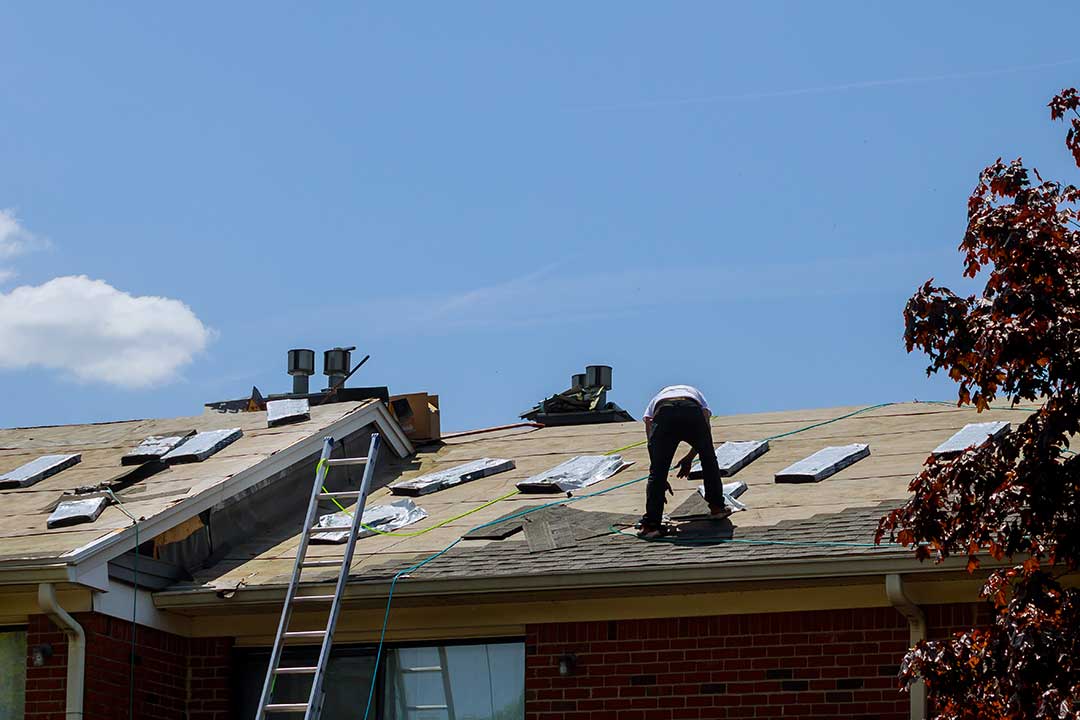
A monthly payment that fits the budget can still represent a costly loan if the term is long or the interest rate is high.
Are government grants or assistance programs available?
Occasionally, public agencies or nonprofit organizations offer housing repair assistance, energy-efficiency programs, or loans for qualifying households. Eligibility may depend on income, age, disability status, property location, ownership, health and safety conditions, or the type of repair.
These programs can change, run out of funding, or cover only specific improvements. A homeowner should verify current eligibility, application deadlines, income limits, inspection requirements, and whether the assistance is a grant, forgivable loan, or standard loan.
Roof replacement is not automatically covered simply because it is necessary. Some programs focus on emergency health and safety repairs, while others support energy improvements but exclude ordinary maintenance.
How can the total cost of borrowing be compared?
The monthly payment is only one part of the decision. Two loans with similar payments can have very different total costs.
For example, a $15,000 loan with a lower payment over ten years may cost substantially more overall than a shorter loan with higher monthly payments. The shorter option may save interest, but only if the payment remains manageable during less predictable months.
A useful comparison includes:
1. Amount borrowed
2. Interest rate and annual percentage rate
3. Loan term
4. Monthly payment
5. Total interest
6. Fees
7. Whether the rate can change
8. Consequences of missed payments
9. Whether the debt is secured by the home
Avoid borrowing more than the project requires. If a lender approves a larger amount, that does not mean the extra money should be used for unrelated purchases or cosmetic upgrades.
What credit factors affect roof financing?
Lenders commonly review credit history, income, existing debt, employment or income stability, and payment history. A stronger credit profile may qualify for a lower rate, while a weaker profile can increase the cost of borrowing.
Before applying, review credit reports for errors and calculate the new payment alongside mortgages, utilities, taxes, insurance, vehicle loans, and seasonal expenses. In a northern climate, winter heating costs can place extra pressure on household budgets, so the payment should remain affordable during the highest-expense months.
Applying to several lenders in a short period may allow rate shopping, but each lender’s credit-check process should be understood. Some inquiries may affect credit scores, while others may not.
What if insurance is expected to pay for part of the roof?
Homeowners insurance generally does not pay for ordinary aging or deferred maintenance. Coverage may apply to certain sudden events, such as wind or falling objects, depending on the policy and the cause of damage.
Do not assume an insurance payment is guaranteed before arranging financing. Confirm the deductible, coverage limits, depreciation rules, exclusions, and claim requirements. If a claim is denied or pays less than expected, the homeowner remains responsible for the loan.
Financing should be based on money that is actually available, not on a possible reimbursement.
How can homeowners avoid financing problems?
Read the entire agreement before signing and keep copies of the loan documents, payment schedule, project scope, invoices, and change orders. Do not sign blank documents or agree to work that is not clearly described.
Be cautious of pressure to sign immediately, unusually low introductory payments, vague promises about insurance coverage, or financing terms that are difficult to explain. A sound arrangement should allow enough time to compare the total cost and understand the consequences of late payment.
For homeowners in Ithaca, planning ahead before the next major snow or freeze-thaw period can reduce the chance of making a rushed borrowing decision. If the roof is actively leaking, protect interior areas from water damage while evaluating safe, affordable repair and financing options.
