
What does preventive roof maintenance mean?
Preventive roof maintenance is the regular inspection, cleaning, minor repair, and monitoring of a roof before visible damage becomes a major problem. Its long-term value comes from addressing small weaknesses while they are still limited, rather than waiting for water intrusion, structural deterioration, or widespread material failure.
For households in Ithaca, NY, this approach is especially useful because roofs experience repeated cycles of snow, freezing temperatures, thawing, wind, rain, and summer heat. These conditions can gradually loosen flashing, stress sealants, clog drainage paths, and expose small defects that may not be noticeable from the ground.
Maintenance does not mean repairing every aging roof indefinitely. It means understanding the roof’s condition, extending useful service life where practical, and planning larger work before an emergency develops.
How does maintenance extend a roof’s useful life?
Routine attention helps prevent isolated problems from spreading into surrounding materials. A small opening around flashing may initially affect only one area, but repeated wetting can damage underlayment, roof decking, insulation, wall framing, and interior finishes.
Maintenance can help by:
- Keeping water moving away from the roof and foundation
- Reducing the chance that loose shingles or metal components become wind damage
- Identifying deteriorated sealants before they allow repeated leaks
- Removing organic debris that holds moisture against roofing materials
- Detecting ventilation or condensation concerns in the attic
- Documenting changes in the roof’s condition over several seasons
A roof is a system rather than a single surface. Shingles or other roof coverings work together with flashing, underlayment, ventilation, gutters, downspouts, and the supporting deck. A problem in one part can place stress on the others.
Why are Ithaca’s seasons hard on roofs?
The local climate creates several recurring maintenance concerns. Snow and ice can remain on roof surfaces, while alternating temperatures cause expansion and contraction in roofing materials, fasteners, flashing, and sealants.
Freeze-thaw cycling is particularly significant. Water enters a small crack or gap, freezes, expands, and enlarges the opening. After thawing, the area may absorb more water during the next storm. This process can occur around chimneys, valleys, skylights, vents, roof edges, and wall intersections.
Snow and ice also affect drainage. If gutters or downspouts are blocked by leaves, twigs, or ice, melting water may back up toward the roof edge. Ice dams can form when heat loss and uneven roof temperatures cause snow to melt in one area and refreeze near a colder eave. Good insulation and balanced ventilation can reduce the conditions that contribute to this problem, although they cannot prevent every ice-related event.
Summer weather creates a different set of stresses. Strong sunlight, heavy rain, humidity, and occasional wind can accelerate aging in exposed roofing materials. A roof that appears sound after winter may still need attention before the next cold season.
What should be checked during routine maintenance?
A useful inspection looks beyond missing shingles. The goal is to identify changes in condition and connections between roof components.
Key areas include:
Roof covering
Look for cracked, curled, blistered, slipped, or missing materials. Granules in gutters may indicate surface wear on asphalt shingles, although a small amount can also be normal as materials age.
Flashing and penetrations
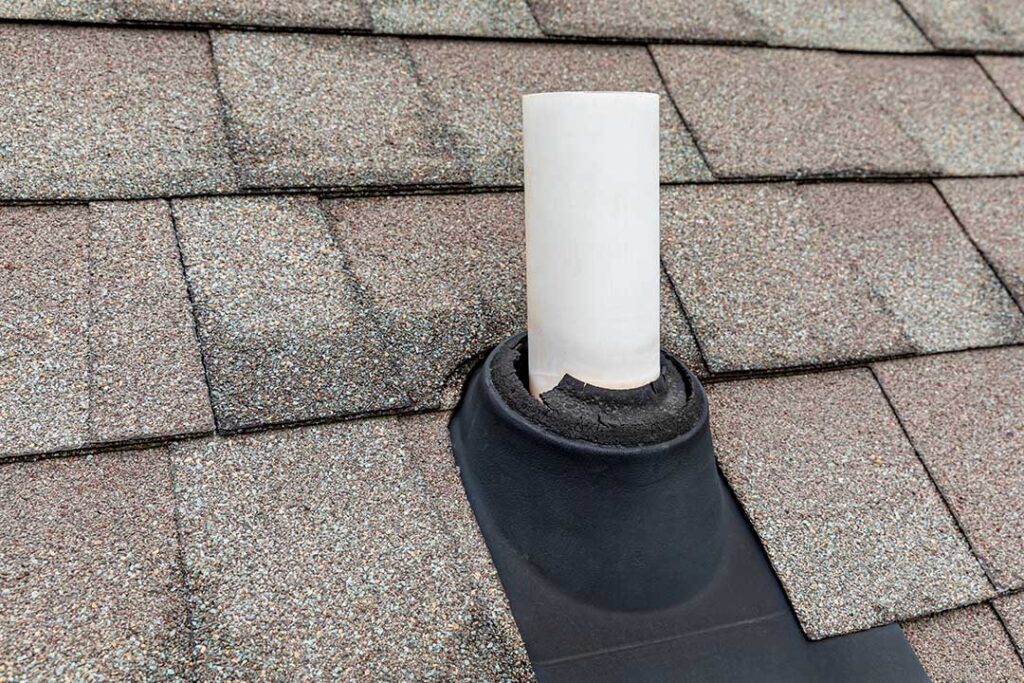
Metal flashing around chimneys, walls, vents, skylights, and valleys deserves close attention. These locations are common pathways for leaks because different materials meet and move at different rates.
Gutters and downspouts
Gutters should be free of heavy sediment, leaves, and shingle debris. Downspouts should discharge water away from the foundation and should not release roof runoff where it can create erosion, ice buildup, or damp conditions against exterior walls.
Roof edges and soffits
The eaves often show early signs of moisture trouble. Look for staining, soft wood, peeling paint, sagging gutters, or evidence that water is backing up beneath the roof edge.
Attic and ceilings
Interior stains, musty odors, damp insulation, peeling paint, or darkened roof sheathing can point to leaks or condensation. A stain may remain visible after the original leak has stopped, so its presence should be interpreted together with current moisture conditions.
Trees and surrounding growth
Branches that rub against the roof can wear away protective surfaces and drop debris into drainage systems. Moss and algae may retain moisture, particularly on shaded roof sections. Removing the underlying moisture source is more useful than treating surface growth alone.
How often should a roof be maintained?
Most homes benefit from a basic inspection at least twice a year: once in spring and again before winter. Additional checks are sensible after major windstorms, heavy snow, ice events, or unusually intense rainfall.
Spring maintenance can reveal damage caused by winter weather. It is a good time to check for displaced materials, damaged flashing, blocked gutters, and moisture that entered during snowmelt.
Before winter, attention should shift toward drainage, roof edges, attic ventilation, and conditions that may worsen during freezing weather. Leaves should be removed from gutters before they become wet, compacted, and difficult to clear.
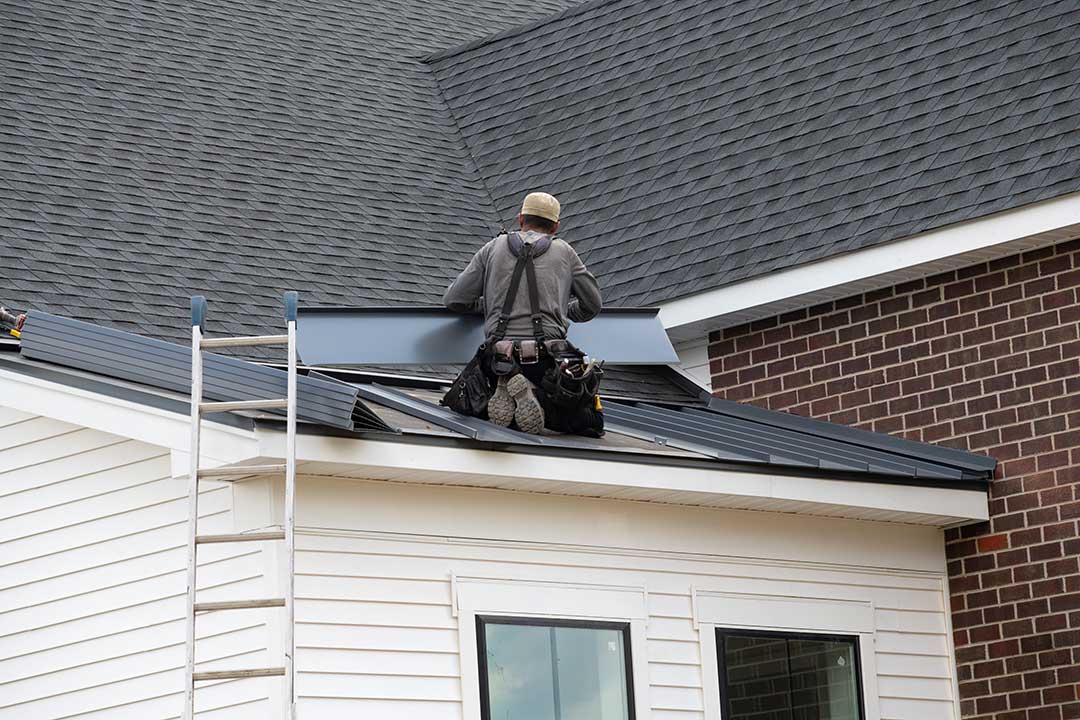
Older roofs or roofs with a history of leaks may require more frequent observation. The same is true for homes beneath mature trees or buildings with complicated roof layouts containing multiple valleys, dormers, or adjoining roof sections.
Does maintenance save money in the long term?
Preventive maintenance can reduce costs by limiting the size and duration of a problem. A minor repair may involve one damaged area, while a delayed leak may affect insulation, drywall, flooring, electrical components, or structural wood.
The financial value is not limited to repair costs. Maintenance may also help preserve:
- Interior finishes and personal belongings
- Insulation performance
- Indoor air quality by limiting persistent dampness
- The remaining service life of roofing materials
- A household’s ability to budget for eventual replacement
Maintenance cannot make an unsuitable or severely deteriorated roof last indefinitely. However, condition records can help distinguish between a roof that needs localized attention and one approaching the end of its practical life.
Which roof problems require prompt attention?
Some conditions should not be postponed, especially when safety or active water entry is involved. Prompt evaluation is warranted for:
- Water entering living spaces
- A sagging roof surface or ceiling
- Large areas of missing or displaced roofing
- Exposed roof decking or underlayment
- Damaged electrical components near a leak
- Heavy snow or ice accompanied by unusual structural movement
- Loose materials that could fall from the roof or building edge
Roof access is hazardous during wet, icy, windy, or snowy conditions. Residents should not climb onto a roof to inspect or remove snow when conditions are unsafe. Specialized equipment or a qualified person may be necessary for elevated work, structural concerns, or repairs that cannot be completed safely from the ground.
What is the most practical maintenance strategy?
The most effective approach is consistent and documented. Keep a simple record of inspection dates, observed changes, repairs, leaks, storms, and photographs taken from safe locations. This information can reveal patterns that are easy to miss when each problem is treated as an isolated event.
A roof that is checked regularly is easier to understand, easier to budget for, and less likely to produce a surprise during the middle of winter. The long-term benefit is not just fewer leaks. It is better control over the building’s condition and fewer situations in which a small roofing defect becomes an expensive interior problem.
