
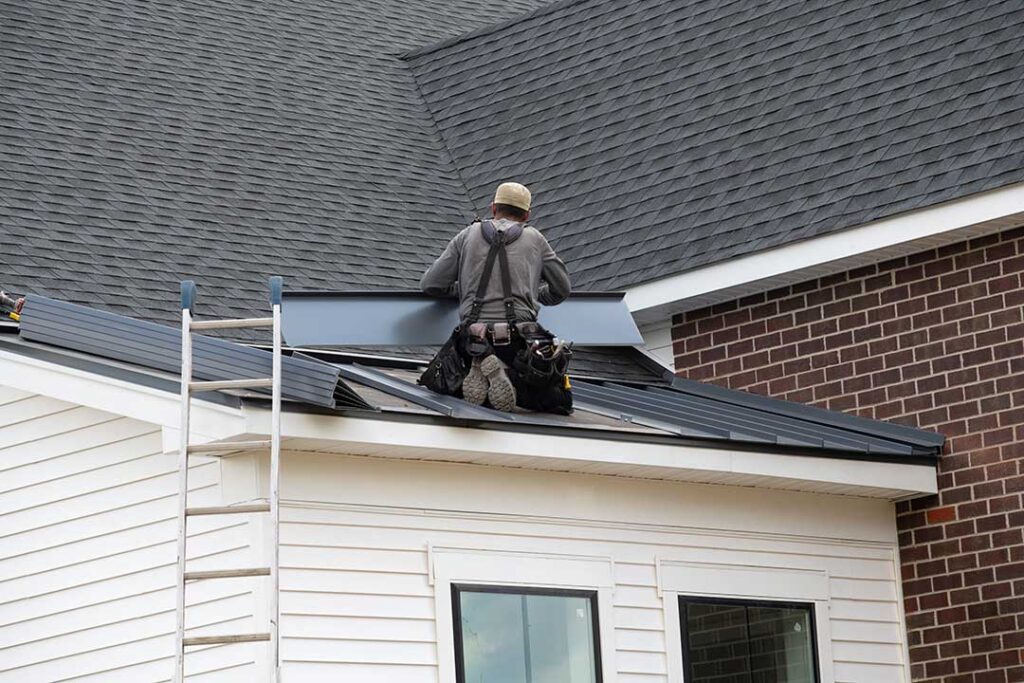
What should you do first after finding a roof leak?
If water is entering a home, protect people and belongings before trying to locate the roof problem. Move furniture, electronics, rugs, and other valuables away from the water, then place a container under the drip if it is safe to do so.
Water rarely travels straight down from the point where the roof is damaged. It may move along rafters, roof decking, insulation, wiring, or wall cavities before appearing indoors. The visible stain may be several feet away from the actual leak.
Take these first steps:
- Keep people away from sagging ceilings or bulging drywall.
- Place a bucket or plastic bin beneath active dripping.
- Put a board across the top of the container if needed to reduce splashing.
- Move furnishings and cover larger items with plastic sheeting.
- Wipe up standing water promptly to limit damage.
- Photograph the affected areas before making temporary repairs.
If water is near a light fixture, outlet, appliance, or electrical panel, avoid touching the area. Turn off power to the affected circuit only if the electrical panel and surrounding floor are dry and accessible. Do not enter standing water to reach a panel.
How can you tell whether a ceiling is unsafe?
A swollen, sagging, or cracked ceiling can indicate that water has collected above the drywall. Do not puncture the ceiling unless the electrical system is known to be safely isolated and the work can be done without standing beneath a weakened area.
Leave the room if the ceiling is rapidly bulging, pulling away from the framing, cracking loudly, or shedding material. A wet ceiling can become heavier and may fail without much warning. Children and pets should also be kept away from the area.
Water damage around electrical wiring creates an additional hazard. Flickering lights, tripped breakers, buzzing sounds, or a burning smell require immediate caution and may justify emergency electrical assistance.
Should you inspect the roof during rain or snow?
No. A wet, icy, or snow-covered roof is not a safe place for most homeowners. Slippery shingles, hidden roof edges, and weakened surfaces can lead to falls. Snow and ice can also conceal damage that would be visible in dry conditions.
From the ground, look for broad warning signs instead:
- Missing, lifted, or visibly damaged shingles
- Sagging roof sections
- Water running behind gutters
- Dark patches or exposed underlayment
- Damaged flashing around chimneys, vents, or roof edges
- Large piles of debris or broken branches
- Ice buildup along the eaves during freezing weather
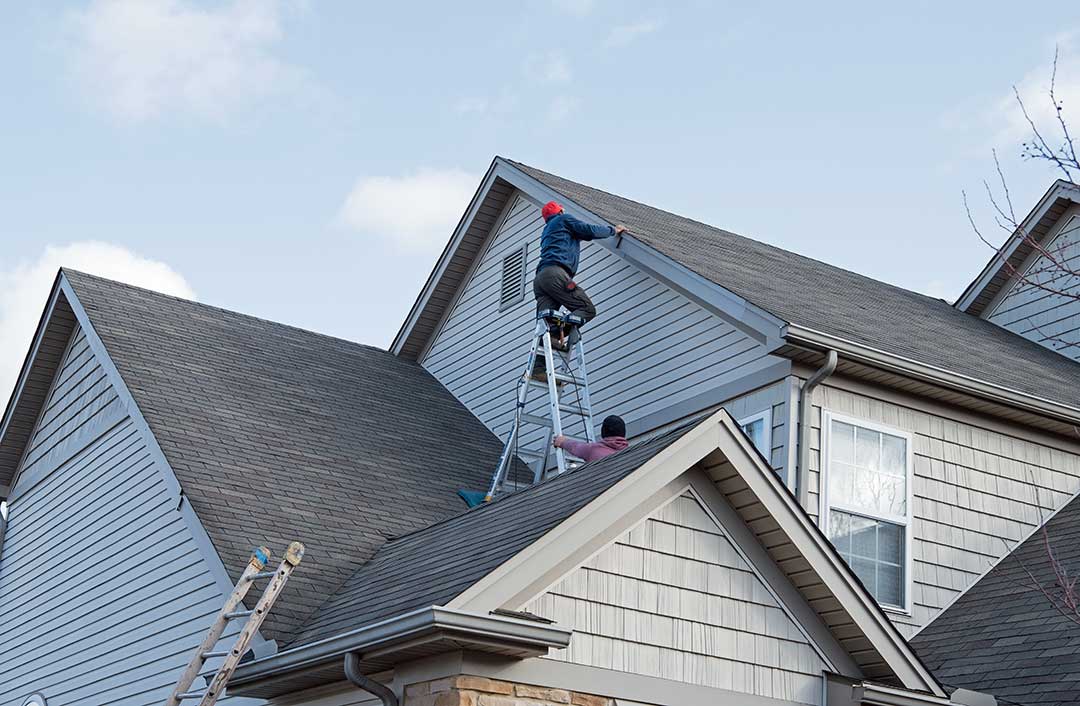
Binoculars can make a ground-level inspection easier. Avoid leaning ladders against gutters or climbing onto a roof to confirm a suspected problem.
What temporary measures can limit damage?
Temporary protection should be simple and should not require walking on the roof. A tarp can help only when it can be secured from a safe position without damaging the roof or creating a wind hazard. Loose plastic, towels, or household tape placed over exterior shingles usually provide little protection and may make later repairs more difficult.
Inside the home, use absorbent materials to protect floors and empty containers before they overflow. Remove wet insulation, carpeting, or ceiling material only when it can be done safely and without disturbing electrical components.
Do not apply roofing cement over a wet interior ceiling as a substitute for finding the source. Interior patching can hide continuing moisture and may trap water inside the building materials.
Why do leaks often appear after storms?
A leak that appears during or shortly after rain may be related to damaged shingles, flashing, roof penetrations, valleys, or clogged drainage paths. Wind can lift roofing materials without removing them completely, leaving damage that is difficult to see from the ground.
In Ithaca, seasonal weather can produce several different leak patterns. Heavy rain can overwhelm blocked gutters or undersized drainage paths. Freeze-thaw cycles can open small gaps around flashing and masonry. Snow and ice may conceal damage for weeks, while spring thaw can expose problems that began during winter.
Not every ceiling stain means the roof itself is failing. Other possible sources include:
- Plumbing leaks above the ceiling
- Condensation around poorly insulated attic areas
- Ice dams and backed-up melting snow
- Leaking chimneys, skylights, or vent pipes
- Water entering through siding, windows, or wall flashing
- Overflowing gutters or downspouts
The timing can provide clues. Water that appears only when a bathroom is used may point to plumbing or ventilation. Moisture that occurs during wind-driven rain may involve flashing or wall details. A stain that grows during sunny weather after snowfall may be connected to melting snow rather than rainfall.
How should you document the damage?
Clear documentation helps establish when the leak occurred and how it progressed. Photograph the ceiling, walls, floors, damaged belongings, and any visible exterior concerns from a safe location.
Write down:
- The date and time the leak was noticed
- Recent weather conditions
- Whether the water was dripping, streaming, or staining
- Rooms and materials affected
- Any unusual sounds, odors, or electrical symptoms
- Temporary steps taken to control the water
Keep damaged materials until their condition has been documented, unless they pose a health or safety risk. Wet materials can develop mold, odors, and structural problems, especially when they remain damp for more than a day or two.
When is a leak an emergency?
Urgent action is warranted when water is entering rapidly, the ceiling is sagging, electrical components are involved, or structural damage is suspected. A leak that continues after temporary containment should not be ignored, even if the original stain appears small.
Immediate attention is especially important when:
- Water is flowing through a ceiling or wall
- A ceiling is bulging or separating
- The leak is near electrical equipment
- A roof section has collapsed or is visibly sagging
- A fallen tree or large branch has damaged the roof
- Strong odors, visible mold, or extensive wet insulation are present
- Freezing conditions may cause water to expand inside materials
Roof access, temporary covering, electrical work, and structural evaluation can become dangerous during storms, winter weather, and nighttime conditions. Safety takes priority over locating the exact entry point.
What should happen after the water stops?
Stopping the drip does not necessarily stop the damage. Wet insulation, roof decking, drywall, and framing can continue absorbing moisture after the visible leak ends. The affected area should be monitored for new staining, soft spots, peeling paint, musty odors, or changes in ceiling shape.
Do not paint over a stain until the source has been corrected and the material is fully dry. Covering discoloration too soon can conceal continuing moisture and make it harder to recognize a recurring leak.
A roof leak may be minor, but the cause can involve concealed damage. In older homes, repeated patching, aging flashing, roof penetrations, and ventilation problems may contribute to recurring moisture. In newer construction, installation details, attic condensation, and drainage design can also play a role.
The safest approach is to control the water, protect occupants and belongings, avoid unsafe roof access, document what happened, and treat recurring or extensive moisture as a building-safety problem rather than only a stain on the ceiling.
