
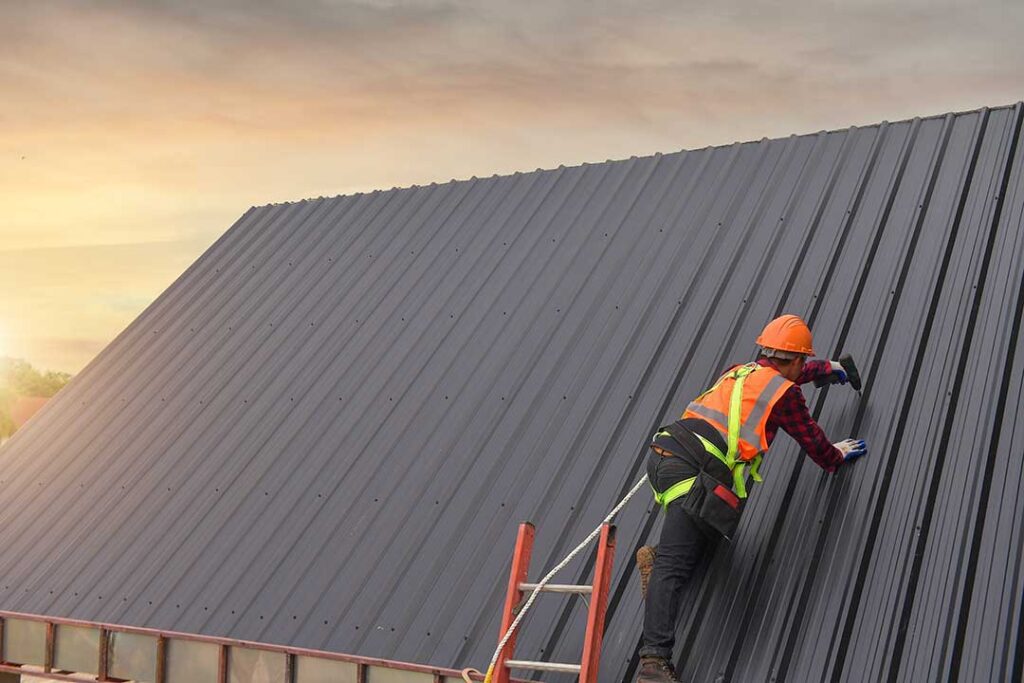
Holiday decorations can damage a roof long after the season ends if they are stored against rafters, packed while damp, or left in areas where temperature changes and moisture create problems. In Ithaca, NY, winter cold, snow, ice, and freeze-thaw cycles make careful storage especially useful for decorations that are used outdoors or kept in attics, garages, sheds, and upper-floor storage areas.
Good storage protects both the decorations and the roof system around them. The main goals are to keep weight off roof surfaces, preserve airflow, prevent moisture buildup, and avoid blocking access to areas that need periodic inspection.
Should holiday decorations be stored in an attic?
They can be stored in an attic, but only if the space is dry, accessible, and strong enough for the added load. An attic should not automatically be treated as a general-purpose storage room.
Before placing bins or boxes overhead, check whether the floor has a solid walking surface and whether the storage area is intended to carry household items. Avoid stepping directly on ceiling drywall or areas between framing members. A misplaced foot can damage the ceiling below or cause a fall.
Keep decorations away from:
- Roof sheathing and exposed roof framing
- Electrical wiring, recessed lights, and heat-producing equipment
- Eave vents, ridge vents, soffit vents, and other ventilation paths
- Areas showing water stains, damp insulation, mold, or frost
- Attic access points and pathways needed for inspection
Storage containers should sit on stable flooring or properly supported platforms, not on insulation. Compressing insulation reduces its effectiveness and can create uneven surfaces that are difficult to walk across.
Can stored items damage roof ventilation?
Yes. Blocking attic ventilation can contribute to moisture problems, especially during cold weather. Warm indoor air can migrate into the attic, where it may condense on colder roof components. If vents are blocked by boxes, bags, or loose decorations, moisture may remain trapped longer.
This can lead to damp insulation, wood deterioration, staining, and frost accumulation. Repeated freezing and thawing can also worsen small moisture problems.
Leave visible clearance around soffit vents and other ventilation openings. Do not push storage into the low edges of the attic simply because those spaces appear unused. The narrow areas near the eaves are often where intake ventilation is located.
A useful arrangement is to keep storage toward the center of a properly floored attic, leaving ventilation paths and roof edges open. Avoid building tall stacks that could fall against vents, wiring, or attic access equipment.
How should outdoor lights be stored?
Outdoor lights should be stored only after they are completely dry. Coiling wet strings into a sealed container can trap moisture around sockets, plugs, and connectors. That moisture may cause corrosion or electrical problems when the lights are used again.
Before storing light strings:
1. Unplug them and allow them to dry fully.
2. Inspect cords for cracks, flattened sections, exposed wiring, or loose connections.
3. Remove clips, hooks, and fasteners that could cut or pinch the cord.
4. Coil loosely around a spool or broad support rather than tightly around the hand.
5. Place each set in a labeled container or bag that prevents tangling without compressing the wiring.
6. Store the container in a dry location away from roof leaks, furnace equipment, and extreme heat.
Do not leave lights hanging from roof edges, gutters, or flashing during the off-season. Even lightweight strings can move in wind, rub against shingles, loosen fasteners, or pull on gutters. Adhesive hooks and clips may also leave residue or lift the surface they were attached to when temperatures change.
What is the safest way to store outdoor decorations?
Large outdoor decorations should be stored on the ground whenever possible, preferably in a dry garage, shed, basement storage area, or other location with stable support. Do not place bulky objects on a roof, porch roof, or low-slope roof simply because the area seems convenient.
Inflatable decorations should be completely dry before folding. Dirt and moisture trapped in fabric can encourage mildew. Fold them loosely and avoid placing heavy boxes on top, which can damage fans, seams, or internal wiring.
Rigid decorations should be supported so they do not bend. Wreaths, garlands, and artificial greenery should not be crushed under heavy containers. Wire frames can deform, and sharp edges may later damage cords or roofing materials if the decorations are reused near the roofline.
Use containers with secure lids, but avoid sealing items that still contain moisture. A sealed container protects against dust and pests only after its contents are dry.
Why should decorations be kept away from gutters and roof edges?
Roof edges and gutters are exposed to snow sliding, ice formation, wind, and falling branches. Storing decorations in these locations can obstruct drainage or add weight where the roof system is not designed for household storage.
Gutters need to remain open so melting snow and rainwater can drain properly. Boxes, hooks, extension cords, and decorative pieces can catch leaves and ice, increasing the chance of overflow. Water that spills against fascia boards, siding, or trim may contribute to staining and deterioration.

Roof edges are also common locations for ice buildup. A decoration stored near an edge can become frozen in place, making removal difficult and potentially damaging shingles or metal flashing.
Should decorations be stored under roof coverings or in roof spaces?
No. Decorations should never be placed under shingles, beneath roof membranes, inside soffits, or in other parts of the roof assembly. These areas are not storage compartments, and inserting objects can disturb weatherproofing, ventilation, or drainage.
Even small items can puncture a membrane, dislodge a roofing component, or interfere with flashing. If a decoration becomes trapped in a roof cavity, removing it may require unsafe access during snow or ice conditions.
The same rule applies to roof penetrations and equipment. Do not use areas around vents, chimneys, skylights, or utility penetrations as convenient places to tuck away decorations.
How should holiday decorations be stored before winter weather?
The best time to organize decorations is before heavy snow and ice arrive. Once ladders, roof edges, and outdoor surfaces become slippery, moving items near the roof becomes more hazardous.
A practical seasonal routine includes:
- Remove roofline decorations during dry, daylight conditions.
- Use a stable ladder only on firm, level ground.
- Keep both hands available when climbing; do not carry bulky containers on a ladder.
- Never work from a snow-covered or icy roof.
- Keep removed decorations away from downspouts, drains, and walkways.
- Label containers by location, such as “indoor,” “porch,” or “roofline,” to reduce unnecessary handling next season.
If a decoration is frozen to a roof, gutter, or flashing, do not pry it loose with a shovel, screwdriver, or other hard tool. Pulling or scraping can damage roofing materials. Ice-covered roof access also creates a serious fall hazard, and roof work should wait for safe conditions.
What warning signs should be checked after decorations are removed?
Look for loose shingles, lifted flashing, pulled gutter fasteners, damaged cords, missing clips, and dark or damp areas around attic storage. Inside the attic, check for wet insulation, frost, staining, or daylight visible where it should not be.
A few small marks do not always indicate an active leak, but new or worsening water entry should not be ignored. Roof damage can become more difficult to manage when snow, ice, and repeated freezing temperatures arrive.
Careful storage does not require elaborate equipment. Dry decorations, stable containers, clear ventilation paths, and keeping all items off roof surfaces will prevent many avoidable problems while preserving safe access for seasonal roof maintenance.
