
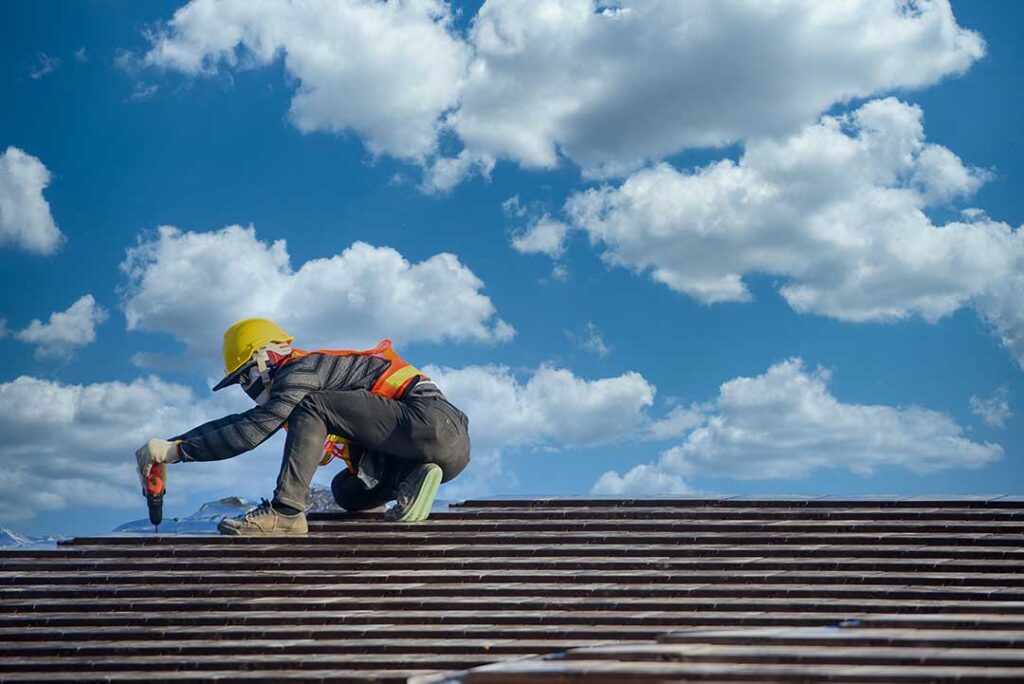
What is a cool roof?
A cool roof is designed to absorb less solar heat than a conventional roof. It uses a surface with higher solar reflectance and thermal emittance, allowing more sunlight to reflect away and more absorbed heat to escape.
Roof color can influence performance, but color alone does not determine whether a roof is “cool.” Some lighter-colored materials naturally reflect substantial sunlight, while specially manufactured darker materials may also include reflective properties. Product ratings are more useful than appearance alone.
A cool roof may be made with:
- Reflective asphalt shingles
- Light-colored metal roofing
- Reflective membranes for low-slope roofs
- Roof coatings
- Certain tile or other high-reflectance materials
The main purpose is to keep the roof surface cooler during sunny weather and reduce the amount of heat transferred into the building.
How does a cool roof reduce indoor heat?
A conventional dark roof can become much hotter than the surrounding air in direct summer sun. That heat can move through the roof assembly into the attic, upper floors, or rooms directly beneath the roof.
A reflective roof interrupts part of that process. By sending more solar energy away from the surface and releasing absorbed heat more effectively, it can reduce heat buildup in the roof deck and attic.
The effect is usually most noticeable in:
- Upper-floor bedrooms
- Finished attic spaces
- Homes with limited attic insulation
- Buildings with large roof areas exposed to full sun
- Rooms beneath low-slope or nearly flat roofs
A cool roof does not replace insulation or ventilation. A home with weak insulation may still become uncomfortable, even with a reflective roof. Roofing, attic insulation, air sealing, ventilation, windows, and shading all affect indoor temperature.
Can cool roofs lower energy bills in Ithaca?
They can reduce summer cooling demand, but the savings in Ithaca are often more modest than in hotter regions. The local climate has a substantial heating season, and many homes use more energy for heating than for air conditioning.
That makes the decision more dependent on the building and the roof system. A reflective roof may offer greater value when:
- The home has air conditioning or heat pumps that operate frequently in summer
- The roof has little insulation
- The attic or top floor overheats
- The roof is broad, dark, and exposed to afternoon sun
- The roofing material is already due for replacement
A well-insulated home with limited air conditioning may see a smaller reduction in utility costs. Energy savings also depend on the roof’s orientation, shade from trees, household habits, equipment efficiency, and the condition of the reflective surface over time.
A cool roof can sometimes increase winter heating demand slightly because it reflects sunlight that might otherwise warm the roof. In a heating-dominated climate, that tradeoff should be considered rather than assuming that a reflective roof automatically produces large year-round savings.
Does a cool roof last longer?
Lower roof temperatures can reduce some heat-related stress on roofing materials. Repeated expansion and contraction, ultraviolet exposure, and high surface temperatures contribute to long-term aging. Keeping the roof cooler may slow certain forms of degradation.
That does not mean every cool roof will outlast every conventional roof. Service life also depends on:
- Material quality
- Installation details
- Roof pitch and drainage
- Snow and ice exposure
- Wind
- Moisture beneath the roofing
- Foot traffic and maintenance
- Ventilation and insulation
In Ithaca, winter conditions add concerns that are separate from solar heat. Snow accumulation, freeze-thaw cycles, ice dams, clogged drainage paths, and moisture infiltration can affect a roof even if its surface remains relatively cool in summer.
Reflectivity is therefore one part of roof performance, not a substitute for proper design and maintenance.
Are cool roofs useful during Ithaca’s winter?
Their strongest benefit occurs on sunny, warm days, so winter advantages are limited. During cold weather, a reflective roof may provide less passive solar warming than a darker roof.
For local homes, the more useful question is often whether the roof performs well across all seasons. A roof should be evaluated for:
- Summer heat gain
- Winter heat loss
- Snow-shedding behavior
- Ice-dam risk
- Ventilation
- Moisture control
- Insulation levels
- Safe drainage

A reflective roof may still be a reasonable choice for a building with significant summer overheating, especially if the roof is being replaced anyway. However, improving attic insulation and air sealing may provide a more noticeable year-round benefit in a home with high heating costs.
What types of cool roofing work for residential homes?
For steep-slope homes, reflective asphalt shingles and metal roofing are common possibilities. Reflective shingles are designed to reduce solar absorption while retaining a familiar appearance. Metal roofing can also be highly reflective, depending on its finish and color.
For low-slope roofs, reflective membranes and coatings are more common. These systems must be selected with drainage, seams, flashing, ponding water, and compatibility with the existing roof in mind.
A coating is not automatically appropriate for every roof. Applying a reflective coating over damaged, damp, poorly adhered, or deteriorated roofing can conceal problems rather than solve them. Coatings also require the underlying roof to be suitable for that treatment.
Product performance should be based on documented solar reflectance and thermal emittance rather than a general claim that a material is “energy efficient.”
Are there drawbacks to cool roofs?
The main drawback is that the energy benefit may not justify replacing a serviceable roof solely for reflectivity, particularly in a climate with a long heating season.
Other considerations include:
- A lighter roof may create more glare around certain windows or neighboring surfaces.
- Dirt, biological growth, and weathering can reduce reflectivity over time.
- Some reflective materials cost more than standard alternatives.
- A highly reflective surface does not correct poor insulation or air leakage.
- Roof color may be limited by neighborhood design preferences, historic requirements, or homeowner association rules.
- Installation details still determine whether the roof resists leaks, wind, snow, and ice.
For many households, the most practical opportunity is to consider reflective roofing during planned replacement rather than treating it as a separate upgrade.
How should homeowners decide whether a cool roof makes sense?
Start with the building rather than the product. Ask where the home gains heat, how often cooling equipment runs, and whether the attic insulation and ventilation are adequate.
Useful questions include:
- Is the top floor noticeably hotter than the rest of the home?
- Is the roof dark and exposed to direct afternoon sun?
- Does the building have central air conditioning or a heat pump?
- Is the roof nearing the end of its service life?
- Are there signs of poor ventilation, moisture, or inadequate insulation?
- Would a reflective material fit the roof’s slope and drainage design?
- Could trees, exterior shading, insulation, or air sealing address the problem more directly?
For a roof replacement, comparing the expected performance of conventional and reflective options can be worthwhile. For a newer roof in good condition, attic improvements may offer a more balanced response to both summer heat and winter conditions.
The central benefit of a cool roof is straightforward: less solar heat enters the building during sunny weather. In Ithaca, that benefit is most useful when it is considered alongside insulation, heating needs, snow management, drainage, and the full life cycle of the roof.
