
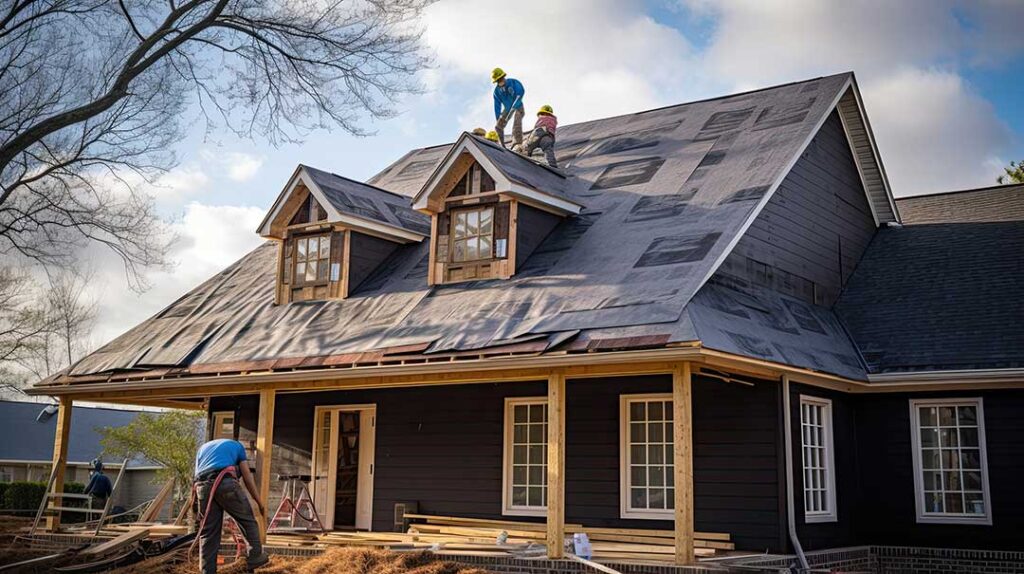
Skylights can make a dark room feel larger and brighter, but they also create openings in the roof that must manage water, snow, wind, heat, and movement. In Ithaca, where roofs experience freeze-thaw cycles, winter snow, spring rain, and summer sun, a skylight’s design and installation have a direct effect on roof durability.
Do skylights weaken a roof?
A properly designed skylight does not automatically weaken a roof, but installation usually requires changes to the roof framing and sheathing. Rafters may need to be cut, doubled, or supported with headers and trimmers so the roof can continue carrying its loads safely.
The effect depends on several factors:
- The size and number of skylights
- The direction and slope of the roof
- The spacing and type of existing rafters or trusses
- The weight of snow and ice the roof must support
- Whether the skylight was installed during construction or added later
- The condition of the surrounding roof materials
A small skylight installed between rafters may require less structural alteration than a wide unit that interrupts multiple framing members. Truss-framed roofs require particular caution because individual trusses generally should not be cut without an engineered design.
Skylights also create a break in the roof’s continuous water-shedding surface. The framing may remain sound while the roof begins leaking because the flashing, underlayment, or seal around the opening has failed.
Why are skylights more prone to leaks than ordinary roof areas?
A skylight has several transitions where water must move from one material to another. These include the skylight frame, metal flashing, roofing material, underlayment, and sometimes a raised curb.
Leaks often result from deteriorated flashing rather than from the glass or acrylic itself. Common problem areas include:
- Flashing installed without the required overlap
- Roofing cement used as a substitute for proper flashing
- Missing or damaged underlayment around the opening
- Debris collecting behind the uphill side of the skylight
- Cracked seals or aging frames
- Roofing materials installed too tightly or too far away from the frame
- Ice dams forming above the skylight
The uphill side deserves special attention. Snow, leaves, and runoff can collect there, increasing the time that water remains against the flashing. During freeze-thaw weather, trapped water may expand, contract, and find its way beneath roofing materials.
A skylight does not need to show dripping water to have a developing leak. Stained ceiling finishes, damp insulation, peeling paint, swollen trim, musty odors, or darkened roof sheathing can indicate moisture entering around the unit.
How do snow and ice affect skylights?
Snow adds weight to the roof, while ice can interfere with drainage and flashing. A skylight may also create a warmer area where snow melts unevenly, particularly if the surrounding roof has limited insulation or air leakage.
That melting snow can run toward a colder roof edge and refreeze as an ice dam. The dam may force water beneath shingles or other roofing materials. Skylights located near eaves, valleys, or roof transitions may be more exposed to this problem.
In the local winter climate, homeowners should watch for:
- Snow buildup on the uphill side of a skylight
- Icicles forming below or beside the unit
- Water stains that appear after sunny winter days
- Frost or condensation on the interior surface
- Drafts around the skylight shaft
- Repeated leaks during thawing weather
Snow should not be removed by walking directly on a skylight. Glazing can crack under impact or concentrated weight, and a fall through the opening is possible even when the surface appears strong.
Do skylights cause heat loss in winter?
Yes, skylights can lose more heat than well-insulated portions of a roof, especially when they have older glazing, thin frames, poor air sealing, or an uninsulated shaft. Heat loss is affected by the skylight’s U-factor, which measures how readily heat passes through the assembly. Lower values generally indicate better insulating performance.
The shaft between the skylight and the ceiling can also be a weak point. If it is poorly insulated or not sealed where it meets the roof and ceiling, warm indoor air may enter the assembly. That can cause condensation, damp insulation, and eventually wood decay.
Energy performance improves when a skylight has:
- Double or triple glazing
- Low-emissivity coatings
- Insulated frames
- Proper air sealing
- An insulated, carefully detailed light shaft
- A size and location suited to the room
Older acrylic dome skylights may allow noticeable drafts or become brittle with age. Some also develop yellowing, crazing, or cracks that reduce their weather resistance.
Can skylights make a room too hot in summer?
They can. A skylight receives direct sunlight from above, and many are difficult to shade effectively. Excess solar heat may make an upper-floor room uncomfortable, increase air-conditioning use, and fade floors or furnishings.
The amount of heat entering a room depends on the skylight’s solar heat gain coefficient, orientation, glazing, tint, shade, and size. A large skylight facing strong afternoon sun can have a very different effect from a smaller unit placed where surrounding trees or roof geometry provide partial shade.
Interior shades can reduce glare and heat, but they must be compatible with the skylight and used consistently. Exterior shading is often more effective because it stops sunlight before it passes through the glazing.
What happens when a roof is replaced around a skylight?
A roof replacement does not always require skylight replacement, but the two systems are closely connected. If the skylight is near the end of its service life, replacing roofing around an old unit may leave a vulnerable component in the middle of a new roof.
Replacement is more worth considering when the skylight has:
- Cracked or yellowed glazing
- Persistent fogging between panes
- Corroded or damaged flashing
- Repeated leaks
- A frame that has warped or deteriorated
- Poor energy performance
- A manufacturer’s parts that are no longer available
If an existing skylight remains, its flashing should be integrated with the new roofing and underlayment rather than simply covered with roofing cement. The roof slope must also be suitable for the specific skylight and flashing system. Some low-slope installations require a raised curb or other special detail.
Do skylights require building-code considerations in New York?
Skylight installations can involve structural, safety, energy, and weatherproofing requirements under New York’s building codes. Requirements may address glazing, fall protection, roof slope, curb height, energy performance, and design loads.
Snow-load design is particularly relevant for roofs in this region. The supporting framing and skylight assembly must be appropriate for the site and building. A permit may also be required for work that alters roof framing or adds a new roof opening.
The exact requirements depend on the building type, project scope, roof design, and code edition applicable to the property. Cutting roof framing without confirming those requirements can create both safety and approval problems.
How should homeowners inspect a skylight?
A visual inspection from the ground and inside the home can identify early warning signs. Look at the ceiling and trim around the light shaft after heavy rain, during a thaw, and after strong wind. From outside, inspect only from a safe location and avoid stepping on the skylight.
Useful observations include:
- Cracked, cloudy, or displaced glazing
- Missing shingles or other roofing materials near the frame
- Lifted flashing
- Rust or corrosion
- Moss and debris collecting uphill
- Water stains or soft interior drywall
- Condensation that persists beyond normal humidity changes
- A visible gap between the frame and surrounding roofing
A skylight is part of the roof system, not an isolated window. Its long-term performance depends on sound framing, correct flashing, continuous underlayment, adequate insulation, controlled indoor humidity, and regular observation after severe weather.
