
How can you tell when a roof is beginning to age?
Aging usually appears as a pattern of smaller changes rather than one dramatic failure. Shingles may lose their protective surface, metal may develop corrosion, slate may crack, or membrane roofing may show seams and edges becoming less secure.
In Ithaca, repeated freeze-thaw cycles, winter snow, ice, wind, spring moisture, and summer sunlight can affect roofing materials at different rates. A roof can look acceptable from the ground while developing problems around valleys, chimneys, skylights, vents, and roof edges.
Roof age is only one part of the assessment. Installation quality, ventilation, drainage, tree shade, storm exposure, and past repairs also influence how quickly visible aging develops.
What does aging look like on asphalt shingle roofs?
Asphalt shingles commonly show age through surface loss, distortion, and loss of uniformity. The most useful clues include:
- Granules collecting in gutters or at downspout outlets
- Bald patches where the darker shingle surface is exposed
- Curling corners or lifted edges
- Cracked, broken, or missing shingles
- Blister-like marks or areas of surface bubbling
- Streaking, moss, or algae growth that remains after wet weather
- Uneven color caused by different repair areas or sun exposure
A few loose granules are not automatically evidence of serious deterioration. Newer roofs can shed some granules, especially after installation. More concerning is widespread granule loss accompanied by exposed matting, brittle shingles, or recurring leaks.
Curling may result from age, poor ventilation, manufacturing defects, or installation problems. Shingles that curl mostly along one roof plane may be reacting to uneven sunlight or airflow rather than reaching the same age throughout the roof.
How does an aging metal roof differ from an aging shingle roof?
Metal roofing often remains watertight after its finish has begun to deteriorate, so appearance alone does not always show the full condition. Aging may appear as faded coating, surface chalking, rust at cut edges, loose fasteners, separated seams, or failed sealant around penetrations.
Look carefully at:
- Panel joints and laps
- Fasteners and washers
- Valleys, ridges, and eave edges
- Areas where snow or ice slides
- Flashing around chimneys, walls, and vents
- Places where dissimilar metals meet
Light surface rust may be limited to the finish or exposed cut edges. Deep corrosion, perforation, loose panels, and recurring water entry indicate more advanced deterioration.
Standing-seam metal roofs can also develop movement-related problems. Panels expand and contract as temperatures change. Clips, seams, and flashing must accommodate that movement. A roof that makes occasional popping sounds is not necessarily failing, but distorted seams or fasteners backing out deserve closer attention.
What are the warning signs on slate, tile, and other masonry-based roofing?
Slate and clay or concrete tile can last for many decades, but individual units may crack, flake, shift, or become loose. The supporting components underneath may age sooner than the visible roofing material.
Signs of aging include:
- Broken or missing slate or tile
- Pieces that sound hollow, crumble, or split into layers
- Slipped units below valleys, ridges, or roof penetrations
- Rusted or exposed fasteners
- Deteriorated flashing
- Sagging areas in the roof plane
- Mortar or ridge material that has cracked and separated
A common misconception is that a long-lasting material eliminates maintenance concerns. Slate and tile may remain durable while flashing, underlayment, fasteners, or roof framing require attention. Walking directly on these materials can also cause damage, particularly when they are cold, brittle, or already cracked.
How can flat and low-slope roofs show their age?
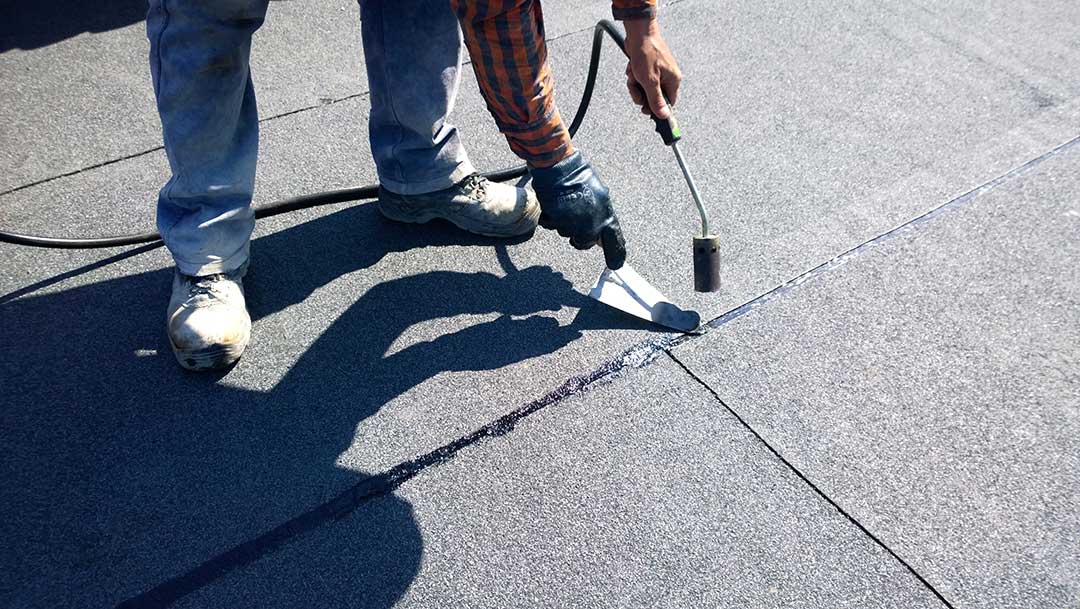
Flat and low-slope roofs often age through drainage problems, seam failure, membrane shrinkage, and surface wear. Water may remain visible for a time after rainfall, but persistent ponding is a concern because it increases stress on seams and can expose weak areas.
Depending on the roof system, look for:
- Open or separating seams
- Blisters, wrinkles, or bubbles
- Cracks at corners and transitions
- Loose edge metal or membrane
- Exposed reinforcement
- Worn coating or bare insulation
- Water stains on ceilings or upper walls
- Repeated ponding near drains or scuppers
Interior evidence can be especially valuable. Stains may appear far from the actual leak because water travels along decking, insulation, framing, or interior finishes. A dry ceiling does not prove that a roof has no hidden moisture.
Which roof areas age faster than the rest?
Roof aging is rarely uniform. Valleys, eaves, ridges, and penetrations usually deserve closer attention than broad, unobstructed slopes.
Valleys collect water, leaves, ice, and debris. Eaves are exposed to runoff and ice buildup. Roof edges can experience wind uplift. Chimneys, vents, skylights, and wall intersections depend on flashing that may deteriorate before the main field material.
Trees can add another source of wear. Branches may scrape surfaces, falling limbs can cause impact damage, and shaded areas dry more slowly. Moss is more likely to establish where moisture and shade persist. Moss does not automatically mean a roof is failing, but thick growth can lift shingle edges and hold moisture against the roofing.
Does a roof leak always mean the roof is old?
No. A leak can occur on a relatively new roof because of storm damage, a puncture, failed flashing, installation error, blocked drainage, or ice-related backup. Conversely, an old roof may not leak yet, even though its materials have become brittle and less resistant to weather.
The location and timing of a leak provide useful clues. Water appearing after wind-driven rain may point toward flashing or exposed edges. A stain that appears during heavy snow or thawing may involve ice-related backup. Drips around a skylight or chimney do not necessarily mean the roof covering itself is the source.
Interior warning signs include:
- Brown or yellow ceiling stains
- Peeling paint or bubbling drywall
- Damp insulation
- Musty odors in attic areas
- Daylight visible through roof decking
- Wet framing or rusted fasteners
Any electrical fixture affected by water should be treated as a safety concern. Keep clear of sagging ceilings and avoid entering areas with unstable surfaces.
How should homeowners inspect an aging roof safely?
A ground-level inspection is often enough to identify visible changes without creating additional damage. Use binoculars to examine shingle texture, missing pieces, flashing, roof edges, and areas beneath trees. Check gutters for excessive granules, shingle fragments, rust, or pieces of flashing.
From inside the attic or uppermost accessible area, look for daylight, damp wood, staining, compressed insulation, and darkened areas near penetrations. Inspect after rainfall if possible, but do not enter an attic during unsafe heat, electrical hazards, or uncertain flooring conditions.
Do not climb onto a roof that is wet, icy, steep, fragile, or covered with moss. Slate, tile, and some older roofing materials can break under foot. Safety concerns, suspected structural damage, active interior leaking, or uncertainty about hazardous materials justify an assessment by a qualified roofing or building professional.
How can roof age be estimated when records are missing?
A roof’s installation date may be found in property records, closing documents, warranties, permits, or maintenance notes. If those are unavailable, condition provides only an estimate.
Look for differences in shingle color, fastener style, flashing, ridge materials, and repair patterns. A roof with several layers may contain materials from different installation periods. The oldest visible layer is not always the layer currently exposed to weather.
For homes in Ithaca, seasonal wear can make calendar age an imperfect guide. A roof exposed to shade, snow accumulation, ice dams, and poor attic ventilation may age faster than a similarly old roof with good drainage and airflow. Conversely, a well-installed roof with favorable exposure may remain serviceable beyond a commonly cited lifespan.
The most reliable approach is to combine the roof’s known history with visible surface condition, attic observations, drainage performance, and the performance of vulnerable details such as flashing and valleys.
