
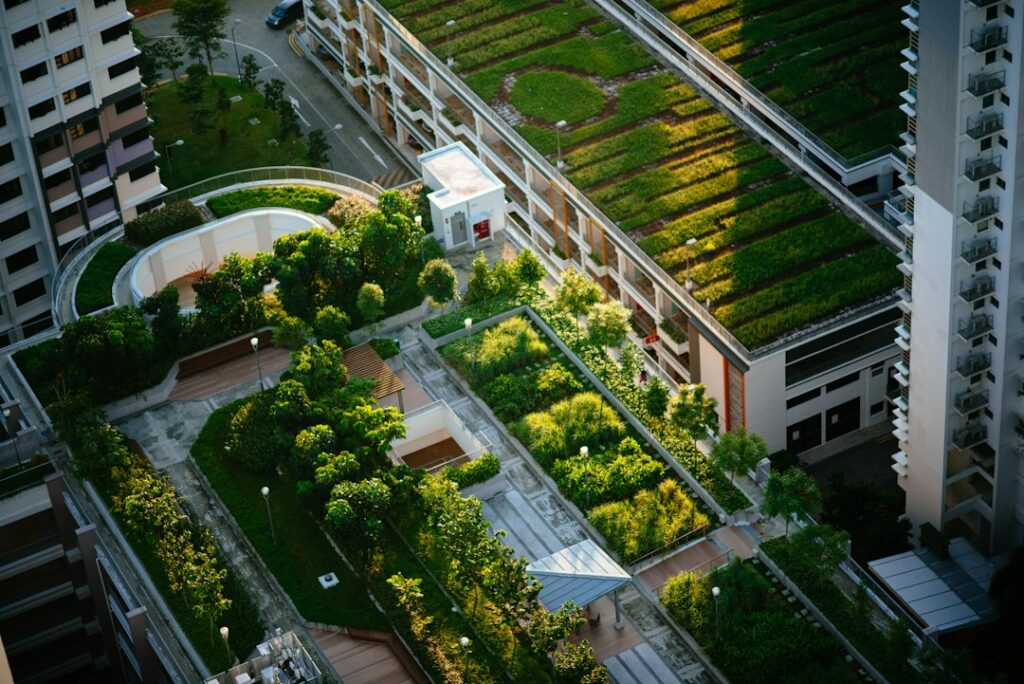
Are green roofs worth considering in Ithaca, NY?
A green roof can be worthwhile when a building has suitable structure, a relatively low-slope roof, and a long-term need for stormwater control, insulation, habitat, or outdoor space. It is not automatically the most economical roofing choice for every home.
A green roof, sometimes called a vegetated roof, places a layered planting system above a waterproof roof membrane. The system usually includes drainage materials, a root barrier, growing medium, and plants selected for rooftop conditions.
For many area households, the main question is not whether green roofs are environmentally attractive. It is whether the building can safely support the added weight, whether the roof is accessible enough for maintenance, and whether the benefits justify the added construction complexity.
What types of green roofs are available?
Most green roofs fall into three broad categories: extensive, intensive, and semi-intensive.
- Extensive roofs use a shallow layer of growing medium and low-maintenance plants, often sedums, mosses, grasses, or other drought-tolerant varieties. They are lighter and generally easier to maintain.
- Intensive roofs have deeper soil and can support larger plants, shrubs, gardens, paths, and gathering areas. They require more structural capacity and regular care.
- Semi-intensive roofs fall between the two, with more planting variety than an extensive system but less depth and weight than a roof garden.
An extensive system is usually the most realistic option for a small residential building. A deeper roof garden may be appropriate for a larger structure designed for public access or outdoor use, but it should be treated as a specialized structural and landscape project rather than a simple roofing upgrade.
How does the local climate affect green roof performance?
The climate in Ithaca includes cold winters, freeze-thaw cycles, substantial annual precipitation, and average yearly snowfall of roughly five feet. Those conditions make drainage, waterproofing, plant selection, and snow-load design especially important.
A green roof does not eliminate winter roof risks. Saturated growing medium, retained snow, ice, and accumulated water can create significant loads. The roof structure must be evaluated for both the permanent weight of the system and temporary conditions after wet weather or snowfall.
Plants also experience more stress on a roof than they would at ground level. Rooftops are exposed to wind, summer heat, drying, and rapid temperature changes. A planting palette that performs well in a protected yard may not survive on an exposed roof.
Freeze-thaw movement deserves particular attention. Repeated changes between freezing and thawing can challenge membranes, flashing, drains, and edge details. A successful design must keep water moving and make it possible to inspect critical roof components.
What are the main benefits?
The strongest benefits are usually stormwater management and environmental performance.
A planted roof can temporarily retain rainfall and slow the rate at which water reaches gutters, downspouts, and surrounding drainage systems. This may reduce runoff during smaller storms, although a green roof will not hold all water during prolonged or intense rainfall.
Vegetation can also protect the waterproofing layer from direct sunlight, temperature swings, and some physical damage. That may help extend membrane life, but only if the roof is properly designed and maintained. Plants do not compensate for poor waterproofing or inadequate drainage.
Other potential benefits include:
- Reduced summer heat gain through the roof assembly
- Improved roof-level habitat for pollinators and insects
- Less glare and a more attractive view from nearby windows
- Limited reduction in outdoor noise
- Opportunities for gardening or shared outdoor space on suitable buildings
The energy benefit is often overstated. A green roof may help moderate summer roof temperatures, but it should not be viewed as a replacement for adequate insulation, air sealing, ventilation, or efficient heating equipment.
What are the disadvantages?
The main disadvantages are higher initial cost, added weight, maintenance requirements, and more complicated repairs.
Green roofs require multiple layers to work correctly. If a leak develops, locating the source may be more difficult because portions of the roof are covered by drainage materials and vegetation. Repairs may require temporarily moving plants, soil, or protective layers.
Maintenance is usually lower for an extensive roof than for a garden, but “low maintenance” does not mean “no maintenance.” Regular inspections may be needed to:
- Remove unwanted woody plants and invasive growth
- Keep drains, scuppers, and overflow paths clear
- Check exposed membrane, flashing, and edge restraints
- Replace dead or damaged plants
- Control erosion after heavy rain or wind
- Confirm that inspection paths remain usable
A neglected green roof can become a drainage problem rather than a stormwater solution.

Can an existing roof support a green roof?
Possibly, but the answer cannot be determined by looking at the roof covering alone. Structural capacity depends on the framing, spans, connections, roof slope, existing materials, snow design, and the weight of the proposed system when saturated.
Older homes may have roof structures that were never designed for a permanent landscaped assembly. Even a shallow extensive roof can add substantial dead load, while wet soil and retained snow add temporary load. The current New York State building codes also require roof design to account for applicable snow and other structural loads.
A structural review is warranted before adding soil, planters, or a vegetated assembly. This is one of the situations where qualified design and code review are necessary for safety and legal compliance.
Are green roofs practical on typical homes?
They are most practical on homes or accessory buildings with low-slope roofs, strong structural framing, good roof access, and a design that allows drains and edges to be inspected.
Steep roofs are generally poor candidates because growing medium and plants may slide, erode, or require complex restraints. Traditional pitched roofs also shed snow and water differently from low-slope roofs, making a vegetated installation more difficult.
For a typical sloped home, other measures may provide similar environmental benefits with less risk and expense. These can include rain gardens at ground level, rain barrels where permitted and properly managed, permeable surfaces, shade trees, native plantings, and improved roof insulation.
A green roof is more likely to make sense during new construction or a major roof replacement, when the membrane, structure, drainage, and edge details can be planned together. Retrofitting an otherwise serviceable roof may be harder to justify financially.
What should homeowners evaluate before choosing one?
Start with the building rather than the planting. Important questions include:
- Is the roof flat or low-slope enough for the proposed system?
- Can the framing support saturated soil, vegetation, snow, and maintenance activity?
- Where will excess water go during heavy rain?
- Can drains, flashing, roof edges, and penetrations be inspected?
- Will the roof be visible from neighboring windows or public areas?
- Who will perform seasonal maintenance?
- Is the waterproofing system suitable for long-term coverage?
- Will local building, zoning, stormwater, or fire-safety requirements apply?
The expected service life of the roof should also be considered. Installing vegetation over an aging membrane may create access and repair problems later. A green roof generally makes more sense when the underlying waterproofing is new, durable, and designed for covered installation.
How should the decision be made?
Green roofs are worth considering when their purpose is clearly defined. They may be a strong fit for a low-slope addition, multifamily building, community facility, or new structure where stormwater retention, habitat, or rooftop use has meaningful value.
They are less compelling when the only goal is lower energy bills or when the roof requires major structural work before it can support planting. In those cases, conventional roofing improvements and ground-level stormwater features may offer a better balance of cost, simplicity, and reliability.
For local residents, the most practical approach is to compare the complete life-cycle picture: structural work, waterproofing, drainage, planting, inspections, snow and ice conditions, maintenance, and eventual replacement. A green roof can provide real benefits, but its success depends more on careful design and ongoing stewardship than on the plants themselves.
