

What do curling and cracking shingles mean?
Shingle curling and cracking are signs that asphalt roofing material is losing its ability to shed water reliably. Curling occurs when the edges or corners of shingles lift upward, while cracking appears as splits through the surface or along the shingle tabs.
Neither condition automatically means the entire roof must be replaced. The right response depends on the age of the shingles, how widespread the damage is, whether the roof deck is still dry, and whether water is entering the building.
In Ithaca, seasonal temperature changes, snow, ice, wind, and repeated wet-dry cycles can expose weaknesses in aging shingles. A roof may appear acceptable from the ground while damage is developing around roof edges, valleys, vents, chimneys, and other areas where water movement is concentrated.
Why do asphalt shingles curl?
Shingles curl when their layers lose flexibility or no longer lie flat against the roof. Several causes are common:
- Age-related drying and loss of asphalt oils
- Repeated expansion and contraction during temperature changes
- Poor attic ventilation that allows excessive heat buildup
- Inadequate fastening or installation problems
- Moisture reaching the underside of the roofing material
- Shingles installed over an uneven or poorly prepared surface
- Manufacturing defects or premature material failure
Curling may appear as an upward lift along the bottom edge, a raised corner, or a wavy pattern across several courses. If the curled shingles are brittle, they can break when exposed to wind or when someone walks on the roof.
A small amount of edge lifting on an older roof is often an early warning that the roofing system is nearing the end of its serviceable life. Curling across multiple slopes usually deserves more attention than one isolated damaged shingle.
What causes shingle cracking?
Cracks form when shingles become brittle or are stressed by movement. Surface cracks may look like narrow lines, while more serious cracks split through the shingle and allow water to reach the underlayment.
Common causes include:
- Normal aging and ultraviolet exposure
- Rapid temperature changes
- Severe winter weather and freeze-thaw cycles
- Roof movement caused by structural or moisture-related problems
- Excessive foot traffic
- Shingles that were bent during installation or repairs
Cracking is not always easy to see from the ground. Some splits are hidden beneath overlapping tabs, while others run along the shingle’s edges. Cracks near roof penetrations or valleys are especially concerning because these areas receive more water and may already have complicated flashing details.
How can a homeowner tell whether the problem is serious?
The extent and location of the damage matter more than a single curled or cracked shingle. A few damaged shingles may be repairable, but widespread deterioration suggests that patching will provide only temporary results.
Warning signs include:
- Curling or cracking on several sections of the roof
- Shingle granules collecting in gutters or at downspout outlets
- Bare or dark patches where the protective surface has worn away
- Missing tabs or shingles after windy weather
- Damp insulation, stained ceilings, or peeling interior paint
- Musty odors in the attic
- Daylight visible through the roof deck
- Sagging areas or soft decking underfoot
Water stains do not always appear directly below the leak. Roof water can travel along rafters, insulation, or ceiling framing before becoming visible indoors. A dry ceiling does not prove that the roof is watertight.
Can curled or cracked shingles be repaired?
Limited damage can sometimes be repaired by replacing individual shingles or a small group of shingles. This approach is more likely to work when the surrounding shingles remain flexible, properly attached, and in generally good condition.
Repairs become less dependable when the shingles are brittle. Older material may break during removal, and new shingles may not blend well or seal properly with the surrounding roof. Adhesive strips also need suitable weather conditions to bond effectively.
A repair should address the underlying cause as well as the visible damage. For example, replacing curled shingles without correcting poor attic ventilation or a flashing problem may leave the roof vulnerable to repeat damage.
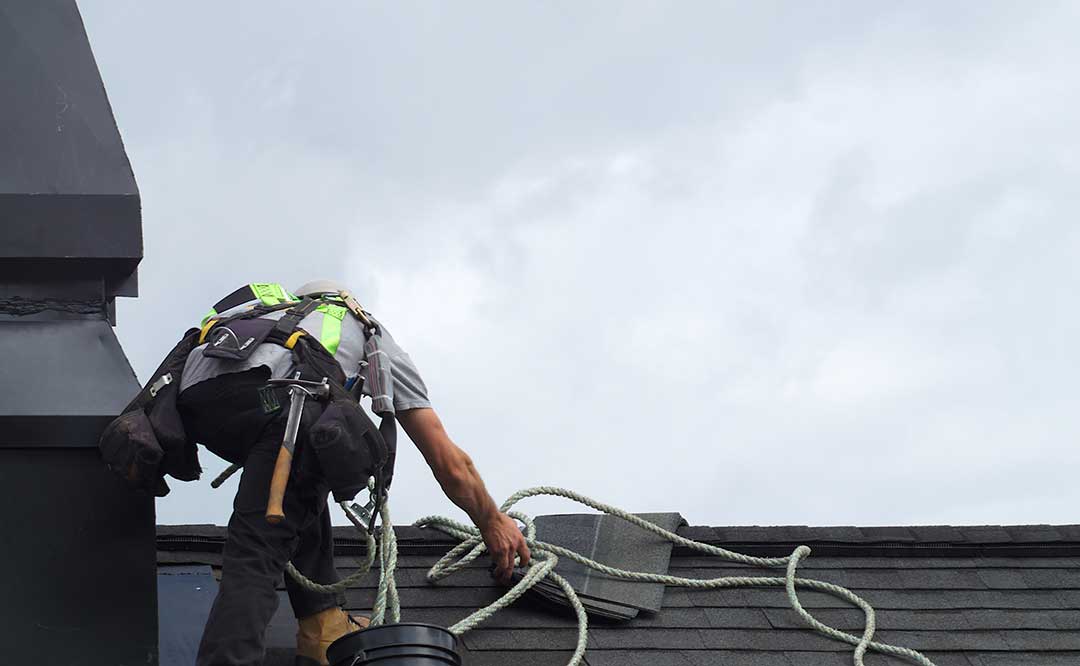
Roof work involves fall hazards, and steep, wet, icy, or deteriorated surfaces are particularly unsafe. Walking on damaged shingles can worsen cracking and dislodge granules. Ground-level inspection with binoculars is safer for routine observation, while serious leaks, structural concerns, or difficult access may require qualified assistance.
When does curling and cracking indicate roof replacement?
Replacement becomes more likely when deterioration is widespread, the shingles are near or beyond their expected service life, or repairs are repeatedly needed. A roof may also need replacement when the underlayment or roof deck has been exposed to ongoing moisture.
The following pattern generally points to a system-level problem:
- Curling appears on multiple roof slopes
- Cracks are present in many shingle courses
- Granule loss is extensive
- Shingles are brittle enough to break easily
- Leaks have occurred in more than one location
- Previous repairs have not stopped water entry
- Flashing, valleys, or roof edges are also failing
A roof’s age is useful context but not a complete diagnosis. Two roofs of the same age may perform differently because of ventilation, shade, installation quality, storm exposure, and maintenance history.
How does Ithaca weather affect shingle condition?
Ithaca experiences cold winters, snow, ice, summer heat, and frequent moisture. These conditions place repeated stress on asphalt shingles and the components beneath them.
Freeze-thaw cycles can enlarge small cracks, especially where water enters a damaged area and later freezes. Snow and ice can also add weight and increase the chance of wind-driven moisture entering around weak edges. In shaded locations, slow drying may encourage algae or moss growth, which can hold moisture against the roofing surface.
Summer heat can accelerate aging, particularly in poorly ventilated attic spaces. Good intake and exhaust ventilation helps reduce heat and moisture buildup, although ventilation cannot restore shingles that are already brittle or severely damaged.
Roof drainage also matters. Leaves, small branches, and ice can obstruct gutters or valleys, causing water to back up beneath shingle edges. Keeping drainage paths clear is a practical part of limiting moisture-related deterioration.
What should be checked after noticing damage?
Start with a careful exterior and interior review rather than immediately assuming the roof needs complete replacement. From the ground, look for missing, lifted, cracked, or visibly uneven shingles. Check gutters for unusually large amounts of granules and inspect around visible vents, chimneys, skylights, and roof intersections.
Inside the building, examine the attic if it can be reached safely. Look for:
- Darkened wood
- Damp insulation
- Water marks
- Mold-like growth
- Rusted fasteners
- Daylight through the roof deck
- Compressed or displaced insulation near the eaves
Photographs taken from the same locations over time can help show whether curling or cracking is spreading. After heavy wind, rain, or snow, a brief inspection is useful because existing weaknesses may become more visible.
Can shingle curling and cracking be prevented?
Prevention cannot stop normal aging, but it can reduce avoidable damage. Keep gutters and downspouts clear, trim branches that rub against the roof, and avoid unnecessary foot traffic. Make sure attic insulation and ventilation are functioning as intended, and monitor areas where ice buildup or recurring leaks have occurred.
Promptly addressing small flashing failures, blocked drainage, and attic moisture can help protect otherwise sound shingles. However, sealants or surface coatings should not be used as a substitute for correcting damaged shingles, wet decking, or faulty flashing.
For homeowners in the area, the most useful habit is seasonal observation: check after winter, after major wind events, and before periods of heavy rain. Early identification does not guarantee that a roof can be saved, but it can help distinguish a limited repair from a broader problem before interior damage develops.
