
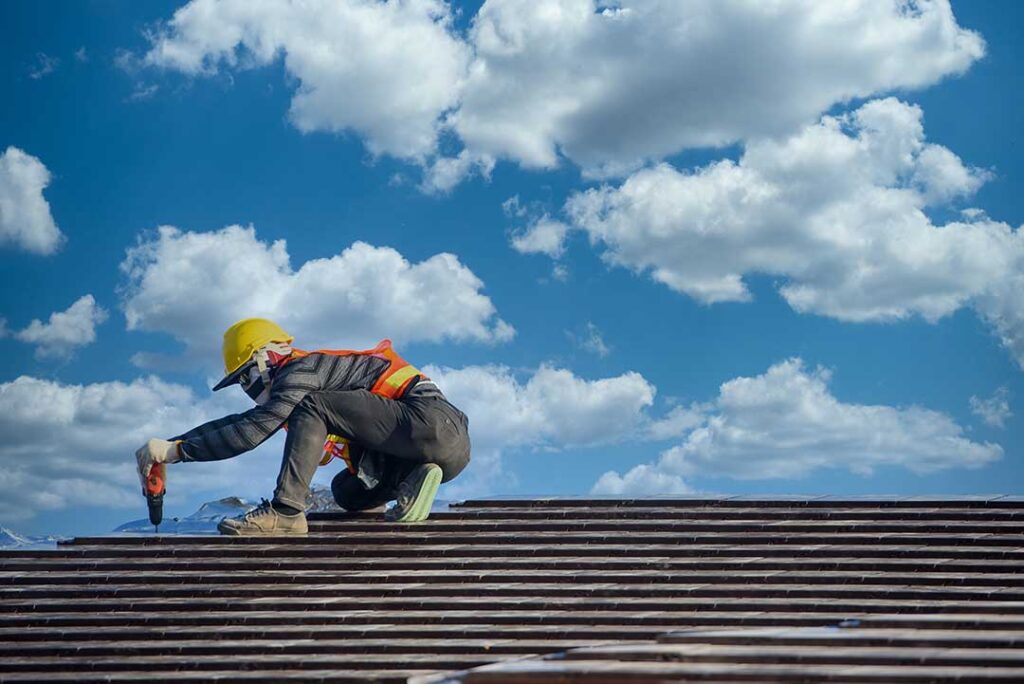
Roof decking, also called roof sheathing, is the layer of plywood or oriented strand board installed over the rafters or trusses. It supports the roofing materials and helps tie the roof structure together. When decking becomes wet, weakened, or distorted, the problem can affect more than the shingles above it.
In Ithaca, seasonal snow, freezing rain, ice buildup, wind-driven precipitation, and repeated freeze-thaw cycles can place added stress on roof assemblies. Some decking problems are easy to see from the attic, while others first appear as changes in the roof surface or interior ceilings.
What does damaged roof decking look like from inside the attic?
The attic often provides the clearest view of the roof deck. Look for changes in the wood itself, especially near roof valleys, eaves, chimneys, plumbing vents, skylights, and other penetrations.
Common warning signs include:
- Dark water stains or rust-colored discoloration
- Soft, crumbly, or spongy wood
- Areas that appear swollen or delaminated
- Mold-like spotting or persistent mildew odor
- Nail tips showing rust or moisture staining
- Patches of wet or compressed insulation
- Visible daylight through unintended gaps
- Sagging between rafters or trusses
A single old stain does not always mean the decking is currently wet. However, a stain that feels damp, grows after rain, or appears alongside soft wood suggests an active or recurring moisture problem.
Avoid walking directly on roof decking in an unfinished attic. Older plywood, thin sheathing, and deteriorated areas may not support a person safely. Use permanent walk boards where available, and do not investigate areas near suspected structural damage without appropriate precautions.
Can roof decking problems be seen from the outside?
Sometimes. A roof deck that has lost stiffness may create visible dips, waves, or uneven sections in the roof plane. These distortions can be subtle when viewed from the ground, particularly on roofs with textured shingles or complex slopes.
Other exterior clues include:
- Shingles that appear uneven or follow a sagging line
- Depressions where water remains after rainfall
- Shingles that curl or deteriorate in one concentrated area
- Roof edges that look wavy instead of straight
- Repeated leaks in the same location after previous repairs
- Exposed sheathing at an eave, rake, or roof opening
A roof that looks uneven does not automatically have rotten decking. Problems with rafters, trusses, insulation, installation, or the roof covering itself can create a similar appearance. The visible symptom identifies an area for closer examination, not the exact cause.
Which indoor symptoms may point to a roof deck issue?
Water damage inside the home can indicate that moisture has traveled through the roofing layers and reached the decking. Ceilings and walls may show yellow-brown stains, peeling paint, bubbling drywall, or damp patches near the upper corners of rooms.
The location of an interior stain may not line up directly with the leak. Water can move along rafters, roof sheathing, insulation, and framing before entering the living space. For that reason, a stain near a wall does not necessarily mean the wall itself is the source.
Pay particular attention after:
- Heavy rain accompanied by strong wind
- Rapid snowmelt
- Ice buildup along roof edges
- Freeze-thaw weather
- A major storm involving fallen branches or debris
A musty smell in an upper room or attic can also signal hidden moisture, even when no active dripping is visible.
How do ice dams affect roof decking?
Ice dams can damage roof decking by allowing meltwater to back up beneath the shingles and underlayment. This is more likely when warm areas of the roof melt snow while colder eaves remain frozen.
The resulting water can wet the lower sections of the roof deck, especially near overhangs and exterior walls. Repeated wetting and drying may cause wood to swell, separate, soften, or decay.
Signs that ice dams may have contributed to decking damage include:
- Water stains near exterior walls or upper-floor ceilings
- Rot or discoloration along the lower roof edges
- Damp insulation near the eaves
- Icicle formation paired with indoor leakage
- Recurring winter leaks that stop during warmer, drier weather

Removing visible ice does not correct the underlying heat, insulation, ventilation, or drainage conditions. Chipping at ice can also damage shingles and gutters. Safer evaluation focuses on preventing water backup and identifying where moisture is entering the roof assembly.
Does condensation damage roof decking even without a roof leak?
Yes. Roof decking can become damp from attic condensation, not just rain or melting snow. Warm, moist air from bathrooms, kitchens, laundry areas, or the living space can enter the attic through gaps around light fixtures, wiring, ducts, and access hatches.
If that moisture meets cold roof sheathing, condensation or frost may form on the underside of the deck. Repeated cycles can contribute to mold, staining, wood deterioration, and reduced insulation performance.
Potential clues include:
- Frost on the underside of the roof deck in winter
- Widespread staining rather than one isolated wet area
- Moisture near bathroom or kitchen exhaust routes
- Exhaust fans that terminate inside the attic
- Damp insulation across broad sections of the attic
- Poor airflow at soffit, ridge, gable, or other ventilation openings
A roof may be free of obvious exterior leaks and still have a moisture problem inside the attic.
When is roof decking damage urgent?
Immediate attention is appropriate when the roof deck is visibly sagging, feels unstable, has large soft areas, or shows signs of a structural opening. Active water entering near electrical wiring, light fixtures, or electrical equipment also creates a safety concern.
Other urgent conditions include:
- A ceiling that is bulging or holding water
- Large sections of wet insulation
- Roof damage after a fallen tree or major impact
- A hole or opening visible from the attic
- Fast-spreading water stains during rainfall
- Structural members that appear cracked, split, or displaced
Keep people away from areas beneath a sagging ceiling or visibly unstable roof section. Do not climb onto a wet, icy, or damaged roof. Structural evaluation may require a qualified roofing or building professional because the condition of the decking cannot always be determined safely from ground level.
How can homeowners check roof decking safely?
A basic inspection can begin from the ground and from accessible attic areas. Use a flashlight and look for staining, dampness, sagging, mold-like growth, and daylight. Compare suspicious areas with the roof surface above them, especially around valleys and penetrations.
Record when the problem appears and whether it changes after rain, snowmelt, or cold weather. Photographs can help track whether staining is spreading.
Do not rely on pressing hard against questionable wood, poking through insulation, or walking across unsupported attic areas. A roof deck may look intact while losing strength internally. Early investigation is most useful when it identifies the source of moisture before the damage expands into rafters, trusses, insulation, ceilings, or wall cavities.
