

Holiday decorations are usually stored for most of the year, and the attic often seems like the easiest place to keep them. In Ithaca, NY, however, winter moisture, freeze-thaw cycles, snow, and older housing designs can make poor storage habits harder on a roof than expected.
The goal is not simply to keep decorations organized. Storage should also preserve attic ventilation, prevent excess weight, avoid punctures and leaks, and keep damp materials from damaging roof framing or insulation.
Can holiday decorations be stored in an attic?
Yes, but only when the attic is dry, accessible, and suitable for storage. Decorations should remain on the attic floor or on properly supported storage platforms, never directly against the underside of the roof or inside ventilation pathways.
An attic may experience large temperature swings. Warm household air can move upward, meet cold roof surfaces, and create condensation. Cardboard, fabric, artificial greenery, and electrical cords can retain moisture, while crowded storage can block the airflow needed to dry the roof assembly.
Before placing decorations in an attic, check for:
- Damp insulation or water stains
- Musty odors or visible mold
- Rusted nails or fasteners
- Soft or discolored roof sheathing
- Daylight visible through the roof
- Blocked soffit, ridge, gable, or other ventilation openings
- Signs of rodents or insects
These conditions should be addressed before adding stored items. Covering a moisture problem with plastic bins can hide the warning signs without correcting the source.
How should decorations be packed to reduce roof-related problems?
Use clean, dry, lidded containers rather than loose piles or weakened cardboard boxes. Plastic containers help protect decorations from minor dust and pests, but they should not be used to seal away items that are already damp.
Pack decorations only after they have dried completely. Artificial wreaths, garlands, outdoor extension cords, fabric tree skirts, and inflatable decorations may hold moisture after outdoor use. Allow them to dry indoors or in a protected, ventilated location before storing them.
A practical storage system includes:
- Rigid containers with secure lids
- Labels on both the top and side of each container
- Smaller containers that can be lifted safely
- Separate bins for lights, fragile ornaments, fabric, and outdoor equipment
- Padding for glass or ceramic items
- Containers that are elevated slightly above the attic floor if moisture intrusion is a concern
Avoid tightly compressing fabric decorations in airtight bags for long periods. Trapped moisture can lead to mildew, especially if the items were not fully dry when packed.
Where should storage containers sit in the attic?
Keep containers on the attic floor or on a designed storage platform, away from the eaves and roof edges. The areas near the eaves often contain ventilation channels that allow outside air to move beneath the roof deck. Blocking those channels can increase condensation and contribute to roof moisture problems.
Do not place boxes:
- Against roof sheathing
- Over soffit vents
- Around bathroom or kitchen exhaust outlets
- Directly beneath roof leaks or suspected trouble spots
- On top of insulation
- Near recessed lights, chimneys, flues, or other heat-producing equipment
- In a way that blocks access to electrical junctions or attic equipment
Storage platforms should be supported by framing designed to carry the load. A sheet of plywood laid across insulation is not automatically a safe floor. It may compress insulation, conceal wiring, or place weight where the ceiling structure was not intended to support concentrated loads.
Can too much attic storage damage the roof?
Excessive storage can contribute to damage indirectly and, in some cases, place stress on ceiling framing. Most residential attics are designed primarily to separate the living space from the roof, not to serve as a full storage room.
Heavy bins concentrated in one location may deflect ceiling components or damage drywall below. They can also make it difficult to inspect the underside of the roof after wind, ice, or heavy snow. In older homes, framing and attic floors may be uneven, limited, or partially covered by insulation.
Distribute weight rather than stacking several heavy containers in one small area. Keep heavier items near walls or supported framing only when the structure is clearly designed for that arrangement. Do not store containers on roof trusses, rafters, or ceiling joists unless the surface is intended for storage and remains accessible for inspection.
Should holiday decorations ever be stored on the roof?
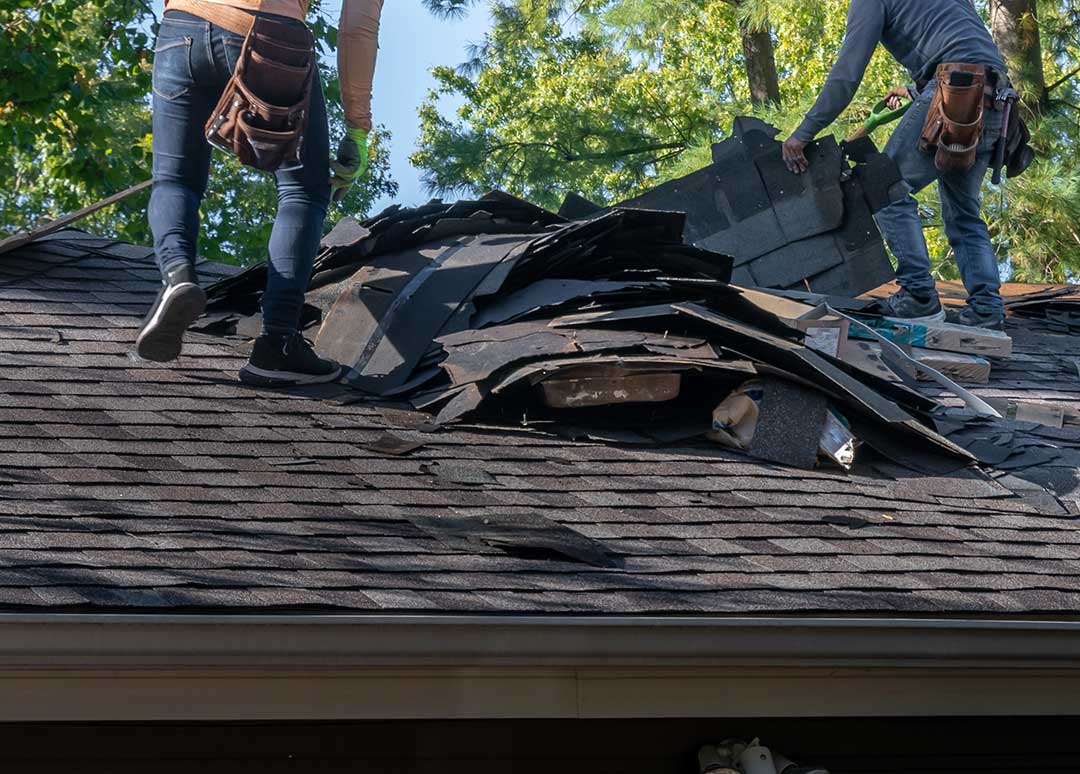
No. Decorations, storage boxes, artificial trees, and seasonal equipment should not be placed on a roof. Walking on shingles can loosen granules, damage flashing, bend metal components, and shorten the service life of roofing materials. Even lightweight decorations may create puncture points or trap water against the roof surface.
Attaching lights or decorations can also cause damage if fasteners are driven through shingles, trim, flashing, or roof decking. Staples and nails can create openings that allow water to enter. Adhesives may loosen in freezing weather and leave residue or pull away protective surface material.
Use existing, purpose-designed attachment points where appropriate, and keep cords away from sharp edges, gutters, and areas where ice or snow may slide. Decorations should never interfere with drainage paths or cover roof penetrations.
How can holiday lights be stored without damaging them?
Holiday lights should be removed carefully and inspected before being packed. Pulling on cords, wrapping strands around sharp objects, or storing them while wet can lead to damaged insulation and electrical hazards.
Before storage:
- Unplug lights before removal
- Check for cracked sockets, exposed wire, melted insulation, or corrosion
- Allow outdoor-rated cords to dry fully
- Coil strands loosely around a smooth spool or divided container
- Keep extension cords separate from decorative light strands
- Label each strand by location or length
- Store lights away from heat sources and moisture
Do not leave cords draped across roof edges, gutters, or attic access openings after the season. Cords can obstruct drainage, become brittle from weather exposure, or create trip hazards during maintenance.
What is the safest place to store decorations in a house?
A dry interior closet, basement storage area, or designated utility room may be safer than an attic, provided the location is not damp and does not interfere with mechanical equipment. Basements in the area can experience humidity, so decorations should be kept off concrete floors and away from walls where condensation or seepage occurs.
An attic is generally more suitable for lightweight, durable items than for fabric, paper, photographs, electronics, or heirloom decorations. Temperature extremes can damage wax, adhesives, delicate finishes, and some plastics even when the roof itself remains sound.
Keep valuable or moisture-sensitive decorations in a stable indoor environment. Use the attic for items that can tolerate seasonal temperature changes and can be removed without stepping on insulation or roof framing.
How often should the storage area be checked?
Inspect stored decorations at least once each year, preferably before placing new items in the attic. Look for water stains, damp containers, pest activity, damaged wiring, compressed insulation, and changes in the roof’s underside.
After major wind, ice, or snow events, a visual check can help identify problems early. In Ithaca, repeated freeze-thaw conditions can expose small flashing or drainage issues that may not be obvious during dry weather. Do not climb onto a snow-covered or icy roof to inspect decorations or make adjustments. A ground-level check, attic observation, or inspection from a safe access point is more appropriate.
If the attic floor, framing, insulation, or roof sheathing shows active leaking, significant dampness, sagging, or structural damage, avoid adding storage and keep people away from unsafe areas until the condition is properly evaluated.
What is the main rule to remember?
Store decorations where they stay dry, keep weight off the roof assembly, preserve attic ventilation, and avoid any attachment method that punctures or traps moisture against roofing materials. Good organization makes seasonal decorating easier, but leaving clear access to the roof structure is just as important as protecting the decorations themselves.
