
Shingle curling and cracking are common signs that an asphalt-shingle roof is losing its ability to shed water. The damage may develop gradually, but it can allow moisture beneath the roofing surface, especially during heavy rain, freeze-thaw cycles, and winter snow.
What do curled and cracked shingles look like?
Curled shingles usually have corners or edges that turn upward, buckle, or lose contact with the shingle beneath them. Cracked shingles may show narrow splits, often running vertically or along the surface where the shingle has become brittle.
Other warning signs include:
- Shingles that appear lifted, wavy, or uneven
- Small pieces of roofing material in gutters or near downspouts
- Missing surface granules
- Dark lines or exposed fiberglass matting
- Loose tabs after strong wind
- Water stains on attic framing or upper-floor ceilings
A few damaged shingles do not always mean the entire roof has failed. The pattern, location, age, and underlying cause matter.
Why do roof shingles curl or crack?
The most common cause is aging. Asphalt shingles gradually lose oils and flexibility after years of exposure to sunlight, wind, rain, snow, and changing temperatures. As the material becomes less resilient, edges may curl and the surface may split.
Several other conditions can contribute:
Repeated temperature changes
In Ithaca, roofs regularly experience seasonal shifts from warm, sunny conditions to freezing temperatures. Water can enter small openings, freeze, expand, and place additional stress on brittle shingles. Repeated freeze-thaw cycles may worsen existing cracks.
Poor attic ventilation
An attic that cannot release excess heat and moisture may contribute to premature shingle aging. Excess heat can accelerate deterioration, while trapped moisture can affect roof sheathing and encourage condensation. Ventilation problems do not always cause visible curling immediately, but they can shorten the useful life of the roof.
Improper installation
Shingles may curl or crack sooner if they were installed over an uneven surface, fastened incorrectly, placed too close to roof edges, or applied during unsuitable weather. Inadequate sealing can also make shingle tabs more vulnerable to wind.
Manufacturing defects or mismatched materials
Occasionally, shingles fail earlier than expected because of a product defect or because different roofing materials were combined improperly. A roof with repairs from several periods may show uneven aging, with newer and older shingles reacting differently to weather.
Foot traffic and physical impact
Walking on brittle shingles, falling branches, hail, or repeated contact with tools can create cracks that are not immediately obvious. Damage around chimneys, vents, valleys, and roof edges deserves particular attention because these areas already handle concentrated water flow.
Can curled shingles be repaired?
Sometimes, but the repair depends on how widespread and advanced the damage is. A single lifted or curled shingle may be carefully secured if the underlying roofing materials remain sound. Small cracks can occasionally be sealed temporarily, but surface sealants are not a permanent solution for widespread aging.
Repair is more reasonable when:
- Damage is limited to a small area
- Most shingles remain flexible and firmly attached
- The roof has substantial remaining service life
- The roof deck and flashing are not showing moisture damage
- The problem resulted from isolated impact or wind damage
A repair becomes less dependable when shingles are brittle, cracking across multiple slopes, shedding large amounts of granules, or failing around many penetrations. Adhesive products may hold a loose tab temporarily, but they cannot restore the shingle’s original flexibility or weather resistance.
When does curling or cracking indicate replacement?
Replacement is more likely to be appropriate when damage appears across several roof sections or when the shingles are near the end of their expected life. A roof does not have to leak visibly before replacement becomes necessary. Small openings can admit moisture into underlayment, insulation, and roof sheathing long before water reaches the ceiling.
Signs that the problem is more extensive include:
- Curling on multiple sides of the roof
- Cracks across many shingles in the same area
- Bare patches where granules have worn away
- Frequent repairs for wind-lifted or broken shingles
- Soft or sagging roof decking
- Water staining in the attic
- Daylight visible through the roof deck
- Flashing that is loose, rusted, or separated
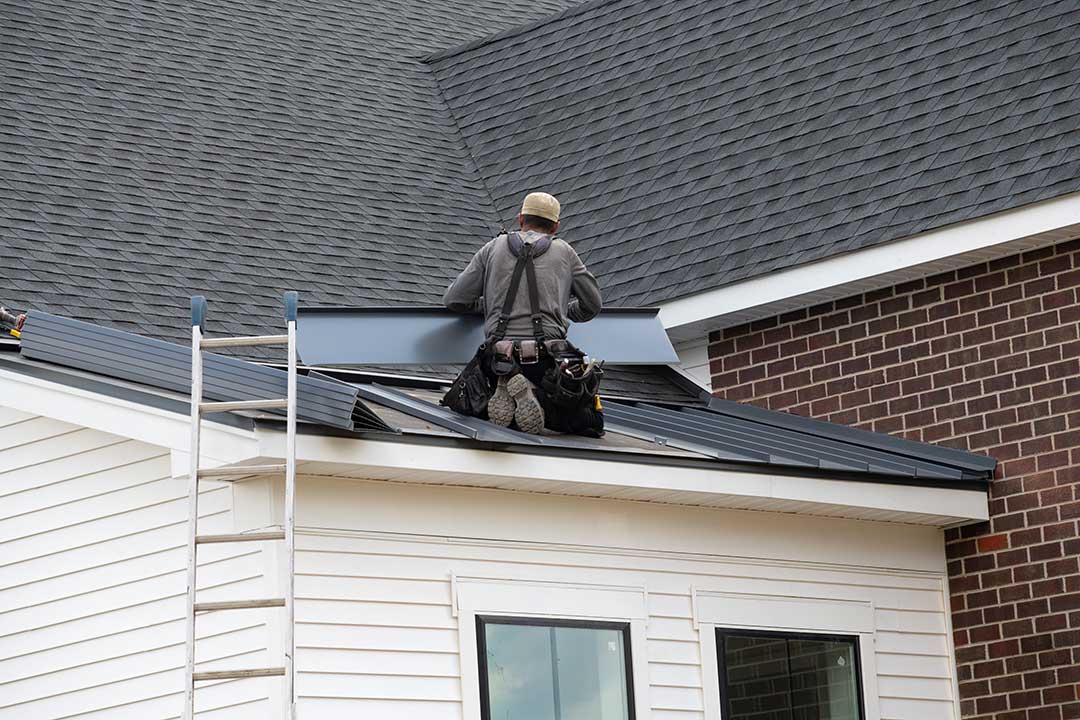
A roof with isolated damage may be repairable, while a roof with widespread brittleness usually becomes less reliable after repeated patching. Mixing new shingles with severely aged ones can also create an uneven surface and inconsistent appearance, though appearance is less important than watertight performance.
How should a homeowner inspect the roof safely?
A ground-level inspection can identify many warning signs without climbing onto the roof. Look from several sides of the property for uneven rows, lifted edges, missing shingles, or debris below roof slopes. Binoculars can help reveal cracks and granule loss.
Inside the attic, inspect the underside of the roof deck after a storm if access is safe. Look for:
- Dark water marks
- Damp insulation
- Rusted fasteners
- Mold-like growth caused by persistent moisture
- Light entering through holes or gaps
- Condensation on nails or roof sheathing
Do not walk on a roof that is wet, icy, steep, visibly damaged, or covered with moss and debris. Asphalt shingles become especially slippery in cold or damp weather. Roof access may also disturb fragile shingles and turn minor damage into larger breaks.
What should happen after a storm?
Wind and heavy weather can expose weaknesses that were already developing. After a storm, check for shingles in the yard, clogged gutters, exposed underlayment, bent flashing, and branches resting on the roof.
If a section is visibly open, cover the affected area only with a properly secured temporary waterproof covering if it can be done from a safe location. Do not place a ladder against unstable gutters or climb onto the roof during active wind, rain, or icy conditions. Water entering near electrical wiring, ceiling fixtures, or attic equipment requires extra caution.
Photographs taken from the ground and from accessible interior areas can help document the timing and location of damage. Keep records of leaks, repairs, and storm conditions, particularly if insurance questions may arise.
How can further shingle damage be reduced?
Prevention begins with controlling moisture and avoiding unnecessary stress on the roof. Keep gutters and downspouts clear so water does not back up beneath shingle edges. Trim branches that can scrape the roof or drop heavy limbs. Make sure attic insulation and ventilation are not blocking intended airflow paths.
Avoid pressure washing asphalt shingles. High-pressure water can remove protective granules and force moisture beneath the roofing layers. Moss and organic growth should also be handled carefully because aggressive scraping can break shingles.
Roof penetrations, flashing, valleys, and eaves deserve periodic attention. These locations receive more water movement and are more likely to reveal problems before the open field of the roof does.
Is curling always caused by poor installation?
No. Curling can result from normal aging, heat exposure, ventilation problems, installation conditions, storm damage, or a combination of factors. A roof that curls several years after installation is not automatically defective, and an older roof with curling is not necessarily the result of poor workmanship.
The most useful evaluation considers the roof’s age, shingle type, installation history, attic conditions, weather exposure, and whether the problem is isolated or widespread. That broader view helps distinguish a small repair from deterioration that is likely to continue.
