
What do gutters do for a roof?
Gutters collect rainwater and melting snow from the roof edge, then direct that water away from the building. Their main purpose is not to make the roof itself waterproof; it is to prevent concentrated water from damaging the roof edge, walls, foundation, landscaping, and soil around the home.
Without a functioning drainage path, water can run over the roof edge in sheets. That may saturate fascia boards, stain siding, erode soil, and create moisture problems near the foundation. Water can also back up beneath roofing materials when gutters or downspouts are blocked.
For homes in Ithaca, NY, gutters must handle more than occasional summer rain. Roof drainage systems may also face heavy spring rainfall, autumn leaves, freezing temperatures, repeated thawing, and snowmelt. These seasonal changes can expose weak connections, poor slopes, and damaged roof-edge materials.
Can bad gutters damage the roof?
Yes. Gutters can contribute to roof damage when they are clogged, sagging, improperly sloped, or separated from the roof edge.
A blocked gutter holds water instead of carrying it away. During cold weather, that trapped moisture can freeze and expand. Repeated freezing and thawing may loosen fasteners, split seams, distort the gutter, or force water toward the roof edge. If water remains against wood components for long periods, rot can develop.
Gutter problems may affect:
- Fascia boards behind the gutter
- Roof-edge trim and soffit materials
- The lower edges of roof sheathing
- Shingles near the eaves
- Exterior walls and window trim
- Insulation and interior finishes if water enters the building
Not every roof leak is caused by a gutter. Leaks may also originate around flashing, vents, chimneys, valleys, skylights, or damaged roofing materials. Still, overflowing or poorly draining gutters can create conditions that resemble a roof leak and should be checked as part of any moisture investigation.
Why are roof edges especially vulnerable?
The lower edge of a sloped roof receives water from the entire roof surface above it. This makes the eave one of the most water-exposed areas of the roofing system.
Shingles are designed to shed water downward, but the roof edge still needs proper drainage and protection. If water spills behind a gutter or repeatedly runs down the fascia, the wood may absorb moisture. Paint can peel, fasteners may rust, and softened material may no longer hold gutters securely.
Ice can add another complication. During a freeze, snow or meltwater may collect near the eaves and refreeze. This is commonly associated with ice dams, which can force water beneath roofing materials. Gutters do not cause every ice dam, and removing gutters does not solve the underlying problem. Attic insulation, air sealing, roof geometry, snow cover, and outdoor temperatures also influence ice formation.
What gutter problems should homeowners watch for?
The most useful signs are often visible from the ground or noticeable during rainfall.
Look for:
- Water pouring over the front or back of the gutter
- Gutter sections that sag or pull away from the fascia
- Downspouts that discharge next to the foundation
- Rusted seams, holes, or visible cracks
- Staining beneath the roof edge
- Peeling paint or soft-looking wood around fascia and soffits
- Puddles or channels of eroded soil below downspouts
- Water marks on exterior walls
- Damp areas in basements or crawl spaces
- Shingle granules collecting in gutters after roof work or severe weather
A gutter may appear clean while still draining poorly. Small amounts of sediment, roofing granules, moss, or compacted leaf material can restrict the outlet or downspout. Downspouts may also become blocked farther below the visible opening.
How often should gutters be inspected in Ithaca?
Most homes benefit from checking gutters at least twice a year: once in late spring and again after most leaves have fallen in autumn. Additional checks may be useful after strong storms, heavy snowfall, or work on the roof.
The exact schedule depends on the property. Homes beneath mature trees usually collect more debris. A roof with several valleys may send a concentrated flow of water into certain gutter sections. Buildings with steep roofs or multiple roof levels may also experience more forceful discharge.
Inspection should include the entire drainage path:
1. Check whether the gutter maintains a consistent slope toward its outlets.
2. Look for loose hangers, separated joints, and sagging sections.
3. Confirm that downspouts are open.
4. Make sure water exits far enough away from the foundation.
5. Examine the wood or trim behind the gutter for staining or deterioration.
6. Look for signs that water is entering at the roof edge.
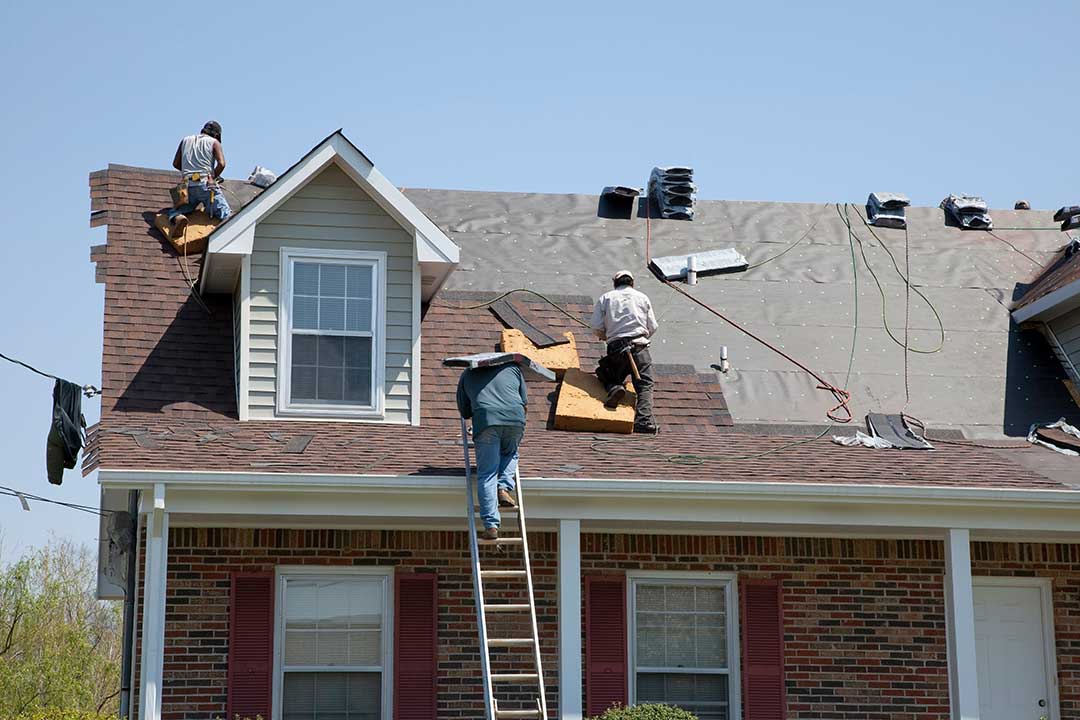
Ladders create a serious fall risk, particularly on uneven ground, icy surfaces, or taller homes. A ground-level inspection is appropriate for many routine observations, but unsafe roof access should not be attempted.
Do gutter guards eliminate maintenance?
No. Gutter guards can reduce the amount of leaves and large debris entering a gutter, but they do not make the drainage system maintenance-free.
Fine particles, pine needles, roof granules, seeds, and organic material may still accumulate. Debris can also collect on top of the guard or block the outlet where water enters the downspout. Some guard designs perform better with certain roof slopes, tree conditions, and rainfall patterns than with others.
A covered gutter still needs periodic observation. During rain, check whether water flows into the gutter or runs over the front edge. After autumn leaf fall and winter weather, inspect for sagging, ice-related movement, and blocked outlets.
Where should downspouts release water?
Downspouts should move water away from the foundation rather than discharge directly beside the wall. The correct arrangement depends on soil, slope, drainage features, nearby walkways, and the building’s foundation design.
Short extensions may be suitable in some locations, while other properties may need a longer above-ground path or an underground drainage arrangement. Water should not be directed toward a neighboring property, a frequently used walkway, or an area where it can freeze into a hazard.
In compact neighborhoods, drainage changes should also be considered carefully. Redirecting a large volume of water can erode a yard, undermine a walkway, or create runoff problems for adjacent areas. The goal is controlled dispersal, not simply moving the outlet a few feet.
How do gutters relate to roof maintenance?
Gutters are one part of a larger roof drainage system. Keeping them clear cannot compensate for damaged flashing, missing shingles, deteriorated underlayment, poor attic ventilation, or inadequate insulation.
During roof inspections, the roof edge should be evaluated along with valleys, penetrations, flashing, and visible attic areas. If gutters are removed or replaced, the condition of the fascia and the attachment points should be checked first. Installing new gutters over deteriorated wood can leave the system unstable and conceal an existing moisture problem.
After major storms, inspect for both roof and gutter damage. A roof may continue shedding water while hidden edge components have been loosened. Conversely, a damaged gutter may overflow even though the shingles remain in good condition.
When does a gutter problem require prompt attention?
Rapid action is warranted when water is entering the building, fascia is visibly collapsing, a gutter is pulling away from the roof, or a downspout is discharging against the foundation during heavy rain.
Extra caution is needed during winter. Ice-covered gutters, snow-loaded roofs, and frozen ground make ladder work and roof access more dangerous. Roof-edge damage that cannot be safely observed from the ground should be evaluated without attempting hazardous access.
A properly functioning gutter system helps the roof shed water as intended. Regular observation, seasonal cleaning, sound attachments, and controlled downspout discharge can reduce moisture exposure at the roof edge and help reveal developing problems before they spread into walls, attics, or foundations.
