
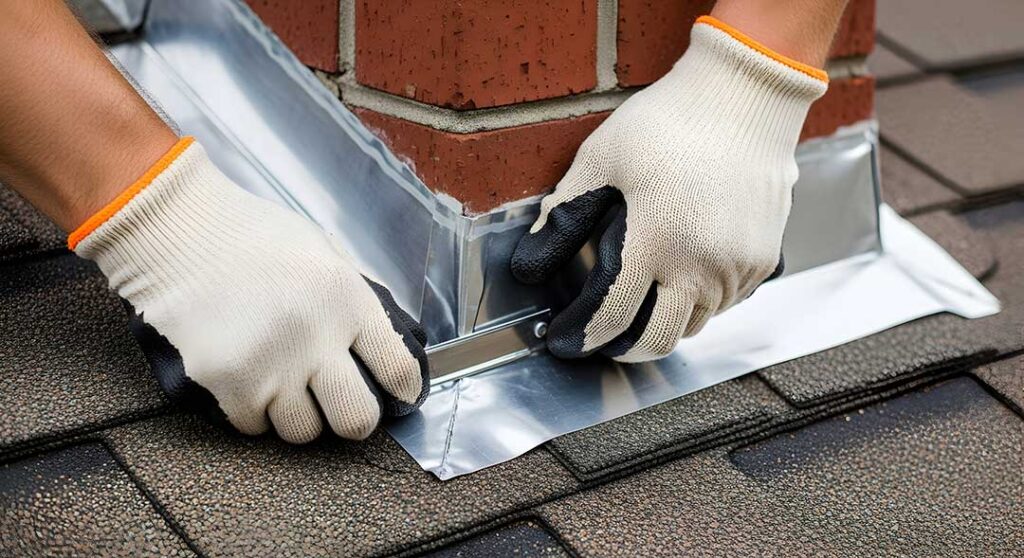
A roof cricket is a small, raised structure built on the uphill side of a chimney or another wide roof penetration. Its purpose is to split and redirect rainwater, melting snow, and ice around the obstruction so water can continue draining down the roof.
For homes in Ithaca, NY, a properly designed cricket can be especially useful because roofs must handle repeated freeze-thaw cycles, winter snowfall, spring rain, and leaves or debris that may collect around chimneys and other projections.
What does a roof cricket look like?
A cricket resembles a small peaked roof attached to the main roof. It is usually framed with wood or built as part of a low-slope roofing assembly. The cricket rises toward the uphill side of a chimney, skylight, large vent, or similar obstruction. Its sloped sides guide water toward the left and right sides of the penetration.
The structure may be covered with:
- Sheet metal
- Asphalt shingles
- A membrane roofing material
- Another roof covering compatible with the main roof system
A cricket is sometimes called a saddle. The terms are often used interchangeably, although designs can vary depending on the roof shape, roofing material, and size of the obstruction.
Why is a cricket necessary?
A chimney or wide roof penetration interrupts the natural path of water moving down a sloped roof. Without a cricket, water can collect against the uphill side of the obstruction instead of flowing around it.
That trapped or slowed water creates several problems:
- Greater pressure on flashing joints
- Increased chances of leaks during heavy rain
- Ice buildup during freezing weather
- Snow accumulation behind the obstruction
- Debris collection that can block drainage
- Premature deterioration of roofing materials and underlayment
A cricket does not make a roof waterproof by itself. It works as part of a complete water-management system that includes underlayment, step flashing, counterflashing, properly lapped roofing materials, and reliable drainage paths.
Where are roof crickets commonly installed?
The most familiar location is behind a chimney. A cricket may also be appropriate behind a wide skylight, large mechanical curb, masonry projection, or another penetration that significantly interrupts roof drainage.
Building-code provisions commonly require a cricket or saddle on the ridge side of a chimney or penetration more than 30 inches wide when measured across the roof slope. The exact requirements can depend on the applicable construction code, roof design, and type of roof covering.
Smaller penetrations may not require a cricket, but they still need properly installed flashing. A narrow plumbing vent, for example, typically relies on a flashing boot rather than a framed cricket.
How does a cricket help with snow and ice?
A cricket helps prevent snow from remaining packed tightly against the uphill side of a chimney or other obstruction. By creating a raised, sloped surface, it encourages snow and meltwater to separate and move around the penetration.
This matters in the local winter climate, where snow can melt during a daytime temperature increase and refreeze overnight. Repeated cycles can place stress on flashing, roofing seams, and exposed fasteners.
A cricket cannot prevent every ice dam. Ice dams are usually related to heat loss, uneven roof temperatures, inadequate ventilation, weather conditions, or a combination of factors. However, a well-built cricket can reduce the tendency for snow and water to accumulate at a vulnerable roof intersection.
Snow should not be chopped away from a chimney or cricket with sharp tools. That can damage shingles, membranes, metal flashing, and the structure beneath the roof covering.
Is a cricket the same as flashing?
No. A cricket is a structural or shaped portion of the roof. Flashing is the material used to direct water away from joints and penetrations.
The two work together. A typical chimney cricket may include:
- A sloped framed structure behind the chimney
- A waterproof underlayment
- Metal or compatible roof-covering material
- Base flashing where the cricket meets the chimney
- Step flashing along sloped sides
- Counterflashing set into or attached to the chimney
- Carefully sealed transitions at corners and changes in direction

Even a large cricket can fail if the flashing is poorly layered or if counterflashing is missing. Conversely, good flashing may have difficulty managing water and snow if a wide chimney blocks the roof’s drainage path without an appropriate cricket.
What problems suggest a cricket or chimney area may be failing?
Water stains on ceilings or upper walls are not always directly below the leak. Moisture can travel along rafters, roof decking, insulation, or framing before becoming visible indoors.
Possible warning signs include:
- Dampness or staining near a chimney
- Peeling paint on an upper wall or ceiling
- Musty odors in an attic
- Rusted metal components near the roof penetration
- Cracked or displaced masonry
- Loose flashing
- Shingles lifting or curling around the chimney
- Repeated ice buildup behind the chimney
- Mold or darkened wood in the attic
- Granules or pieces of roofing material collecting near the cricket
A leak that appears only during wind-driven rain or after snow melts can still indicate a flashing or drainage problem. Waiting for an active drip may allow moisture to damage insulation, sheathing, and interior finishes.
Can an existing roof be repaired without rebuilding the cricket?
Sometimes. The appropriate repair depends on whether the problem is limited to surface materials or involves the underlying framing and roof deck.
A relatively minor issue may involve damaged flashing, missing sealant, deteriorated shingles, or a small opening in the roof covering. More extensive damage may require removal of the surrounding roofing materials to inspect the cricket, underlayment, sheathing, and chimney connection.
Sealant alone is rarely a durable substitute for correctly layered flashing. Sealants can crack, separate, or lose adhesion as the roof expands and contracts. Repairs should preserve the direction of water flow rather than simply covering visible gaps.
What should homeowners look for during a roof inspection?
From the ground, a homeowner can look for obvious signs such as loose metal, missing roofing materials, sagging, or heavy debris behind a chimney. Attic access may reveal damp insulation, water marks, or daylight around a roof penetration.
A roof inspection is more hazardous during snow, ice, wet conditions, or strong winds. Walking on a steep or slippery roof can cause injury and can also damage roofing materials. Structural concerns, active leaks, chimney movement, or extensive deterioration require evaluation by someone qualified to work safely on the roof.
The most useful question is not simply whether a home has a cricket. It is whether the cricket, flashing, and surrounding roof assembly provide a continuous, unobstructed path for water and melting snow to drain away from the chimney or penetration.
