

Can a sports ball really damage a roof?
Yes. A baseball, softball, lacrosse ball, hockey puck, or another hard projectile can damage roofing materials, especially when it strikes at high speed or lands repeatedly in the same area. The most vulnerable components include asphalt shingles, flashing, gutters, roof vents, skylights, and lightweight trim.
In Ithaca, NY, roof damage from sports equipment is more likely around homes with nearby yards, sloped lots, shared outdoor spaces, or rooflines close to basketball hoops and informal playing areas. Seasonal weather can make the problem harder to identify because wind, rain, freeze-thaw cycles, and snow may worsen a small impact after it occurs.
A ball does not need to create a dramatic hole to cause a roofing problem. It may loosen a shingle, crack a protective coating, dent metal flashing, or break the seal around a roof penetration.
Which parts of a roof are most vulnerable?
The roofing surface is only one part of the system. Sports-ball impacts can affect several materials differently.
Asphalt shingles
A hard ball can:
- Crack or split a shingle
- Remove protective granules
- Lift or loosen the shingle edge
- Break the adhesive seal between overlapping shingles
- Create a visible bruise or soft spot beneath the surface
Granule loss may appear as a dark mark, a small bare patch, or loose granules collected in the gutter. A shingle can also look intact from the ground while having a fractured fiberglass mat underneath.
Older shingles are generally more vulnerable because years of sunlight, temperature changes, and weather exposure can make them less flexible. Cold conditions may increase brittleness, so an impact during a chilly spring or fall afternoon can have a different effect than the same impact during warm weather.
Roof flashing
Flashing is the thin metal or membrane material installed around chimneys, walls, valleys, vents, and other transitions. A ball can dent or bend exposed flashing, particularly where the material extends above the surrounding roof surface.
A small crease may not cause immediate leakage. However, if it opens a seam or changes the way water flows, rain can begin entering beneath the roofing materials.
Gutters and downspouts
Gutters can be dented, pulled away from the fascia, or knocked out of alignment. A direct hit may also loosen hangers or damage a downspout connection.
Gutter damage matters because water may then overflow near the roof edge or foundation. During heavy rain, a small change in slope can prevent water from reaching the downspout properly.
Skylights, vents, and other roof accessories
Plastic vent covers, bathroom exhaust caps, and skylight components can crack under impact. Metal vents may be dented, while the seal around a vent pipe can be disturbed.
These areas deserve attention because they are already interruptions in the roof surface. Damage to the surrounding sealant, flashing, or boot can allow water to enter even when the main field of shingles appears undamaged.
What does impact damage look like?
The signs depend on the type of ball, the angle of impact, the roof material, and the age of the roof. Common clues include a fresh dark spot, a missing patch of granules, a torn shingle edge, or a shingle that appears raised compared with the surrounding courses.
Other warning signs include:
- A shingle that is cracked, creased, or partially detached
- Small pieces of roofing material on the ground
- New dents in flashing, vents, or gutters
- Water stains on an upper-floor ceiling
- Damp insulation or discoloration in an attic
- Granules accumulating in one section of a gutter
- A new leak that appears after rain but not during dry weather
A ceiling stain does not always identify the exact location of the exterior damage. Water can travel along rafters, roof decking, insulation, or framing before becoming visible indoors.
Can a ball cause a roof leak immediately?
It can, but not always. A direct strike may puncture a membrane, crack a skylight, or create an opening around flashing right away. More often, the damage is partial: a shingle is loosened, a seal is broken, or a small crack is created.
That type of damage may remain dry during light rain. Later, wind-driven rain, melting snow, or repeated freeze-thaw cycles can enlarge the opening. In the local climate, water that enters a small defect may freeze and expand, placing additional stress on nearby materials.
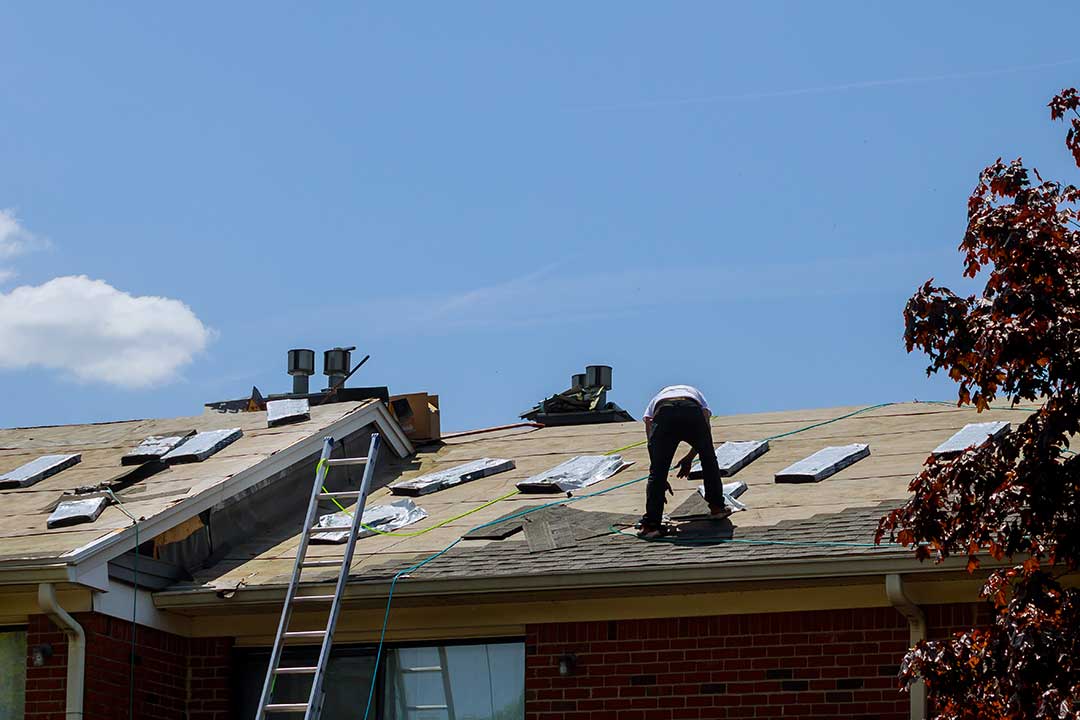
A delayed leak can make it difficult to connect the interior stain with the original impact. If a ball was recently hit toward the roof, that event is useful information when inspecting the area.
Are some sports more likely to cause damage?
Yes. The risk depends on the ball’s hardness, size, speed, and trajectory.
Baseballs, softballs, lacrosse balls, field hockey balls, and hockey pucks can deliver concentrated force. A soccer ball or basketball is usually less likely to break a shingle, but it can still damage gutters, siding, trim, or roof accessories when kicked or thrown at close range.
Golf balls can be particularly damaging because they are small, dense, and capable of traveling at high speed. Even a tennis ball may cause damage if it repeatedly strikes the same gutter, vent, or thin roof component.
The distance between the playing area and the house matters as much as the sport. A ball hit from close range can have more force than one traveling from farther away.
What should residents check after an impact?
Begin with a ground-level inspection from a safe position. Look for displaced shingles, fresh marks, damaged gutters, and pieces of material on the ground. Binoculars can help identify surface changes without requiring anyone to climb onto the roof.
Inside the attic, check for daylight through the roof deck, damp insulation, water marks, or a musty smell after rain. Ceilings below the roof should also be examined for new stains or bubbling paint.
Avoid walking on a steep, wet, icy, or damaged roof. Roof surfaces can be slippery, and stepping on cracked shingles may worsen the damage. Ladder use also becomes more hazardous near uneven ground, retaining walls, snow, or icy conditions.
If water is actively entering the home, place a container under the drip when practical, move belongings away from the area, and avoid contact with electrical fixtures. Serious leaks or unsafe roof conditions may require qualified assistance because the immediate concern is preventing injury and further interior damage.
Does homeowners insurance cover sports-ball damage?
Coverage depends on the policy, the cause of the damage, the deductible, and whether the event is considered sudden and accidental. A single unexpected impact may be treated differently from gradual deterioration, repeated neglect, or damage that existed before the incident.
Photographs of the exterior, interior stains, damaged objects, and the surrounding area can help document what happened. Keep notes about the approximate date, the type of ball involved, weather conditions, and when the damage was first noticed.
Insurance questions are specific to the policy and circumstances. The policy language, not the type of sport alone, determines whether a claim may apply.
How can accidental impacts be reduced?
The simplest prevention measure is increasing the distance between active play and the house. Basketball hoops, batting practice, lacrosse drills, and similar activities should be positioned so that missed shots do not travel toward rooflines, windows, or overhead utilities.
Other practical steps include:
- Using a net or barrier behind batting and shooting areas
- Avoiding hard-ball practice beside the house
- Directing play away from neighboring rooflines
- Keeping gutters and roof edges visible during routine seasonal checks
- Replacing damaged outdoor equipment that sends balls unpredictably
- Supervising children when play occurs near buildings or parked vehicles
In dense neighborhoods or homes on sloped lots, a ball may travel farther or take an unexpected path. A short review of the yard’s slope, fences, roof height, and nearby structures can prevent repeated impacts before they become a recurring maintenance issue.
