

Removing leaves, branches, moss, and other debris from a roof helps protect shingles, flashing, gutters, and drainage paths. For residents in Ithaca, NY, seasonal leaf fall, winter snow, ice, and spring wind can all leave material behind that holds moisture or blocks runoff.
The safest approach is to inspect from the ground first, remove only what can be reached securely, and avoid walking on a wet, icy, steep, or damaged roof.
What debris commonly collects on a roof?
Roof debris usually includes natural material carried by wind or dropped by nearby trees. Common examples are:
- Leaves and pine needles
- Small branches and twigs
- Seeds, cones, and bark
- Moss, algae, and organic buildup
- Windblown litter
- Roofing granules or loose shingle pieces
- Snow and ice, in some circumstances
Homes near mature trees may collect debris in roof valleys, behind chimneys, around skylights, and near plumbing vents. These areas can hold moisture longer than the exposed portions of the roof.
A small amount of loose material is not always an emergency. The concern increases when debris forms a wet mat, covers roof damage, blocks a drain, or stays in contact with roofing materials for an extended period.
Should you walk on the roof to remove debris?
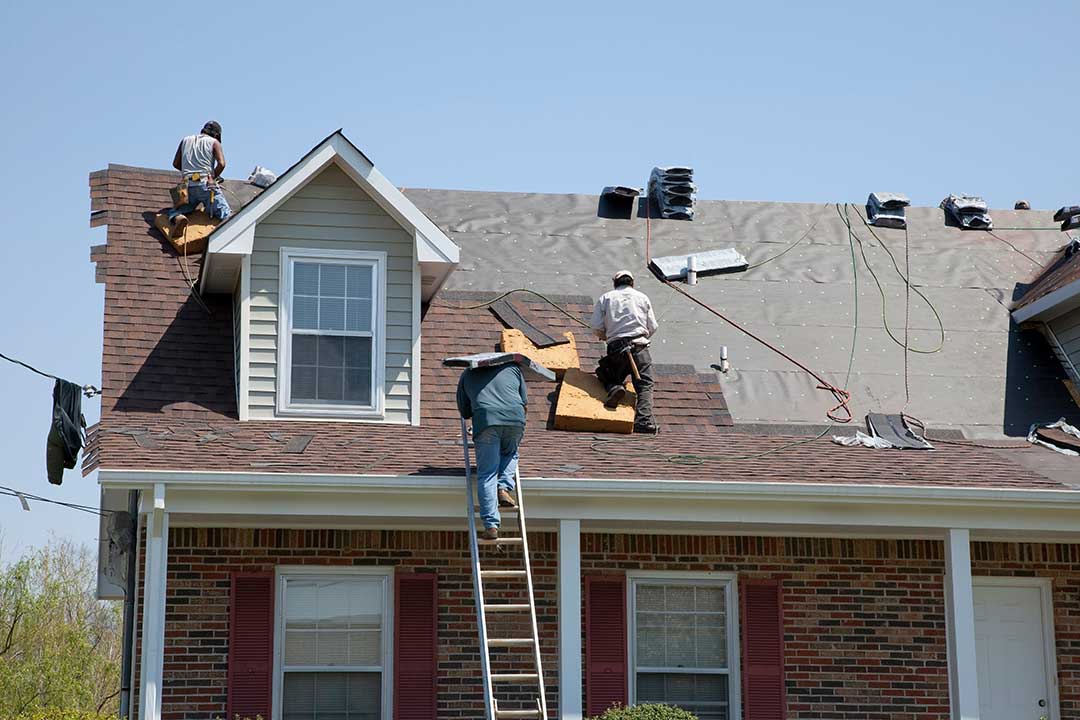
Usually, no. Walking on a roof creates fall risks and can damage shingles, flashing, ridge vents, gutters, or older roofing materials. A roof that appears dry may still be slick from dew, frost, moss, or fine organic residue.
Ground-level inspection is often enough to identify whether debris is accumulating. Binoculars can help reveal material in valleys and around roof penetrations without requiring ladder or roof access.
Avoid roof access entirely when:
- The roof is wet, icy, snowy, steep, or visibly damaged.
- Wind is strong or weather is changing.
- The roof has moss or algae that makes footing uncertain.
- The work would require carrying tools while climbing.
- There is no secure way to access the roof.
- Power lines, tree limbs, or other overhead hazards are nearby.
- The roof is unusually high or has multiple levels.
A ladder should not be used as a work platform for reaching across a roof. Using a rake, shovel, or other long-handled tool while standing on a ladder can shift balance unexpectedly.
How can loose debris be removed from the ground?
Light debris may be removed with a telescoping roof rake or soft-bristled extension tool used from the ground. The tool should be pulled gently toward the lower edge rather than pushed aggressively across the shingles.
Use these precautions:
- Stand well away from the roof edge and falling material.
- Keep people, pets, vehicles, and fragile objects out of the drop zone.
- Work only in calm, dry conditions.
- Pull debris downward in small sections.
- Do not scrape, jab, or pry at shingles.
- Stop if the tool catches on flashing, vents, gutters, or roof edges.
- Keep tools away from overhead utility lines.
Roof rakes are more appropriate for loose leaves and light snow than for compacted ice, heavy branches, or deeply rooted moss. Removing snow from the ground can also be hazardous if the rake causes a large mass to slide suddenly from the roof.
What is the safest way to remove branches?
Small, loose twigs can sometimes be removed from the ground with a soft rake or telescoping tool. Larger branches should not be pulled from below if they are wedged under shingles, caught around a chimney, or resting on electrical equipment.
A branch that appears light may be under tension. Pulling it can cause it to spring free, damage the roof covering, or fall unpredictably. Do not climb onto the roof to cut a branch unless proper fall protection, access equipment, and overhead hazard controls are in place.
After a substantial branch has fallen on a roof, look for signs of damage from the ground:
- Missing, cracked, or lifted shingles
- Bent or displaced flashing
- A sagging roof surface
- Damaged gutters or downspouts
- New stains or damp areas in the attic or upper rooms
- Exposed underlayment or roof decking
Roof debris and roof damage are not the same problem. Removing the visible branch does not correct damage beneath it.
How should moss and organic buildup be handled?
Moss should not be scraped aggressively from shingles. Scraping can remove protective granules and loosen the edges of roofing materials. A stiff broom, pressure washer, or power blower can also cause unnecessary damage.
If moss is limited and reachable from a safe position, gently removing loose surface material may reduce buildup. However, established moss often has roots or holdfasts attached to the roofing surface. It may return unless the moisture and shade conditions are addressed.
Do not use a pressure washer on asphalt shingles. High-pressure water can force moisture beneath roofing materials and shorten the roof’s service life. Chemical treatments should be used only according to the product label, with care around plants, pets, metal surfaces, and storm drains.
Moss is more likely to persist where branches shade the roof, leaves remain damp, or gutters overflow. Trimming vegetation safely, improving drainage, and keeping nearby roof areas clear may help reduce future growth.
What about gutters and downspouts?
Removing roof debris should include checking the drainage system, because leaves often move from the roof into gutters and downspouts. Blocked gutters can cause water to back up beneath roof edges or spill against siding and foundations.
From a secure ladder position, gutters may be cleared by hand with gloves or by using a gutter-cleaning tool designed for ground-level use. Do not rest a ladder against the gutter itself. The ladder should stand on firm, level ground, and someone should stabilize it when appropriate.
After removing loose material:
- Check whether the gutter is sagging or pulling away from the fascia.
- Look for separated joints or visible corrosion.
- Confirm that downspout openings are not packed with leaves.
- Observe whether water can exit away from the foundation.
- Avoid forcing ice out of a gutter with a hammer or sharp tool.
In Ithaca, freeze-and-thaw cycles can turn wet leaves into compacted masses and ice. Clearing drainage paths during mild, dry weather is safer than attempting the same work during a storm or freeze.
How should the debris be disposed of?
Keep removed leaves and branches out of streets, storm drains, and drainage ditches. Organic material can block water flow and contribute to polluted runoff. Place debris according to applicable local collection or disposal rules, and separate roofing materials from ordinary yard waste.
Wear gloves when handling wet leaves, broken branches, damaged shingles, or debris that may contain sharp metal. Wash hands after cleanup, especially before eating or handling household items.
If debris may include old roofing material, insulation, deteriorated siding, or other building products, avoid disturbing it until its composition is understood. Older materials can create health hazards when broken, cut, or swept dry.
When is roof debris removal not a do-it-yourself task?
Do not attempt the work yourself when the roof is unsafe to access or the debris is connected to possible structural damage. Professional assistance is warranted when there is a large fallen limb, substantial snow or ice load, damaged roof decking, electrical exposure, or a need to work near a chimney or utility line.
A roof that is sagging, leaking heavily, or showing widespread shingle displacement should be treated as a safety concern rather than a cleaning project. Keep people away from the affected area until the hazard has been evaluated.
For routine maintenance, a ground inspection after major wind, rain, or snow events can identify problems early. Clearing light debris before it becomes a wet, compacted layer is generally safer and less damaging than waiting until the roof, gutters, or drainage paths are already affected.
